 Save
Save There's something about the smell of chicken hitting a hot grill that makes me stop whatever I'm doing. One summer afternoon, I was standing in my tiny kitchen watching my neighbor's garden tomatoes ripen on the windowsill, and I got this sudden craving for something that felt both elegant and simple. That's when I started playing with the idea of taking everything I loved about a traditional Caprese—those perfect tomatoes, creamy mozzarella, bright basil—and turning it into something that could be a proper meal. The addition of grilled chicken felt natural, almost inevitable, like the salad had been waiting for it all along.
I made this for my sister's book club once, and someone asked if I'd catered it. The compliment stuck with me not because it was fancy, but because it proved that sometimes the simplest combinations—when you use really good ingredients and treat them with respect—end up being the most memorable. She still texts me for this recipe.
Ingredients
- Boneless, skinless chicken breasts (2 large): The foundation of this dish. I learned the hard way that pounding them slightly to an even thickness keeps them from drying out on the grill.
- Olive oil (2 tbsp): Good quality oil makes a real difference here—it helps carry the flavor of the herbs and creates that golden crust on the chicken.
- Dried Italian herbs (1 tsp): Or use 1/2 tsp dried oregano and 1/2 tsp dried basil if you want more control over the flavor profile.
- Garlic powder (1/2 tsp): Just enough to add depth without being obvious about it.
- Salt and black pepper, to taste: Season generously—salads need more seasoning than you'd think.
- Mixed salad greens (4 cups): Arugula, spinach, or romaine all work beautifully. I prefer a mix because the different textures keep things interesting.
- Ripe tomatoes (2 large): This is where quality really shows. Buy them when they're actually ripe, not those pale supermarket tomatoes.
- Fresh mozzarella (250g or 9 oz): Keep it cold until the last moment, and slice it just before assembly so it stays creamy.
- Cherry tomatoes (1 cup, halved): These add little bursts of sweetness and keep you from needing the salad to be perfectly uniform.
- Red onion (1 small, thinly sliced): Raw red onion has a sharp bite that balances the richness of the cheese and chicken.
- Fresh basil (1/2 cup loosely packed): Tear it by hand instead of cutting it—you want to keep those oils intact and the leaves from bruising.
- Balsamic vinegar (1/2 cup): The reduction is what elevates this from a nice salad to something special.
- Honey (1 tbsp): This mellows the vinegar's sharpness and helps it reduce to the right consistency.
Tired of Takeout? 🥡
Get 10 meals you can make faster than delivery arrives. Seriously.
One email. No spam. Unsubscribe anytime.
Instructions
- Get your grill ready:
- Heat your grill or grill pan to medium-high. You want it hot enough that water droplets sizzle immediately when they hit the surface, but not so scorching that it'll char the chicken before the inside cooks through.
- Season the chicken:
- Mix the olive oil, herbs, garlic powder, salt, and pepper in a small bowl. Rub this mixture all over both sides of the chicken breasts, making sure you're coating every surface evenly so the flavors are consistent.
- Grill the chicken:
- Place the chicken on the grill and let it sit undisturbed for 6 to 7 minutes—resist the urge to flip it constantly. You'll know it's ready when you see nice grill marks and the meat releases easily from the grates. Flip, cook for another 6 to 7 minutes until the juices run clear when you pierce the thickest part.
- Rest the chicken:
- Transfer it to a cutting board and let it sit for 5 minutes. This step matters more than people think—it redistributes the juices so every slice stays tender instead of drying out as it cools.
- Make the balsamic reduction:
- While the chicken's grilling, pour the balsamic vinegar and honey into a small saucepan. Bring it to a boil, then turn the heat down to medium-low and let it bubble gently for 6 to 8 minutes, stirring every so often, until it's thick and syrupy enough to coat the back of a spoon. Set it aside to cool slightly—it'll thicken a bit more as it cools.
- Build the salad base:
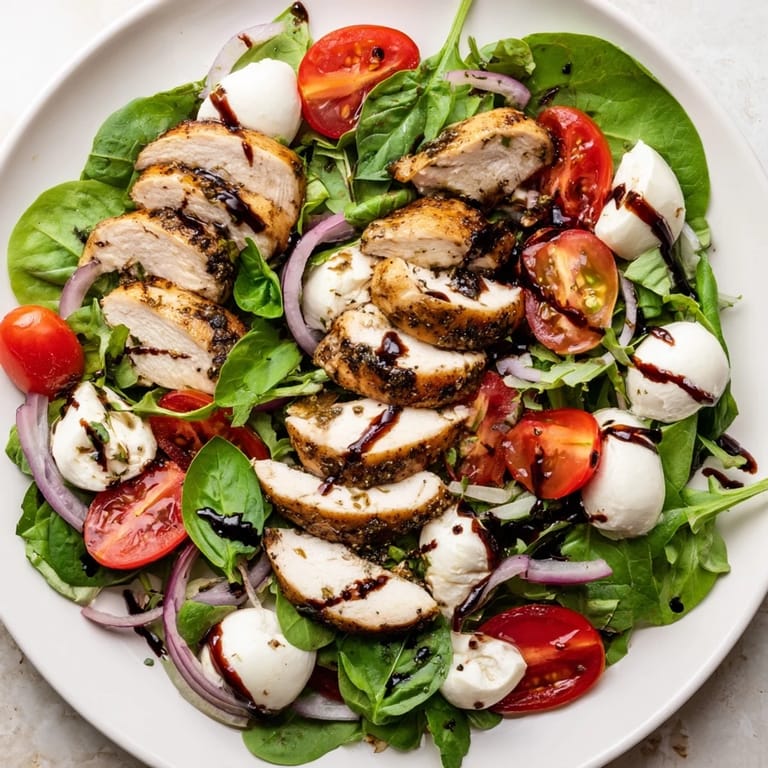
- Spread your mixed greens across a large platter or divide them among serving plates. This is your canvas, so arrange them loosely enough that there's room for everything else.
- Layer everything:
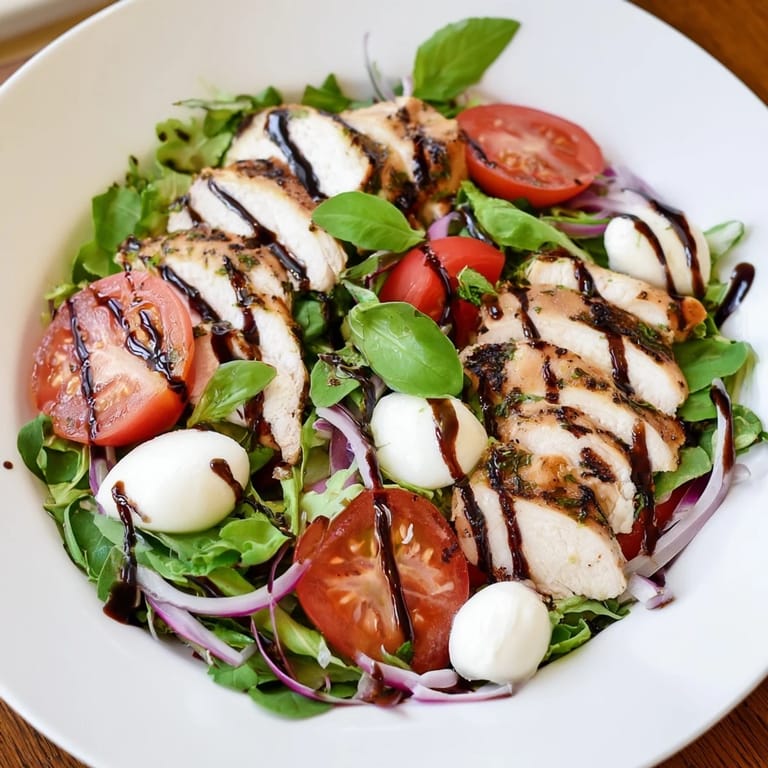
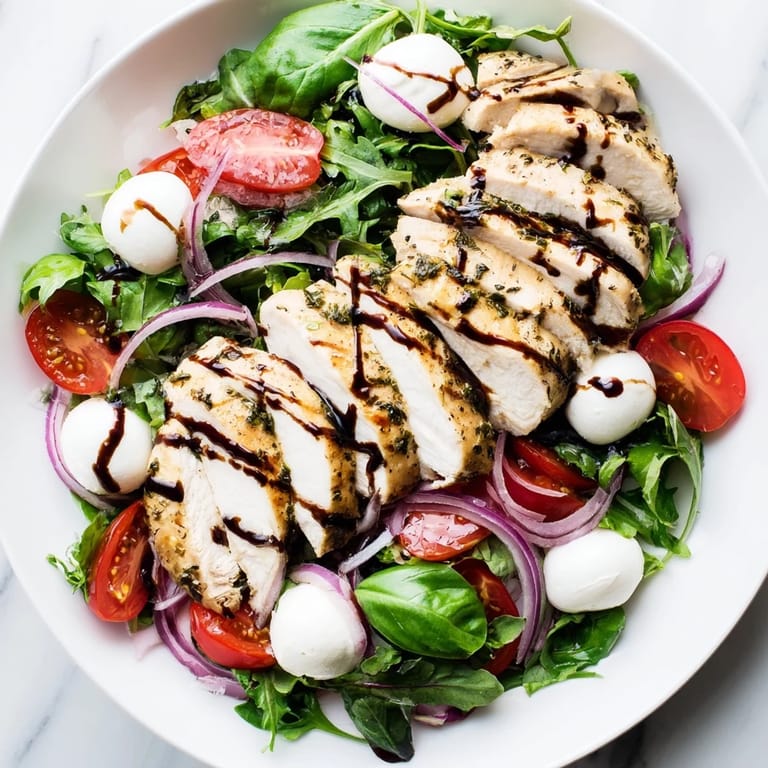
- Scatter the sliced tomatoes, mozzarella slices, cherry tomato halves, and red onion over the greens. Toss the basil leaves on top, keeping some whole for a nicer presentation.
- Add the chicken:
- Slice the rested chicken thinly at a slight angle, then arrange these slices over the top of the salad in a way that looks intentional.
- Finish with the reduction:
- Drizzle the cooled balsamic reduction over everything just before you serve it. If you drizzle too early, it can pool and make parts of the salad soggy.
 Save
Save I remember my neighbor tasting this for the first time and saying it reminded her of a restaurant she visited in Italy thirty years ago. She came over just for leftovers the next day. There's something about sharing food that tastes like travel and memory that makes you realize cooking is really just a form of love.
The Secret of Ripe Tomatoes
The reason this salad works so well comes down to one thing: the tomatoes. I spent years making salads with whatever tomatoes were available, and they were always fine, but never special. Then I started buying tomatoes only when they were actually red and soft to a gentle squeeze, and suddenly everything changed. A ripe tomato brings its own sweetness and juice, which means you don't need a heavy dressing to make the salad taste alive. That's the entire point of Caprese—letting each ingredient shine without fussing.
When to Make This
This is the kind of salad that feels at home at a summer dinner party, a quick weeknight dinner, or even packed up for a picnic. I've made it in spring when the first tomatoes appear at the market, and I've made it at the tail end of summer when you're tired of heavy meals and just want something that feels fresh. The only time it doesn't work is winter, when tomatoes lose their character and taste like crunchy sadness.
Ways to Make It Your Own
The beautiful thing about this salad is how forgiving it is. You can swap ingredients based on what you have or what sounds good on any given day. The base—protein, greens, tomatoes, cheese, balsamic—stays consistent, but everything else is negotiable. I've added avocado when I had one, tossed in roasted vegetables, used different types of mozzarella. One time I made it with leftover rotisserie chicken on a Tuesday night just because I was tired of cooking, and it was somehow even better because I could focus on the fresh components.
- Rotisserie chicken from the store is a legitimate shortcut when you're short on time.
- A handful of pine nuts or toasted almonds adds crunch and richness if you want more texture.
- If you have fresh oregano or basil on hand, definitely use it instead of the dried herbs—the difference is noticeable.
 Save
Save This salad has become my go-to when I want to feed people something that feels special without stress. It's one of those recipes that reminds me why I love cooking in the first place.
Recipe FAQs
- → What herbs enhance the chicken flavor?
Dried Italian herbs such as oregano and basil, along with garlic powder, add depth and aroma to the grilled chicken.
- → How is the balsamic reduction prepared?
Simmer balsamic vinegar with honey over low heat until syrupy, then cool slightly before drizzling on the salad.
- → Can I substitute the chicken with another protein?
Yes, rotisserie or leftover chicken can be used for convenience without compromising flavor.
- → What kind of greens work best for this dish?
A mix of arugula, spinach, and romaine adds a fresh, crisp base complementing the main ingredients.
- → Is this dish suitable for gluten-free diets?
Yes, it contains no gluten ingredients, but it's important to verify that cheese and dressings are gluten-free as packaged.