 Save
Save My first maklouba moment came on a crowded kitchen counter in Amman, watching my neighbor Fatima work with such calm precision—rice soaking, vegetables frying in careful batches, chicken simmering in that unmistakable blend of cumin and cinnamon. She explained it wasn't just about the flavors layering together; it was about the drama of the inversion, that beautiful reversal that turns everything into something unified and gorgeous. I've made it dozens of times since, and each time that pot gets flipped, there's still that same small thrill.
I remember making this for a dinner party where everything felt chaotic until that moment when I inverted the pot and heard the soft whoosh of the entire dish settling onto the platter intact. My friend Sarah actually clapped, which felt ridiculous and perfect at once. It was the first time I understood that maklouba isn't intimidating—it's just patient, methodical cooking that rewards you with theater.
Ingredients
- Bone-in chicken pieces (1.2 kg): The bones add serious flavor to your broth and keep the meat tender during the long cook.
- Basmati rice (2 cups): Soak it to release starch—this prevents it from turning into mush and keeps grains separate and delicate.
- Cauliflower florets and potato slices: These fry until golden and crispy, creating the structural foundation and textural contrast your maklouba needs.
- Onion (1 large): Sauté it until soft to build the flavor base that holds everything together.
- Spice blend (cumin, coriander, cinnamon, turmeric, allspice, cardamom, bay leaves): This isn't negotiable—it's the soul of the dish, so don't skip or substitute.
- Chicken stock (5 cups): Use homemade if you can, but a good quality store-bought broth works fine too.
- Pine nuts or almonds (¼ cup, toasted): These add richness and crunch as a final flourish.
Tired of Takeout? 🥡
Get 10 meals you can make faster than delivery arrives. Seriously.
One email. No spam. Unsubscribe anytime.
Instructions
- Soak the Rice:
- Rinse your rice under cold running water until the water runs clear, then soak it with salt for 30 minutes. This step matters more than you'd think—it keeps each grain distinct and prevents sticking.
- Brown the Chicken:
- Heat olive oil in your pot over medium-high heat, season chicken generously with salt and pepper, and brown it on all sides until deeply golden (about 6 minutes). This isn't rushed; you're building flavor.
- Build the Broth:
- In the same pot, soften your onions, then add all your spices and stir for just 1 minute to wake them up. Return the chicken, add your stock, bring to a boil, then simmer gently for 20 minutes.
- Fry the Vegetables:
- While chicken simmers, heat vegetable oil in a separate pan and fry cauliflower florets and potato slices in batches until they're golden and crispy. Drain them on paper towels so they stay crisp.
- Layer with Intent:
- In a large heavy-bottomed pot, start with a layer of fried potatoes on the bottom, then chicken pieces, then cauliflower, and finally your drained rice on top. Press down gently—you're creating structure, not flattening it.
- Add Broth and Cook:
- Pour enough reserved broth to just cover the rice, place over medium heat, and when you see bubbles at the edges, cover tightly and reduce to low. Cook for 35–40 minutes without peeking—the steam is doing all the work.
- Rest and Invert:
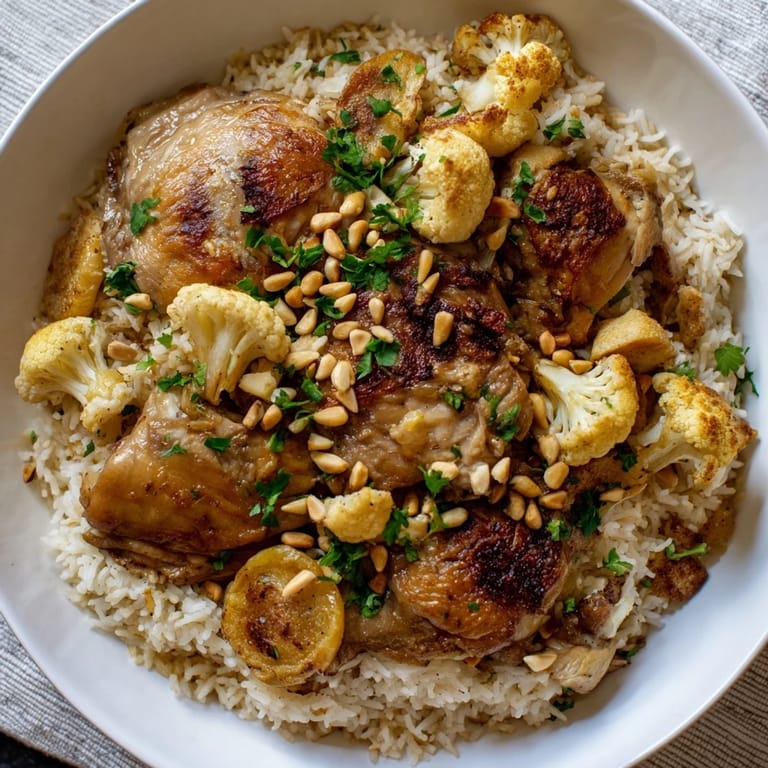
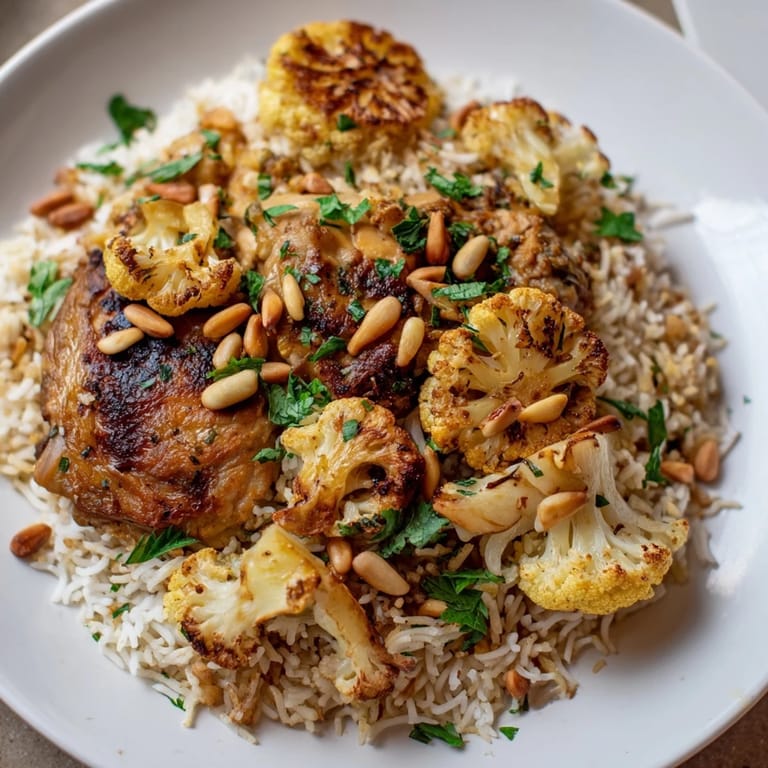
- Turn off heat and let it rest for 10–15 minutes, which helps everything relax and hold together. Then place a large platter over the pot and invert it with one confident motion, lifting away the pot to reveal your beautiful, intact maklouba.
- Finish and Serve:
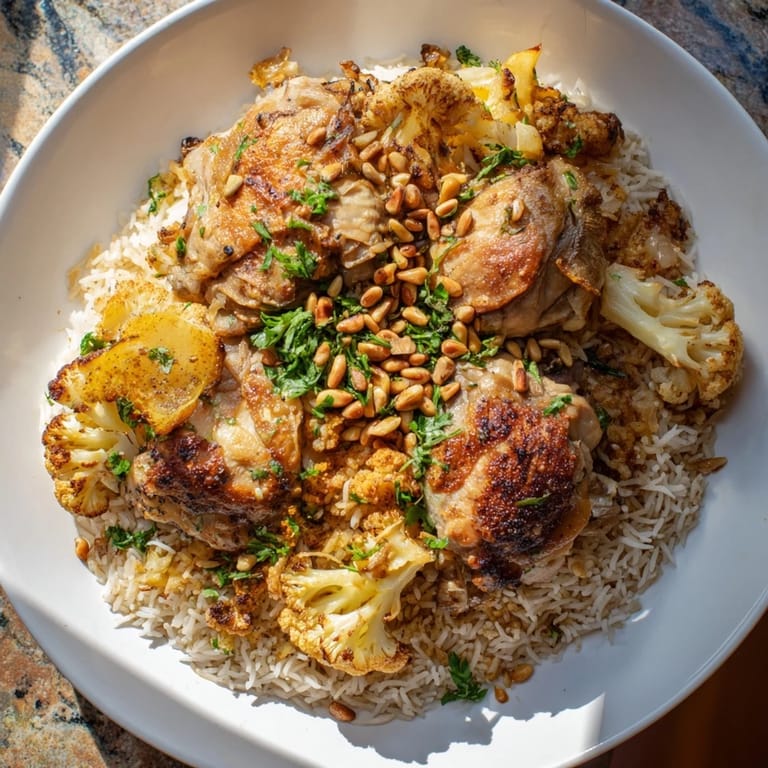
- Scatter toasted nuts and fresh parsley over the top, and serve hot with yogurt or a crisp salad alongside.
 Save
Save There's something almost sacred about maklouba, the way it brings people around a table who might not otherwise sit together. I watched my aunt fold her hands and smile when someone asked for thirds, and realized this dish isn't performance—it's care in edible form.
The Drama of the Inversion
That moment when you flip the pot is what everyone remembers, but it only works because you've been methodical about everything before it. The potatoes crisp while the chicken cooks, the spices unfold slowly in the broth, and by the time you're ready to invert, every element is exactly where it needs to be. The platter should be larger than your pot—this gives you room to catch the dish if it needs a gentle nudge.
Playing with Layers
Some cooks add eggplant or carrots to their maklouba, and there's no single right way here. I've tried both and they work beautifully, each adding their own texture and sweetness. The potato-cauliflower combination is the classic backbone, but if you want to experiment, fry your additions the same way and layer them anywhere except the very top—that's where your rice should finish.
Beyond the Main Course
Maklouba is assertive enough that it doesn't need much accompaniment, but it's better with some contrast. I always serve it with a thick yogurt (spooned on the side, not mixed in), a sharp tomato salad, or even a simple cucumber and mint combination that cuts through the richness. Leftovers actually improve by the next day; the flavors meld deeper, and you can either warm it gently in the oven or eat it at room temperature.
- Make sure your platter is warm before you invert—a cold platter can cause the bottom layer to stick.
- If you're nervous about the inversion, a thin metal cake server slipped around the edges can help coax everything onto the platter.
- This dish feeds six generously, but scale it carefully if you're making more—timing gets trickier in larger quantities.
 Save
Save Maklouba teaches you patience in the best way, rewarding you with a dish that's both rustic and elegant. Make it once, and you'll make it again.
Recipe FAQs
- → What spices are used to flavor the dish?
The dish features a blend of ground cumin, coriander, cinnamon, turmeric, allspice, cardamom, and bay leaves, creating a warm, aromatic profile.
- → How is the layered structure formed?
Potato slices are placed at the bottom of the pot, followed by browned chicken pieces, fried cauliflower, and finally soaked basmati rice layered on top before cooking.
- → What cooking method is used for the chicken and rice?
The chicken is first browned and simmered briefly in spiced stock, then layered with rice and vegetables and cooked covered until the liquid is absorbed and flavors meld.
- → Can this dish be made vegetarian?
Yes, simply omit the chicken and use vegetable broth instead to maintain the rich flavor and layering method.
- → What garnishes enhance the dish?
Toasted pine nuts or slivered almonds and chopped fresh parsley add texture and brightness when sprinkled on top.