 Save
Save The first time I tasted majboos, I was standing in a cramped spice market in Doha, watching a vendor's hands move with practiced precision as he wrapped black limes in newspaper. He explained how this one dish—meat, rice, and aromatics layered with intention—could feed a family and still taste like someone had spent all day on it. I left that market determined to recreate it, and what I discovered was that majboos isn't just food; it's the sound of sizzling onions, the smell of cardamom and cinnamon colliding in steam, and the quiet satisfaction of a perfect bite where the rice has absorbed every drop of spiced broth.
I made this for my neighbor last winter, and she arrived just as I was drizzling saffron water over the rice—the kitchen was so thick with cinnamon and cardamom steam that she could barely see across the room. When we opened the pot fifteen minutes later, the aroma hit us both at once, and she laughed and said it smelled like a memory she didn't know she had. That's when I understood majboos isn't about technique; it's about generosity and how certain flavors can reach people in ways words can't.
Ingredients
- Lamb, bone-in: Choose meat with visible bone marrow and fat; it deepens the broth as everything cooks together and gives you something to hold while eating.
- Basmati rice, rinsed and soaked: Soaking matters more than you'd think—it prevents mushiness and lets each grain stay distinct even after absorbing all that flavor.
- Onions, thinly sliced: The foundation of everything; cook them until they're mahogany-brown and almost jammy, which takes patience but builds the whole flavor base.
- Ground coriander: The quiet backbone that makes people ask what spice they're tasting; don't skip it.
- Ground cumin: Earthy and warm, it grounds the sweeter spices and keeps the dish from feeling too floral.
- Ground turmeric: A pinch of color and a whisper of earthiness; it ties everything together.
- Ground cinnamon: Sweet and deep, it's the spice that makes people pause mid-bite and wonder what they're eating.
- Ground cardamom: Aromatic and slightly floral; this is where the dish gets its soul, so don't be shy with it.
- Ground cloves: Just a touch, because cloves are bold; too much and they overpower, but just right and they add complexity.
- Dried black limes (loomi), pierced: The secret weapon—tart and funky in the best way, they add a flavor you can't replicate with regular limes.
- Bay leaves: These simmer in the broth and give it a subtle herbal note without announcing themselves.
- Saffron threads, soaked: The final flourish that smells like luxury and adds a golden hue; soak it in warm water first so it releases its color and flavor.
- Ghee or vegetable oil: Ghee gives it richness and a slightly nutty taste, but any oil works if that's what you have.
- Water or chicken stock: Stock makes it deeper, but water lets the spices shine through without competing flavors.
- Toasted slivered almonds: Toast them yourself if you can; the moment they go golden is the moment they become something special.
- Fresh cilantro: The bright finish that cuts through all the richness and reminds you that you're eating something alive and fresh.
Tired of Takeout? 🥡
Get 10 meals you can make faster than delivery arrives. Seriously.
One email. No spam. Unsubscribe anytime.
Instructions
- Season your meat and gather everything:
- Toss the lamb pieces with salt and pepper, and lay out all your spices where you can see them. This moment of readiness is half the battle.
- Build the onion foundation:
- Heat ghee over medium heat and add the sliced onions, then let them go golden and caramelized—this takes about ten minutes, and resisting the urge to rush is key. You're not cooking onions; you're coaxing out their sweetness.
- Wake up the aromatics:
- Add garlic and green chilies to the golden onions and cook for just a minute—long enough to smell how the garlic softens but not so long that it burns.
- Brown the meat:
- Nestle the lamb pieces into the onion mixture and let them sit undisturbed for a few minutes before stirring, so they get a crust. This browning matters; it seals in the flavor.
- Let the tomatoes break down:
- Add chopped tomatoes and let them soften and lose their shape into the pot, about five minutes—they'll add acidity that balances all the richness.
- Announce the spices:
- Stir in all the ground spices, black limes, and bay leaves, and watch the pot come alive with aroma. This is the moment the dish announces itself.
- Simmer the meat tender:
- Pour in water or stock, bring everything to a boil, then reduce heat and cover. Simmer for forty-five to fifty minutes until the lamb is so tender it nearly falls apart when you touch it with a spoon.
- Prepare the rice layer:
- Remove the cooked lamb pieces with a slotted spoon and set them aside, then add the drained rice to the spiced broth and stir gently so each grain gets coated.
- Reunite meat and rice:
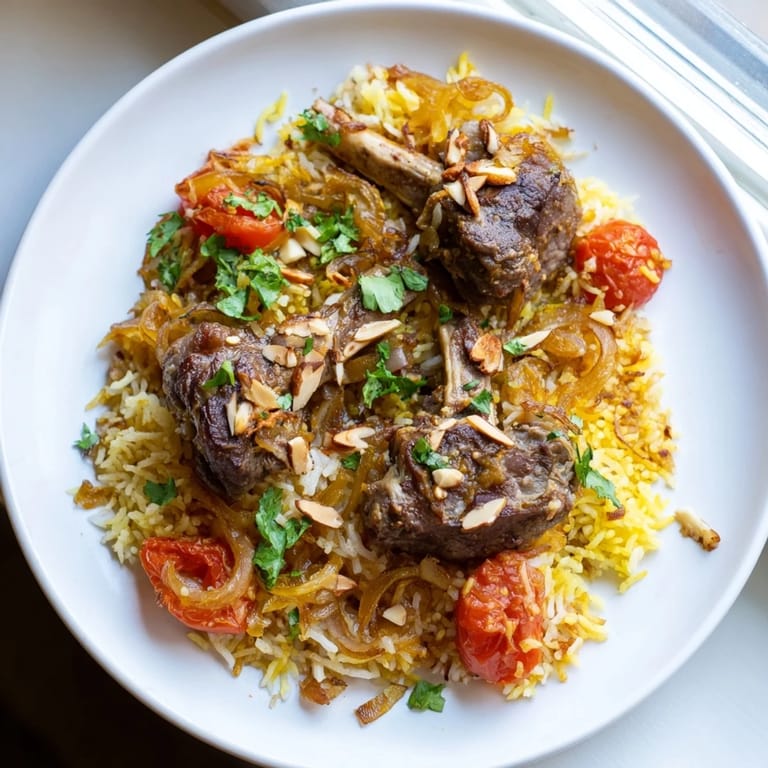
- Arrange the lamb pieces back on top of the rice, then drizzle the golden saffron water across everything—this is where the dish becomes a portrait.
- Let it finish quietly:
- Cover the pot tightly, reduce heat to low, and let it cook for twenty-five to thirty minutes while you sit nearby and listen. The rice will absorb the last of the liquid, and the kitchen will smell like something you want to remember forever.
- Rest and reveal:
- Remove from heat and let it sit covered for ten minutes—this final rest lets everything settle and finish cooking gently. When you lift the lid, the aroma will be your reward.
- Present with care:
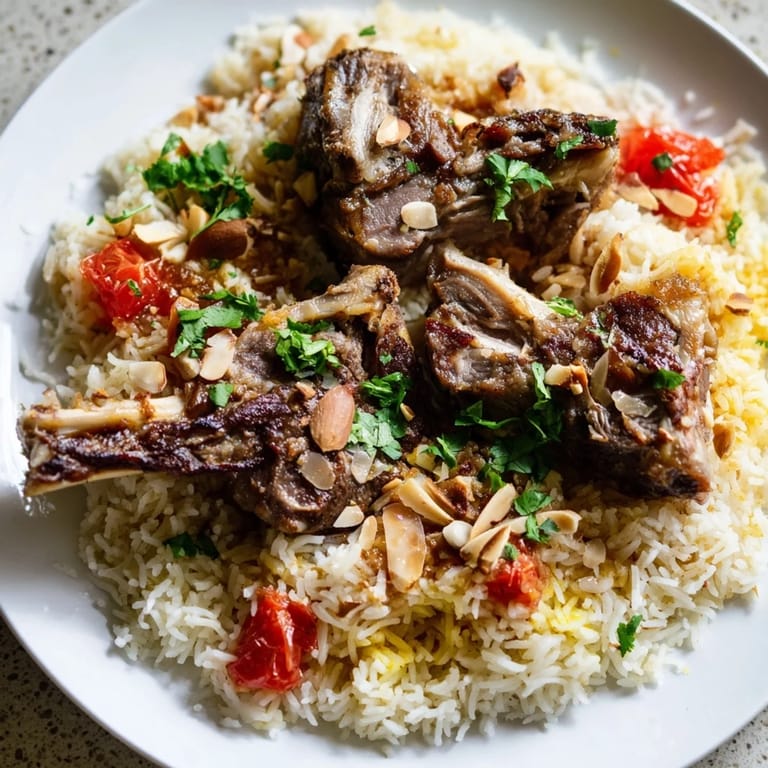
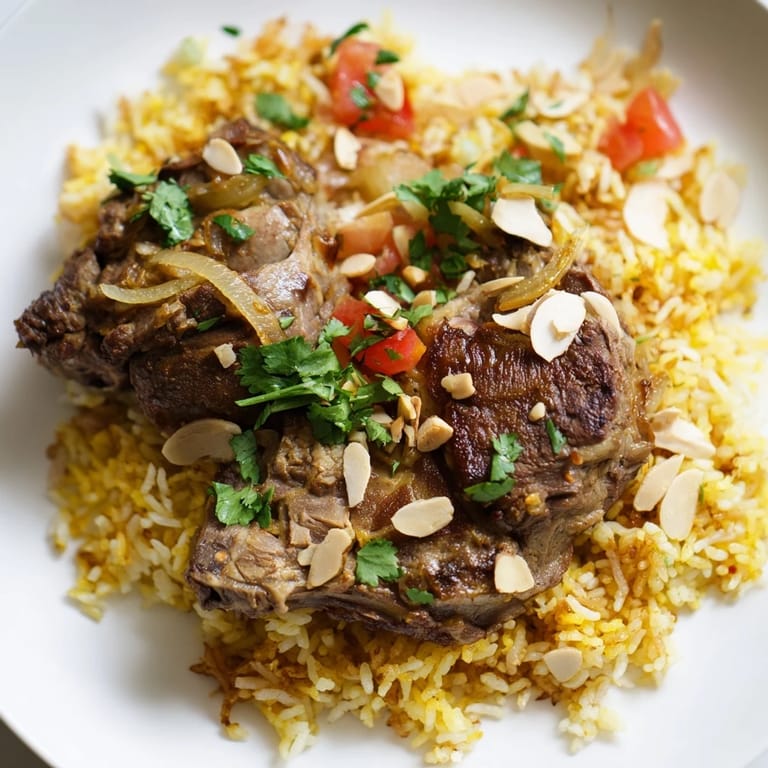
- Gently fluff the rice with a fork, arrange the lamb on a platter surrounded by rice, and scatter toasted almonds and cilantro across the top like you're adding the final brushstrokes to a painting.
 Save
Save My mother asked me why I bothered making majboos when we could order it, and I didn't know how to explain that the point isn't perfection—it's the ritual of layering flavors, the quiet confidence of knowing exactly when the meat is done, and the moment someone takes their first bite and their eyes close without them meaning to. That's when cooking becomes communion.
The Story of Black Limes
Black limes are not a shortcut; they're a statement. These wrinkled, almost charred-looking fruits are sun-dried limes that develop a funk and tartness impossible to replicate with fresh juice. In Middle Eastern kitchens, they're non-negotiable, and once you taste what they do to a broth—adding depth and a faint earthiness that makes people wonder what they're eating—you'll understand why. If your grocery store doesn't stock them, check specialty Middle Eastern markets or order online; they keep for months and will transform not just this dish but your entire spice repertoire.
Why This Dish Matters
Majboos isn't fancy or complicated, but it carries weight in Qatari culture because it's the dish families gather around, the meal that marks occasions and everyday Thursday dinners alike. What makes it special isn't any single ingredient but how they come together—how the spices don't compete but harmonize, how the meat becomes part of the rice instead of sitting on top of it, how something made from simple ingredients can taste this intentional. When you cook majboos, you're not just following steps; you're honoring a tradition of generosity and flavor that stretches across generations and borders.
Variations and Flexibility
While traditional majboos uses lamb, chicken works beautifully and cooks faster—reduce the simmering time to about thirty minutes for bone-in chicken pieces. Some cooks add a handful of raisins or dried fruit for sweetness, or a touch of pomegranate molasses for tang; there's room to make this dish yours without betraying its essence.
- If you can't find black limes, a strip of lemon zest added at the end won't replicate them but will add brightness.
- Serve majboos with cooling sides like yogurt, fresh salad, or a simple tomato sauce for heat—these balance the richness.
- Leftover majboos tastes even better the next day; reheat gently on the stovetop with a splash of water so the rice doesn't dry out.
 Save
Save Majboos is one of those dishes that reminds you why cooking matters—it transforms simple things into something that nourishes both body and memory. Make it once, and you'll want to make it again.
Recipe FAQs
- → What type of meat works best for Majboos?
Bone-in lamb pieces are traditional and add rich flavor, but chicken can be used as a lighter alternative.
- → How is the basmati rice prepared?
The basmati rice is rinsed and soaked for about 30 minutes to ensure fluffiness and even cooking.
- → What spices are essential for authentic flavor?
Ground coriander, cumin, turmeric, cinnamon, cardamom, cloves, and dried black limes (loomi) create the signature aromatic profile.
- → Can the dish be made spicier?
Yes, adding green chilies during cooking provides a mild heat that can be adjusted to taste.
- → What is the role of saffron in this dish?
Saffron threads soaked in warm water add subtle color and a delicate fragrance when drizzled over the rice before final cooking.