 Save
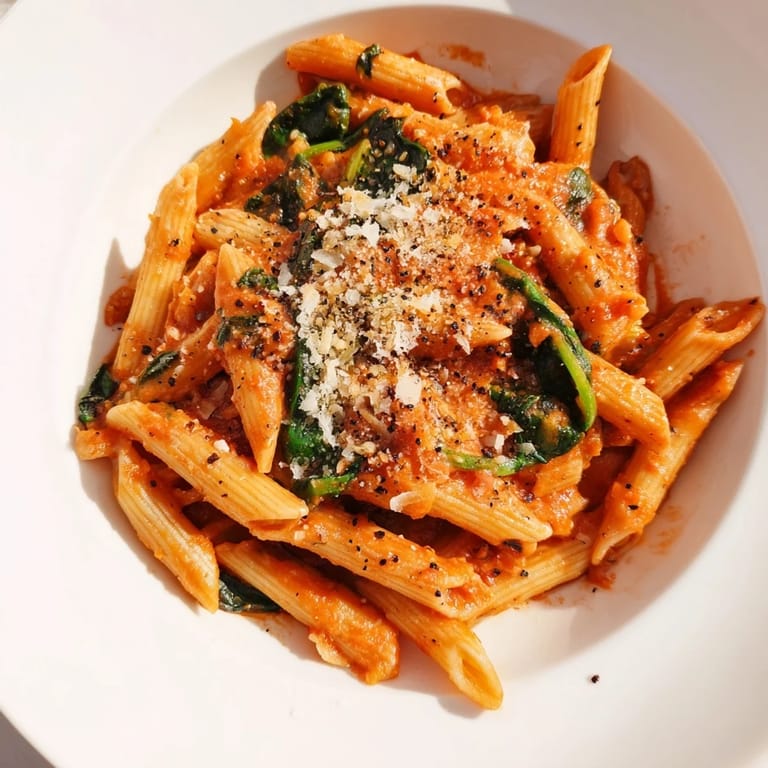
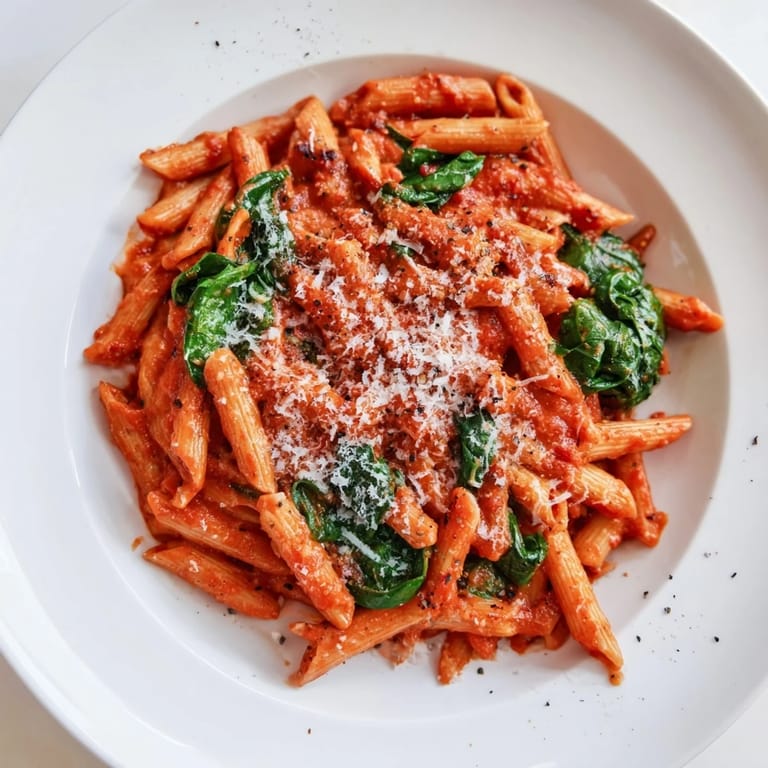
Save There's something about a Tuesday night when you realize dinner needs to be on the table in twenty minutes and your fridge is already telling you what's possible. I grabbed a jar of marinara from the pantry, noticed the bunch of spinach getting that urgent look it gets before it wilts, and suddenly had one of those meals that feels both intentional and completely improvised. The kind where you're not overthinking it, just cooking with what's in front of you and somehow everything comes together better than planned.
I made this for my roommate once when she came home exhausted from back-to-back meetings, and I remember her taking that first bite and just closing her eyes for a second. She didn't say much, just ate quietly while we sat at the counter, and somehow that felt like the highest compliment a quick weeknight dinner could get.
Ingredients
- Spaghetti or penne, 12 oz: The shape honestly doesn't matter much, but I've learned that penne holds onto the sauce a little better if you're the type who likes every bite to have flavor.
- Salt for pasta water: Don't skip seasoning the water—it's your only real chance to build flavor into the pasta itself.
- Olive oil, 2 tbsp: Good enough to taste, not so fancy that you're worried about heating it.
- Garlic, 3 cloves minced: That thirty-second sauté is the whole foundation; you'll smell when it's right.
- Marinara sauce, one 24 oz jar: Pick one you'd actually eat straight from the jar—that's your baseline.
- Fresh baby spinach, 5 oz: It wilts down to almost nothing, so don't be shy with how much you pile in.
- Red pepper flakes, 1/2 tsp optional: I use them most times because that little warmth changes everything, but skip them if heat isn't your thing.
- Black pepper and Parmesan, 1/4 cup: Fresh pepper matters more here than you'd think, and real Parmesan makes the difference worth the small effort.
- Fresh basil optional: A handful torn at the end feels like finishing a painting, even if it's technically optional.
Tired of Takeout? 🥡
Get 10 meals you can make faster than delivery arrives. Seriously.
One email. No spam. Unsubscribe anytime.
Instructions
- Get your water boiling:
- Fill a large pot with water, salt it generously so it tastes like the sea, and let it come to a rolling boil while you do everything else. This is your timer in a way—by the time the water's ready, you're ready.
- Cook the pasta:
- Follow the package directions but taste it a minute or two before the time says to; al dente means you still feel a tiny bit of resistance when you bite down. Scoop out 1/2 cup of that starchy water before you drain—it becomes your secret ingredient for silky sauce.
- Wake up the garlic:
- Heat olive oil in a large skillet over medium heat until it shimmers, then add your minced garlic and listen for it to start crackling. Thirty seconds and you'll smell it, and that smell is your signal—any longer and it gets bitter and disappointed.
- Build the sauce:
- Pour in the marinara and let it come to a gentle simmer, where little bubbles break the surface but it's not aggressively boiling. Add red pepper flakes now if you're using them, stirring them in so they release their warmth into the oil.
- Wilt the spinach:
- Push all that fresh spinach into the hot sauce and stir constantly for two or three minutes—it goes from an impossible pile to something that actually fits in your pan. You're done when there's no green resistance left, just wilted leaves folded into red sauce.
- Bring it all together:
- Add your drained pasta to the skillet and toss everything until the pasta is coated and warm. If it looks too thick, splash in a little of that reserved pasta water—just enough to give everything a slight shine and make sure the pasta can move freely.
- Finish with intention:
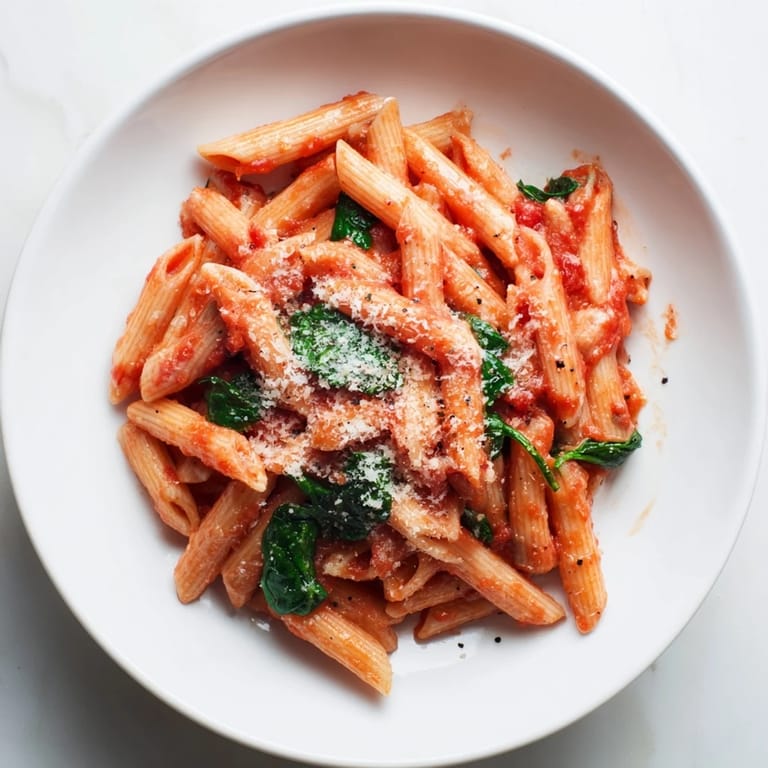
- Stir in the Parmesan, crack black pepper over the top, and taste it. Adjust seasoning however feels right to you, then serve immediately while everything's still steaming.
 Save
Save There's a moment when fresh spinach first hits hot sauce where it looks like you've made a mistake—everything seems crowded and impossible—but then it becomes manageable and then beautiful. That's when I realized this dish is actually about trust, about knowing that things work out if you let them.
The Pasta Water Secret
I used to wonder why restaurant pasta always looked silkier and more finished than mine, until someone explained that starchy pasta water is basically edible gold in the kitchen. It sounds silly until you see how a splash transforms thick sauce into something that clings to every strand and tastes more cohesive. Now I treat that water like the ingredient it actually is, never draining it away without saving some first.
Making It Your Own
The beauty of this dish is that it's a starting point, not a rule book. I've added white beans on nights when I needed more substance, thrown in sautéed mushrooms when I had them, stirred in a handful of cherry tomatoes for brightness. The marinara is stable enough to handle additions without falling apart, which means you get to be creative within something that still feels manageable and quick.
Why This Works on Busy Nights
This is the meal I make when I have twenty minutes and need something that tastes intentional, not desperate. The combination of jarred sauce and fresh spinach means you're not choosing between quick and good—you're getting both, which is maybe the whole point of learning to cook well. There's something freeing about a dish this straightforward, because you can focus on technique and presence instead of complexity.
- Keep a good jar of marinara in your pantry and fresh spinach becomes a meal, not just salad ingredients.
- The difference between this tasting rushed and tasting cared-for is often just remembering to taste and season at the end.
- Set the table while the pasta cooks—it makes the whole experience feel less like dinner and more like a moment you're actually present for.
 Save
Save This pasta is proof that the best meals sometimes arrive not from complexity but from knowing exactly what you have and trusting it. Make it tonight when you're tired, or make it next Tuesday when you need something warm.
Recipe FAQs
- → Can I use fresh tomatoes instead of marinara sauce?
Yes, fresh tomatoes can be simmered down with garlic and olive oil to create a homemade sauce, but it will take longer to prepare and yield a different flavor profile.
- → What type of pasta works best with this dish?
Spaghetti or penne are ideal choices as they hold the sauce well, but any pasta shape you prefer can be used.
- → How can I make the dish spicier?
Adding more red pepper flakes during the sauce simmering step increases heat. Fresh chili peppers can also be added for stronger spice.
- → Is it possible to prepare this dish vegan?
Omit the Parmesan cheese or substitute it with a plant-based alternative to keep it vegan without sacrificing flavor.
- → How do I prevent the pasta from sticking when mixing with the sauce?
Reserving some pasta cooking water and adding it gradually to the sauce helps loosen it, allowing even coating and preventing sticking.
- → What are some good protein additions?
Cooked white beans or sautéed mushrooms are great protein boosters that blend well with marinara and spinach flavors.