 Save
Save The kitchen smelled like sunshine and salt the afternoon I burned my first pot of tomato soup to the bottom because I was too busy trimming basil on the windowsill. I learned two things that day: never walk away from a simmering pot, and fresh pesto can rescue almost anything. This tomato soup with its bright green swirl became my go-to whenever I needed something that felt like a hug in a bowl. It's simple, forgiving, and tastes like you spent all day in the kitchen even when you didn't.
I made this for my neighbor once when she was stuck at home with a cold, and she called me two hours later just to ask for the recipe. She said it reminded her of her grandmother's kitchen in Tuscany, which felt like the highest compliment I'd ever received. Since then, I've made it for friends, for myself on rainy evenings, and once for a small dinner party where it disappeared faster than the main course. There's something deeply satisfying about watching people take that first spoonful and pause, eyes widening just a little.
Ingredients
- Olive oil: Use a decent quality oil here, it forms the base of your soup and carries all the flavors forward, nothing fancy, just good and fruity.
- Onion: Finely chopped onion melts into the soup and adds natural sweetness, don't skip the slow softening step or you'll taste the sharpness later.
- Garlic cloves: Freshly minced garlic gives the soup warmth and depth, let it cook just until fragrant or it turns bitter.
- Ripe tomatoes: Fresh is beautiful in summer, but canned whole peeled tomatoes work year-round and sometimes taste even richer.
- Tomato paste: This little dollop intensifies the tomato flavor and adds body, it's the secret to a soup that doesn't taste watery.
- Vegetable broth: Homemade or store-bought both work, just taste it first because some are saltier than others.
- Sugar: A single teaspoon balances the acidity of the tomatoes without making the soup taste sweet.
- Salt and black pepper: Season as you go and adjust at the end, every tomato batch tastes a little different.
- Heavy cream: Stirred in at the end, it makes the soup silky and rich, but you can swap it for coconut cream if you prefer.
- Fresh basil leaves: The star of the pesto, use bright green leaves and avoid any that are bruised or wilted.
- Pine nuts: They blend into a creamy, nutty paste, but walnuts or cashews work beautifully too if that's what you have.
- Parmesan cheese: Adds salty, umami depth to the pesto, grate it fresh for the best texture and flavor.
- Extra virgin olive oil: This is where you use the good stuff, it makes the pesto glossy and fragrant.
Tired of Takeout? 🥡
Get 10 meals you can make faster than delivery arrives. Seriously.
One email. No spam. Unsubscribe anytime.
Instructions
- Soften the onion:
- Heat olive oil in a large pot over medium heat and add the finely chopped onion, stirring occasionally until it turns soft and translucent, about five minutes. You want it sweet and tender, not browned or crispy.
- Wake up the garlic:
- Stir in the minced garlic and let it cook for just one minute, until the kitchen smells amazing and the garlic is fragrant. Any longer and it will taste sharp and burnt.
- Build the tomato base:
- Add the chopped tomatoes and tomato paste, stirring everything together and letting it cook for five minutes. The tomatoes will start to break down and the paste will deepen in color, creating a rich foundation.
- Simmer the soup:
- Pour in the vegetable broth and add the sugar, salt, and pepper, then bring the pot to a boil before reducing the heat to a gentle simmer. Let it bubble away uncovered for twenty minutes, stirring occasionally and letting all the flavors meld together.
- Blend the pesto:
- While the soup simmers, toss basil, pine nuts, garlic, and Parmesan into a food processor and pulse until finely chopped. Drizzle in the olive oil with the motor running until the pesto is smooth and vibrant green, then season with a pinch of salt.
- Make it silky:
- Once the soup has simmered, use an immersion blender to puree it until completely smooth, or carefully transfer it in batches to a countertop blender. Be cautious with hot liquids and blend until there are no chunks left.
- Finish with cream:
- Stir in the heavy cream and taste the soup, adjusting the salt and pepper if needed. Warm it through gently but don't let it boil, or the cream might separate.
- Swirl and serve:
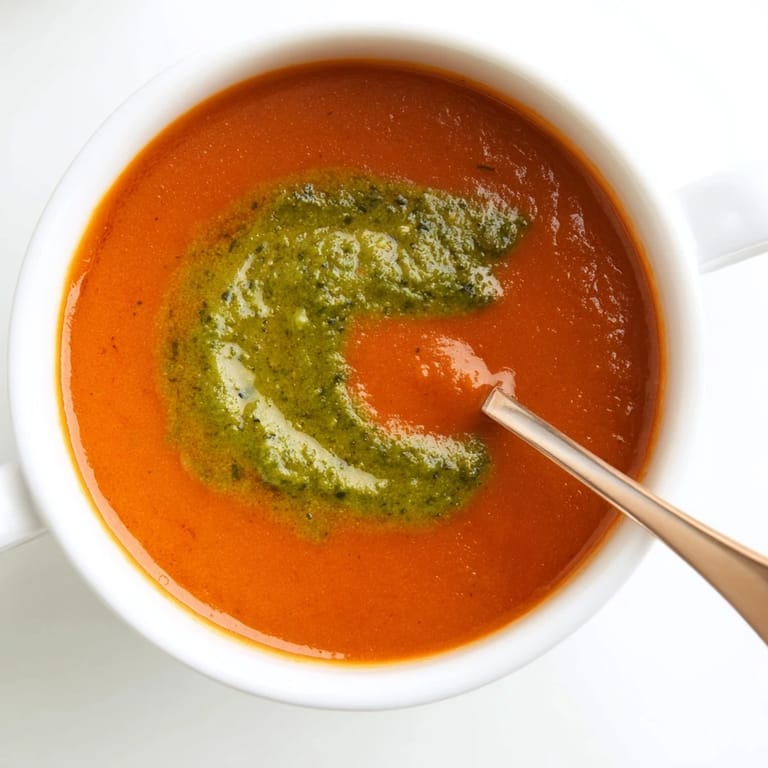
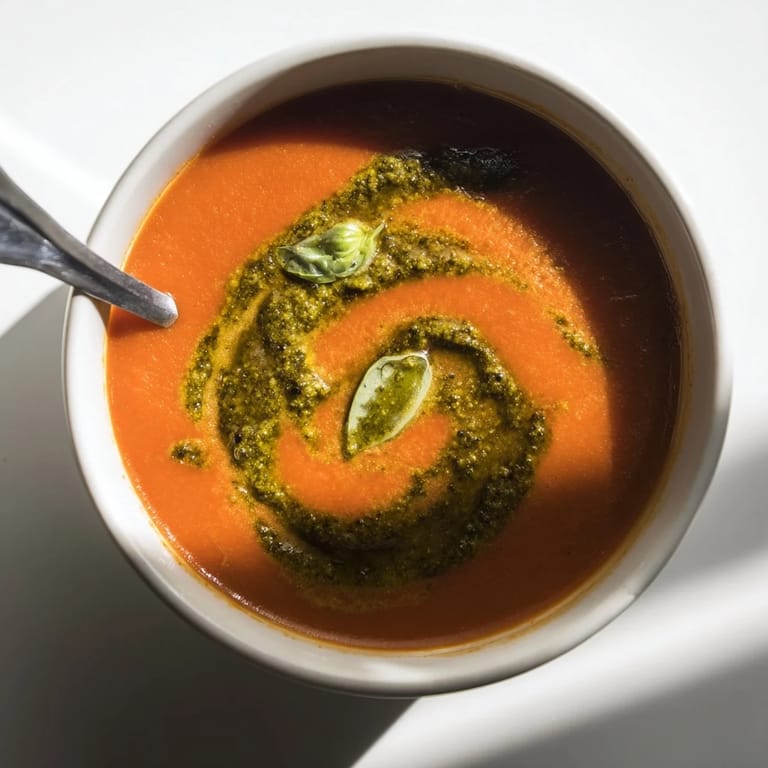
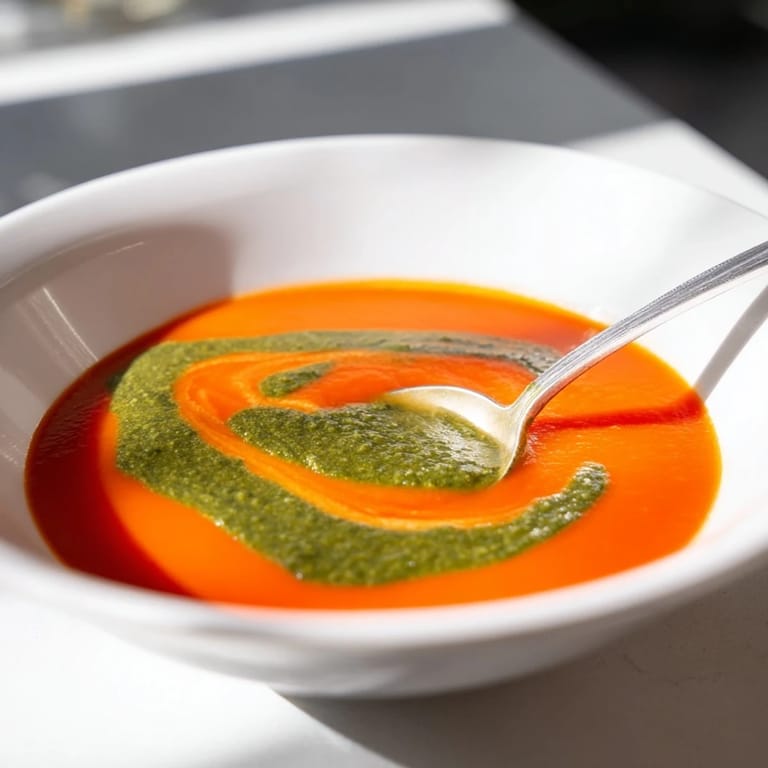
- Ladle the hot soup into bowls and drizzle each one with a generous swirl of basil pesto. Serve immediately while it's steaming and fragrant.
 Save
Save One winter evening, I served this soup to a friend who'd just moved across the country and was feeling unmoored. She didn't say much, just ate two bowls and sat quietly by the window with her hands wrapped around the third. Later she told me it was the first time in weeks she'd felt at home anywhere. That's when I realized this soup wasn't just about tomatoes and basil, it was about warmth, presence, and the small comfort of something made with care.
Serving Suggestions
This soup begs for something crunchy and carb-loaded on the side. I love pairing it with thick slices of toasted sourdough brushed with olive oil and rubbed with garlic, or a classic grilled cheese sandwich with sharp cheddar that gets all melty and golden. If you want to keep it lighter, a simple green salad with lemon vinaigrette cuts through the richness beautifully. Sometimes I'll add a sprinkle of chili flakes on top for a little heat, or tear extra basil leaves over the pesto swirl for color and freshness.
Storage and Reheating
The soup keeps well in the fridge for up to four days in an airtight container, and it actually tastes even better the next day when the flavors have had time to deepen. Reheat it gently on the stove over low heat, stirring occasionally, and add a splash of broth or water if it's thickened too much. I recommend storing the pesto separately in a small jar with a thin layer of olive oil on top to keep it bright green. Frozen soup lasts up to three months, though I prefer to freeze it before adding the cream and stir that in fresh when reheating.
Variations and Swaps
You can make this soup vegan by swapping the heavy cream for coconut cream or cashew cream, and using nutritional yeast or vegan Parmesan in the pesto. If you're out of pine nuts, walnuts add an earthy richness and cashews make it creamier and milder. For a smokier flavor, roast the tomatoes in the oven with garlic before adding them to the pot. I've also stirred in white beans or cooked orzo to make it more filling, and once I added a spoonful of miso paste at the end which gave it an unexpected umami boost.
- Try adding roasted red peppers for sweetness and a deeper color.
- Stir in a handful of spinach or kale at the end for extra greens.
- Top with crispy croutons, a drizzle of balsamic glaze, or crumbled feta for texture and tang.
 Save
Save This soup has become my answer to so many moments, the ones that need comfort, celebration, or just something warm and nourishing on a regular Tuesday. I hope it finds a place in your kitchen the way it has in mine.
Recipe FAQs
- → Can I use canned tomatoes instead of fresh?
Absolutely. Two cans (800g) of whole peeled tomatoes work perfectly as a substitute for fresh tomatoes, especially during off-season months. The flavor profile remains equally delicious and comforting.
- → How do I make this soup vegan?
Replace heavy cream with coconut cream for a rich, creamy texture. In the pesto, use a vegan Parmesan alternative or nutritional yeast. The rest of the ingredients are naturally plant-based, making this adaptation straightforward.
- → What's the best way to blend the soup smoothly?
An immersion blender directly in the pot is convenient and creates a silky texture. For a countertop blender, work in batches carefully with hot soup. Be cautious of steam when blending hot liquids.
- → Can I prepare this ahead of time?
Yes, the soup keeps well refrigerated for up to 3 days. Prepare the pesto fresh before serving for optimal color and flavor. Reheat gently on the stovetop, stirring occasionally without boiling.
- → What are good alternatives to pine nuts?
Walnuts and cashews are excellent substitutes that deliver similar richness and texture to the pesto. Adjust quantities slightly based on personal preference for a more robust or mild basil flavor.
- → How can I adjust seasoning if it tastes too acidic?
A pinch of sugar balances acidity naturally. Add gradually and taste between additions. You can also stir in more cream to mellow the tomato flavor, or increase salt slightly to enhance overall depth.