 Save
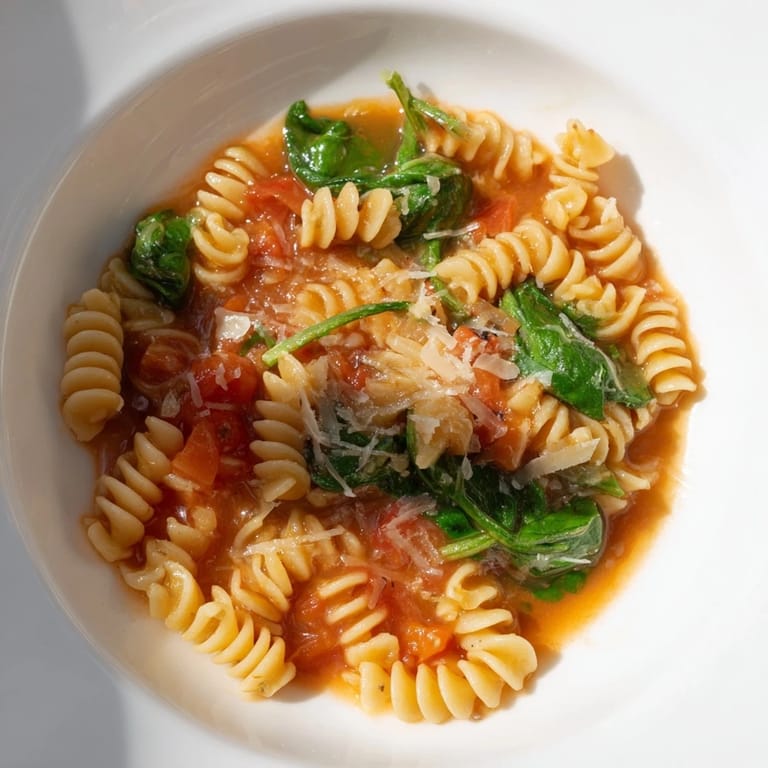
Save My apartment was tiny and my budget even smaller when I discovered the magic of one-pot pasta. The first time I made this, I was skeptical about cooking noodles directly in broth, but watching the starch thicken the liquid into a silky sauce felt like discovering a secret kitchen shortcut. My roommate walked in, drawn by the smell of garlic and tomatoes, and asked if I'd been cooking all afternoon. Little did she know, dinner was ready in under thirty minutes with almost zero cleanup.
Last winter, when my friend Sarah was recovering from surgery and too exhausted to cook, I brought over a steaming pot of this pasta. She took one bite and literally moaned, telling me it tasted like something from a cozy Italian restaurant. We sat at her kitchen table, eating straight from the pot while rain tapped against the window, and she made me promise to write down the recipe before I left. Now it's the meal I make whenever someone needs a little comfort.
Ingredients
- Rotini pasta: The spiral shape captures sauce beautifully in its crevices, and I've found it holds up better than longer pasta shapes when cooked directly in liquid
- Canned diced tomatoes: Use a good quality brand with juices intact, as this forms the base of your sauce and adds essential acidity
- Fresh baby spinach: Add this at the very end so it stays vibrant and tender, overcooking will make it slimy and sad
- Onion and garlic: Finely chopped onion disappears into the sauce while providing sweetness, and minced garlic adds that essential aromatic foundation
- Vegetable broth: This becomes your cooking liquid and sauce, so choose one you actually like drinking on its own
- Dried oregano and basil: These classic Italian herbs bloom in the hot broth, creating that familiar comforting flavor profile
- Olive oil: Start with this to sauté your aromatics, adding richness and helping to carry the flavors throughout the dish
- Crushed red pepper flakes: Even if you're sensitive to heat, just a pinch adds depth and complexity without making it spicy
- Parmesan cheese: Optional but highly recommended, it melts into the finished dish adding salty umami richness
Tired of Takeout? 🥡
Get 10 meals you can make faster than delivery arrives. Seriously.
One email. No spam. Unsubscribe anytime.
Instructions
- Build your flavor foundation:
- Heat olive oil in a large pot or Dutch oven over medium heat, then add your chopped onion and cook for 3 to 4 minutes until it's translucent and fragrant. Stir in the minced garlic and cook for just 1 minute until you can smell it, being careful not to let it brown or it'll turn bitter.
- Create the cooking liquid:
- Pour in the canned diced tomatoes with all their juices along with the vegetable broth, then add the oregano, basil, red pepper flakes if using, and season with salt and pepper. Stir everything together and let it come to a gentle boil, watching as the tomatoes break down slightly and the broth takes on a beautiful reddish hue.
- Cook the pasta directly:
- Once the liquid is boiling, add the uncooked rotini and give it a good stir to ensure all the pasta is submerged. Reduce the heat to medium-low and let it simmer uncovered for 10 to 12 minutes, stirring occasionally to prevent sticking, until the pasta is al dente and most of the liquid has been absorbed by the noodles.
- Add the fresh elements:
- Stir in the fresh baby spinach and cook for just 1 to 2 minutes, watching as it wilts down into the sauce and turns a deep vibrant green. If you're using Parmesan, add it now and stir until it melts into the pasta, creating an incredibly creamy texture.
- Taste and adjust:
- Take a moment to taste your creation and adjust the seasoning if needed, adding more salt, pepper, or red pepper flakes to suit your preferences. Serve hot in bowls, passing extra Parmesan at the table for anyone who wants to sprinkle on more.
 Save
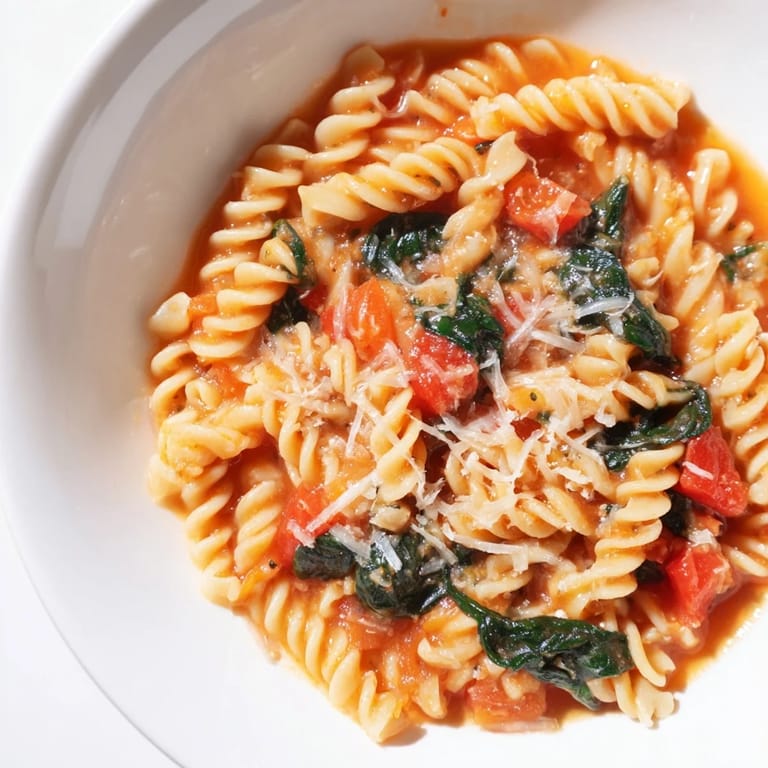
Save This recipe became my go-to during the early days of the pandemic when grocery trips felt like expeditions and I needed meals that stretched without sacrificing comfort. There was something deeply grounding about stirring that pot, watching simple ingredients transform into something that felt like a hug in a bowl. It's become one of those recipes I don't even need to look up anymore, my hands just knowing exactly what to do.
Making It Your Own
Once you've mastered the basic technique, this pasta becomes a canvas for whatever you have on hand or crave. I've added sun-dried tomatoes during the winter when fresh tomatoes feel lackluster, and sometimes I'll throw in a handful of chopped kalamata olives for briny depth. The beauty of the one-pot method is that it's incredibly forgiving, adapting to whatever additions you choose to incorporate.
Perfecting The Texture
The key to nailing this dish is getting the pasta cooked properly without leaving too much liquid behind or ending up with a dry mess. I've found that using slightly less broth than you think you need often yields the best results, as the pasta will release starch as it cooks and naturally thicken the remaining liquid. If you're unsure, you can always remove a piece of pasta and taste it, adding more broth if needed while it finishes cooking.
Serving Suggestions
While this pasta is satisfying enough to stand alone as a complete meal, a few simple sides can elevate it to dinner party status. A crisp green salad with acidic vinaigrette cuts through the richness, and warm crusty bread is absolutely essential for sopping up every last drop of that flavorful sauce. For a lighter touch, try roasted asparagus or broccolini on the side.
- Let the pasta rest for 5 minutes before serving to allow the sauce to thicken slightly and cling to the noodles
- If you have fresh basil on hand, tear some leaves over the top just before serving for a burst of brightness
- A final drizzle of really good extra virgin olive oil right before serving adds luxurious depth
 Save
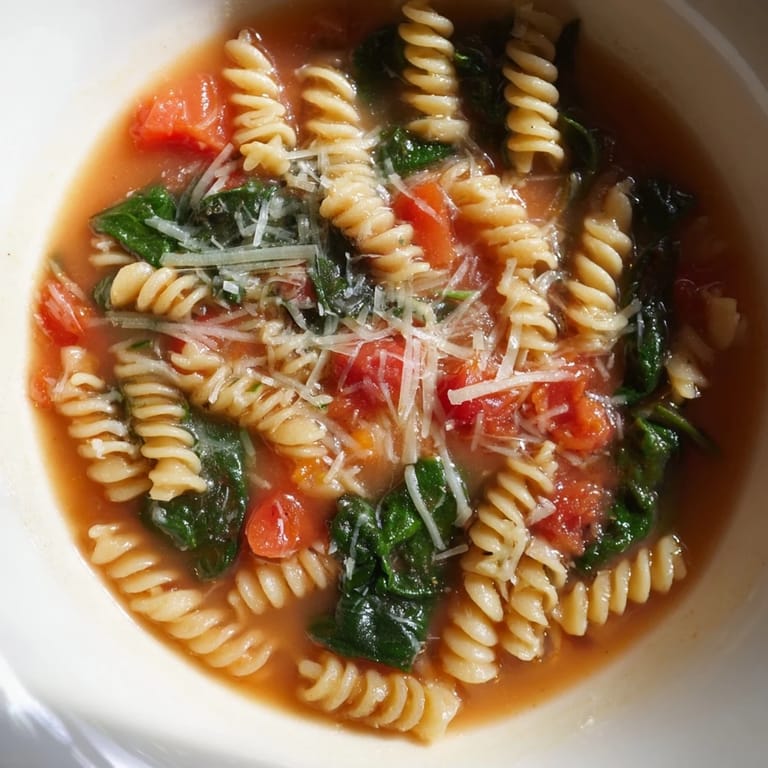
Save Some of my favorite meals have been the simplest ones, eaten from mismatched bowls with people I love. This pasta reminds me that good food doesn't need to be complicated, it just needs to be made with care and shared generously.
Recipe FAQs
- → Can I use fresh tomatoes instead of canned?
Yes, use about 600g of fresh diced tomatoes. However, reduce the broth to 750ml (3 cups) since fresh tomatoes release less liquid than canned varieties.
- → What pasta alternatives work best?
Penne, fusilli, or farfalle are excellent substitutes with similar cooking times. Avoid long pasta shapes like spaghetti, which work better in traditional dishes rather than one-pot preparations.
- → How do I make this completely plant-based?
Omit the Parmesan cheese or use a vegan alternative. The dish is already vegetarian; simply verify your vegetable broth doesn't contain animal products. Consider adding chickpeas or white beans for extra protein.
- → Can I prepare this ahead of time?
This dish is best served fresh, but you can prepare ingredients the evening before. The finished pasta doesn't store well as it continues absorbing liquid. Reheat with additional broth if needed.
- → What's the difference between al dente and fully cooked pasta?
Al dente means pasta is tender but still has a slight firmness when bitten. This texture is preferred in one-pot dishes because pasta continues softening slightly as residual heat is absorbed.
- → How do I adjust seasoning if it tastes bland?
Taste before serving and adjust salt, pepper, or red pepper flakes gradually. A squeeze of fresh lemon juice brightens the tomato flavor, and extra grated Parmesan adds savory depth.