 Save
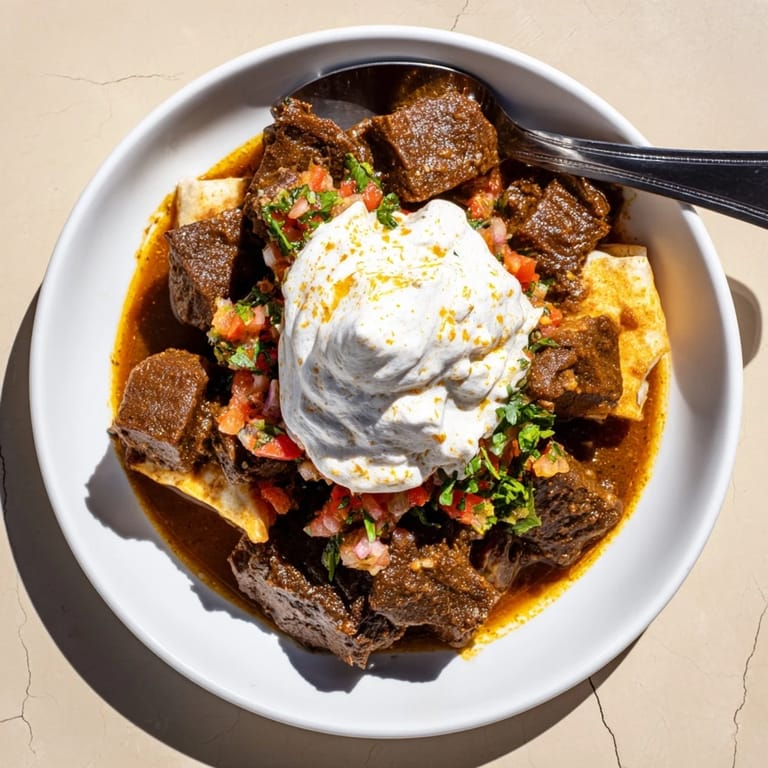
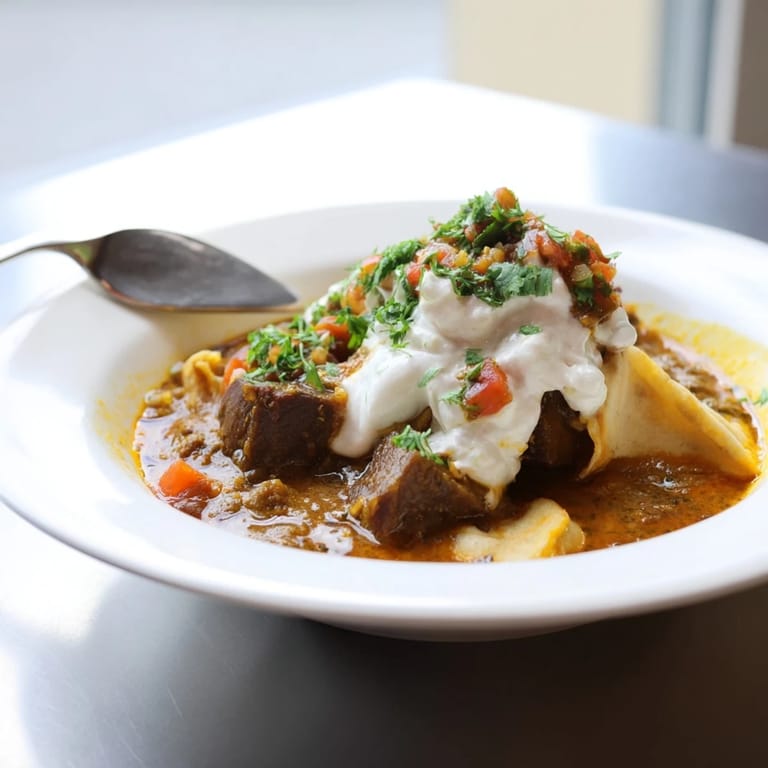
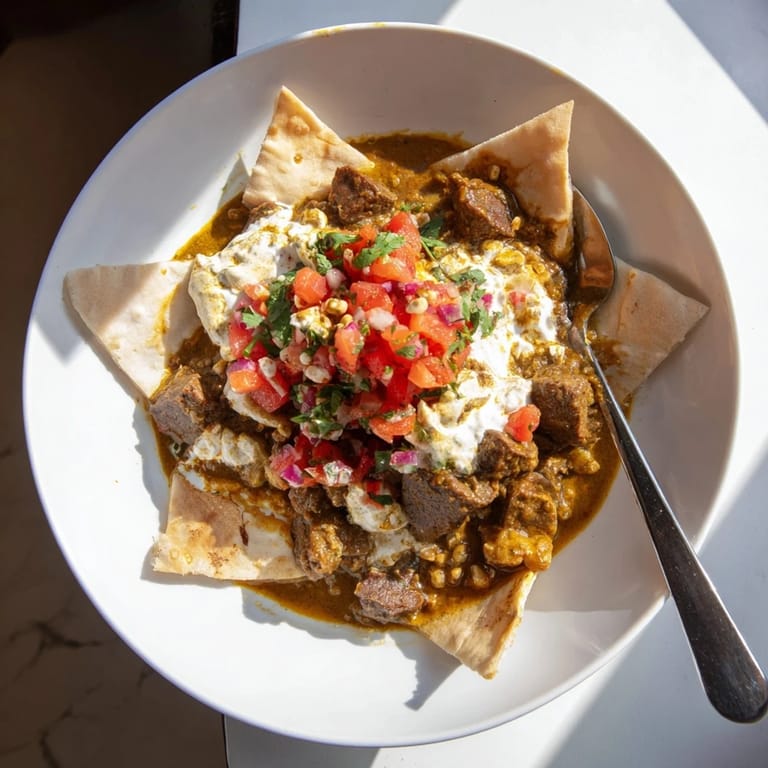
Save The first time I tasted Saltah, I was sitting on a low cushion in a Sana'a kitchen, watching steam rise from a bowl that looked like chaos until the first spoonful revealed pure comfort. The layering—spiced meat broth soaking into torn flatbread, then crowned with that impossibly light, fluffy fenugreek foam—felt like edible poetry. My friend's grandmother whisked the hulbah with such intention, beating it until it transformed from paste to cloud, and I understood then that this wasn't just a stew; it was a ritual wrapped in flavor.
I made this for my partner on a Tuesday when neither of us had eaten properly in days, and by the time we finished, we were sitting closer than usual, chasing the last spoonfuls with bread and lemon. There was something about the ritual of assembly—tearing bread, ladling broth, spooning that cloud of fenugreek—that made the meal feel ceremonial even at our kitchen table.
Ingredients
- Beef or lamb, cubed: This is where tenderness lives—smaller cubes mean faster cooking and better browning, which builds flavor.
- Onion and garlic: Golden onions are non-negotiable; they're the foundation everything else rests on.
- Tomatoes: Fresh or canned both work, but fresh ones add brightness that rounds out the spices.
- Ground cumin, coriander, turmeric, and fenugreek: This spice blend is what makes Saltah itself—don't skip the fenugreek in the stew itself, not just the topping.
- Potato and carrot: They soften into the broth and create that gentle sweetness that balances the spices.
- Water or beef broth: Broth deepens everything, but water lets the spices shine through in a different way.
- Ground fenugreek seeds for hulbah: This is the texture miracle—find it at Middle Eastern markets or online, and don't substitute it.
- Yemeni flatbread (malawah or lahoh): The bread absorbs the stew's soul; pita works in a pinch, but traditional flatbread changes everything.
Tired of Takeout? 🥡
Get 10 meals you can make faster than delivery arrives. Seriously.
One email. No spam. Unsubscribe anytime.
Instructions
- Start with the base:
- Heat oil until it shimmers, then add onions and watch them turn golden—this takes patience, but it's where the sweetness begins. Once the garlic hits the pan, keep moving; you want it fragrant, not burned.
- Brown the meat:
- Don't crowd the pot or the meat steams instead of browns. Work in batches if you need to, then return everything once each piece has caught some color.
- Build the stew:
- Add tomatoes, vegetables, and spices, stirring so everything coats in oil and the spices bloom into the air. This smell—nutty, warm, a little smoky—is your signal that you're on the right track.
- Simmer with intention:
- The long, low heat turns the meat buttery and marries the flavors until they're inseparable. Don't rush this; it's where the magic happens.
- Prepare the hulbah while the stew cooks:
- Soak the fenugreek seeds in cold water for an hour, then drain and beat them—really beat them, with a whisk or fork—until they're light and foamy. It seems impossible until suddenly it isn't.
- Fold in the hulbah toppings:
- Once the foam is ready, gently fold in tomato, cilantro, chili, and lemon juice so you don't deflate all your hard work. Taste and adjust salt.
- Assemble each bowl:
- Tear flatbread into pieces, layer it in bowls, pour hot stew over so the bread soaks but doesn't disappear, then crown it with hulbah. Serve immediately while everything's hot.
 Save
Save There's a moment in every Saltah meal when someone pauses, spoon halfway to their mouth, and you see them understand why this dish has endured for generations. It's not fancy, but it's complete—every layer has purpose, every spoonful tastes like someone cared.
The Spice Story
The spice blend in Saltah isn't aggressive or complicated; it's restrained and deliberate. Turmeric brings earthiness, cumin adds warmth, coriander softens edges, and fenugreek—both in the stew and the hulbah topping—wraps everything in a subtle, nutty sweetness that lingers. These aren't spices that shout; they whisper, layer by layer, until you're tasting something that feels both specific and timeless.
Why the Hulbah Matters
If Saltah is a poem, the hulbah is the last line—the thing that makes you pause and smile. This fenugreek foam isn't a garnish; it's textural contrast, flavor bridge, and tradition all at once. When you whisk soaked fenugreek seeds, something chemical and magical happens—the proteins emulsify into a mousse that's light, slightly bitter, and completely transformative. Once you've made it, you understand why no other topping would work here.
Cooking Notes and Variations
Vegetarian versions work beautifully if you skip the meat and bulk up with chickpeas, lentils, or extra root vegetables, though the cooking time might shift slightly. Some families add Zhug, that bright green Yemeni sauce, on the side for heat—let people control their own spice level. The flatbread choice matters more than you'd think; malawah and lahoh soak up broth differently than pita, creating different textures, so use what you can find and trust it'll be delicious.
- Make the stew a day ahead if you can; flavors deepen overnight and reheating is faster.
- Hulbah should be made fresh and served immediately, or it loses its cloud-like texture.
- Freeze leftover stew (without bread or hulbah) for up to three months.
 Save
Save This is the kind of meal that reminds you why people gather around tables, why recipes are worth passing down. Make it, and you're not just feeding people—you're sharing something that tastes like both home and discovery.
Recipe FAQs
- → What type of meat is best for this stew?
Beef or lamb cut into medium cubes works best, as they become tender and flavorful after slow simmering.
- → How is the fenugreek topping prepared?
Ground fenugreek seeds are soaked in water for an hour, then whipped until fluffy and combined with diced tomato, cilantro, chili, lemon juice, and salt.
- → Can I substitute the flatbread used in the layers?
Yes, traditional Yemeni flatbreads like malawah or lahoh are ideal, but pita or naan can be used as alternatives.
- → What spices give this dish its distinctive flavor?
Cumin, coriander, turmeric, black pepper, and fenugreek provide warm, earthy, and slightly bitter notes essential to the dish.
- → How long should the stew simmer?
Simmer the meat and vegetables for 1 to 1.5 hours until the meat is tender and the vegetables are soft.