 Save
Save The first time I served this honey-drip cake, my friend Sarah actually gasped when she saw it—not because it looked fancy, but because watching honey cascade from that central pot onto her fork felt almost ceremonial. I'd been inspired by a moment at a local bakery where I noticed people lingering over desserts longer when they could interact with them, and something clicked: why not build an entire cake around that magic? That evening, as golden honey pooled on each plate, I realized this wasn't just about sweetness; it was about creating a shared moment where everyone at the table felt like they were discovering something together.
I remember baking this for my sister's birthday dinner in late summer when the kitchen stayed warm even as the sun set. The smell of honey and vanilla filled the house so completely that by the time dessert arrived, everyone was already leaning forward, anticipating something extraordinary. When I set that warm honey pot into the center, the room actually went quiet—that rare, beautiful quiet that happens when food becomes theater.
Ingredients
- All-purpose flour, baking powder, baking soda, and salt: This combination creates a tender crumb that won't overpower the honey, and the baking soda amplifies the honey's subtle warmth.
- Softened butter and granulated sugar: Creaming these two together builds the structure; don't skip this step or your cake will be dense and the honey flavor will get lost.
- Honey (½ cup in batter): Use a middle-of-the-road honey here—something like wildflower—so it blends seamlessly without competing flavors.
- Eggs and vanilla: Eggs give the cake moisture and richness; vanilla is your secret weapon that makes people pause and ask what that incredible flavor is.
- Whole milk: The liquid that brings everything together, creating a tender texture that lets the honey shine.
- Heavy cream and mascarpone: This filling bridges honey and cake without being overly sweet; the mascarpone's slight tang is essential.
- High-quality liquid honey for serving: This is where you splurge a little—wildflower or acacia honey transforms the final moment from nice to unforgettable.
- Toasted almonds and edible flowers: These are your final touch, adding texture and visual drama that makes people reach for their cameras.
Tired of Takeout? 🥡
Get 10 meals you can make faster than delivery arrives. Seriously.
One email. No spam. Unsubscribe anytime.
Instructions
- Set your stage:
- Preheat to 350°F and prepare two 8-inch pans with parchment paper. This matters because honey cakes need even heat, and lined pans ensure they come out looking pristine.
- Blend your dry ingredients:
- Whisk flour, baking powder, baking soda, and salt together in one bowl. This prevents lumps and distributes the leavening evenly throughout the batter.
- Cream your base:
- Beat softened butter and sugar until the mixture is pale and fluffy, about 3 minutes. You're aerating the mixture, which creates a lighter cake structure.
- Add richness:
- Pour in honey, crack in eggs one at a time, and add vanilla while beating. Each egg needs a moment to incorporate; rushing this creates a broken batter.
- Alternate carefully:
- Add dry ingredients and milk to your wet mixture, starting and ending with dry ingredients. Alternate in three additions: dry, milk, dry, milk, dry—this prevents overmixing.
- Bake with patience:
- Divide batter evenly and bake 22–25 minutes until a toothpick inserted in the center comes out clean. The cake should spring back when touched lightly; overbaking dries it out.
- Prepare the honey cream:
- Whip cold heavy cream to soft peaks, fold in honey and mascarpone gently, then whip to stiff peaks. Chill this while your cake cools completely.
- Layer your cake:
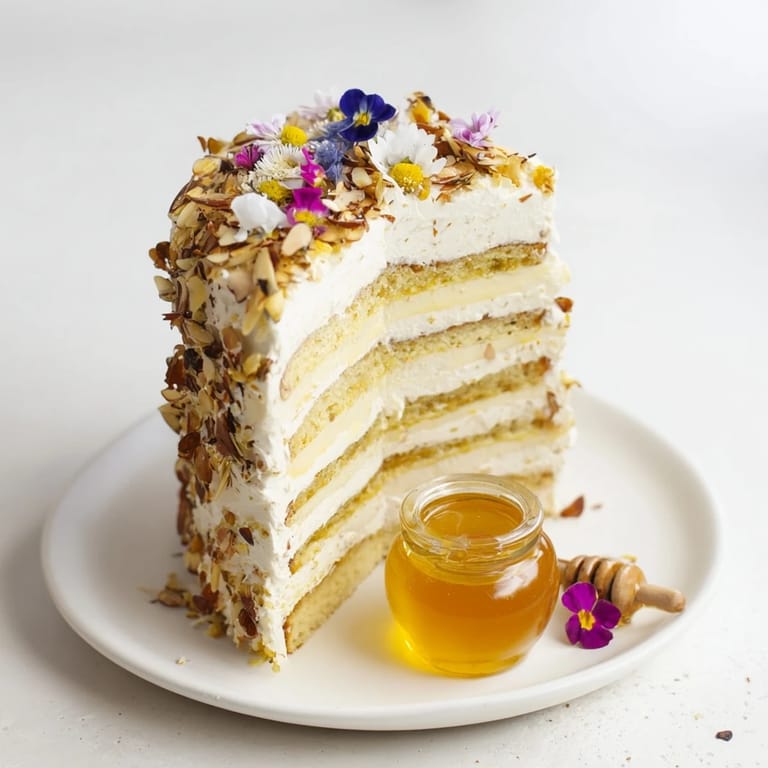
- Slice each cooled cake horizontally to create four thin layers total. Spread honey cream between each layer with a small offset spatula, using light pressure so layers don't slide.
- Create the honey well:
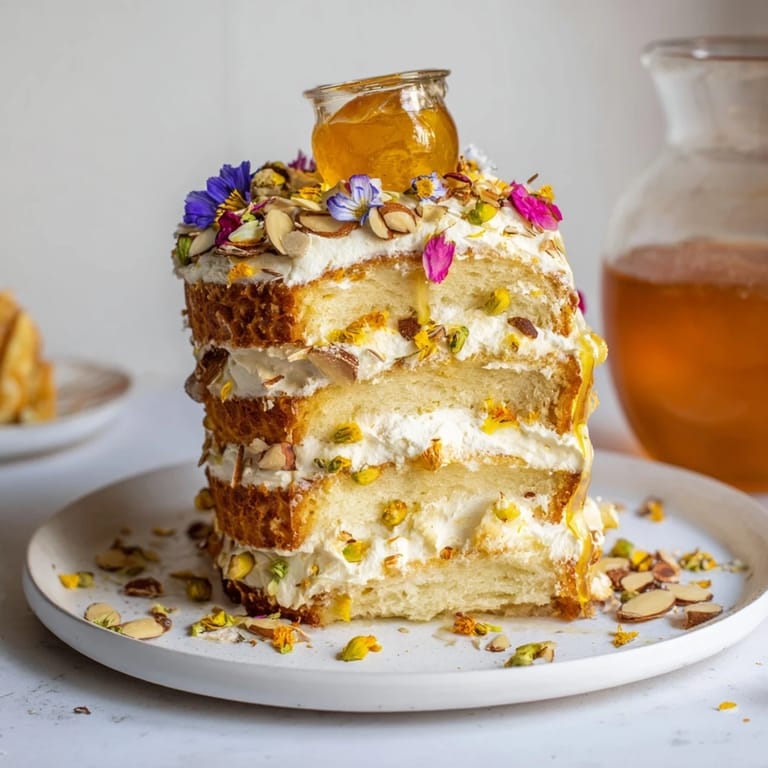
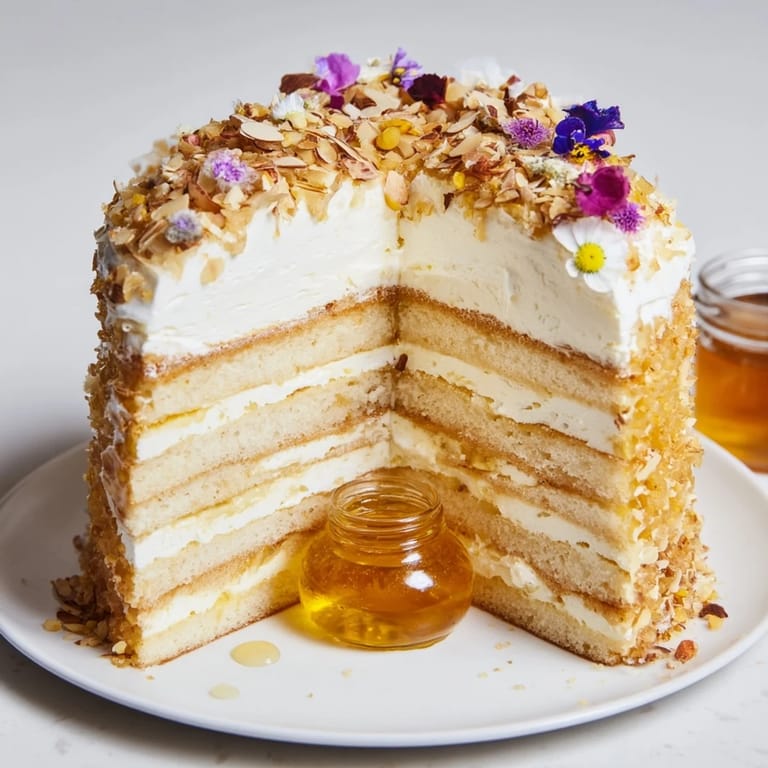
- Using a 3-inch round cutter, carefully cut a hole from the center of the stacked cake—press straight down without twisting. Place your small honey pot inside and fill with liquid honey just before serving.
- Finish and flourish:
- Crown the top with toasted almonds and edible flowers, then drizzle honey artfully over everything. The visual presentation is half the magic here.
 Save
Save There's something profound about watching people discover that they can dip each forkful of cake directly into warm honey. That moment when someone's face lights up because they've just understood they're part of an experience, not just eating dessert? That's why I keep making this.
The Honey Question
Not all honey tastes the same, and for this cake, that variety is actually your advantage. Wildflower honey brings a subtle floral depth that complements the vanilla without overpowering it. Acacia honey is milder and lets the cake's structure shine through. I've experimented with lavender honey for special occasions, and the guests who usually skip dessert suddenly became honey evangelists. If you want to go adventurous, orange blossom honey adds a sophisticated note that pairs beautifully with Moscato in the evening. The key is choosing liquid honey that pours beautifully at room temperature and tastes like something you'd want to savor, not just drizzle.
Making It Your Own
The genius of this cake is that it's forgiving enough to adapt. For a nut-free version, simply omit the almonds and garnish instead with a dusting of edible gold leaf or a few candied lemon slices for brightness. If your guests have dairy sensitivities, I've successfully substituted the honey cream with a cashew-honey blend whipped to the same consistency—it's almost better, actually, with a subtle nuttiness. The central honey pot is sacred and non-negotiable, but everything else can bend to your kitchen's reality and your guests' needs.
Serving Moments That Matter
This cake reaches its full potential when served with intention. Set it on the table 10 minutes before dessert so the honey warms slightly and becomes more fluid. I always serve it with small plates and forks so guests have space to cut and dip without rushing. A glass of late-harvest Riesling or Moscato transforms the experience from lovely into memorable—the wine's sweetness plays against the honey without competing, and the acidity cuts through the richness beautifully.
- Pour honey into the central pot just moments before serving so it stays warm and viscous enough to cling to each bite.
- Encourage guests to cut all the way through the cake so they catch both honey cream and the warm honey in the center.
- Keep extra honey on hand for those who want to add more—some people will, and that's the point.
 Save
Save This honey-drip cake has become my answer to the question of what to bake when you want to say something with food that words can't quite reach. It's simple enough to actually make, but grand enough to feel like celebration.
Recipe FAQs
- → What type of honey works best?
Wildflower or acacia honey offers floral notes that enhance the dessert's flavor. Orange blossom or lavender honey can add unique nuances.
- → How to create the central honey pot?
After stacking the cake layers filled with honey cream, cut a round hole in the center to place a small ceramic or glass pot filled with warm liquid honey.
- → Can I make this dessert nut-free?
Yes, simply omit the toasted almond garnish to accommodate nut allergies.
- → What’s the best way to serve this dessert?
Serve sliced pieces allowing guests to dip each bite into the central pot of warm honey, enhancing the moistness and sweetness.
- → How long does the preparation take?
The total time is approximately 1 hour 10 minutes, including baking and assembling the layers with honey cream.