 Save
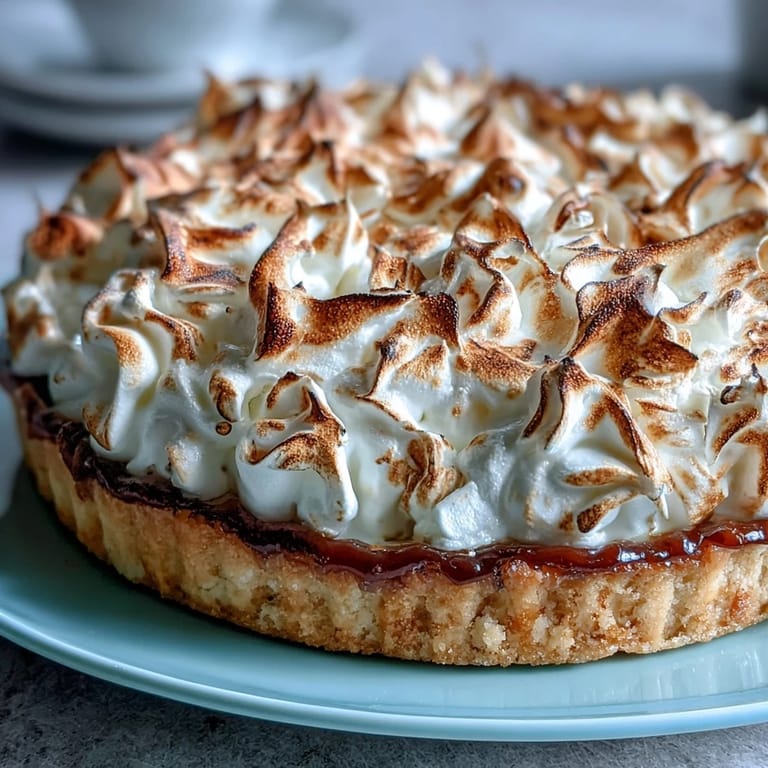
Save The kitchen was a mess of flour and lemon peels, and I was convinced the meringue would never stiffen. My mixer whirred for what felt like forever before those glossy peaks finally appeared, and I let out a breath I didn't know I was holding. That pie turned out to be the hit of the dinner party, even with my shaky lattice attempt on the crust edge. There's something about the sharp brightness of lemon against sweet clouds of meringue that makes you forget how much effort went into it. Now, every time I zest a lemon, I'm back in that chaotic, joyful kitchen moment.
I made this for my neighbor's birthday once, and she teared up when she tasted it because it reminded her of her grandmother's version. We sat on her porch with slices on mismatched plates, and she told me stories about Sunday dinners and lemon trees in the backyard. That's when I realized this pie isn't just dessert. It's a bridge to memories, a reason to sit down and actually talk. I've never looked at a simple lemon the same way since.
Ingredients
- All purpose flour: The foundation of your crust, and using cold ingredients is the secret to flakiness, so don't rush this step.
- Cold unsalted butter: Cubed and chilled, it creates pockets of steam during baking that give the crust its tender, layered texture.
- Granulated sugar (for crust): Just a hint of sweetness in the dough balances the tartness of the filling without competing with it.
- Granulated sugar (for filling): This tempers the sharp acidity of fresh lemon juice and helps the cornstarch set into that perfect silky custard.
- Cornstarch: The thickening agent that transforms liquid into a smooth, sliceable filling without the heaviness of flour.
- Egg yolks: They add richness and body to the filling, and tempering them properly prevents scrambling, which I learned the hard way.
- Lemon zest: This is where the aromatic oils live, and it adds a depth of citrus flavor that juice alone can't achieve.
- Freshly squeezed lemon juice: Bottled juice won't give you the same bright, clean tang, so squeeze those lemons yourself and taste the difference.
- Unsalted butter (for filling): Stirred in at the end, it gives the filling a glossy finish and a hint of luxurious richness.
- Egg whites: At room temperature, they whip up faster and higher, creating that towering meringue crown.
- Cream of tartar: Stabilizes the egg whites so your meringue holds its shape and doesn't weep or collapse after baking.
- Pure vanilla extract: A small addition that rounds out the sweetness and adds warmth to the meringue's flavor.
Tired of Takeout? 🥡
Get 10 meals you can make faster than delivery arrives. Seriously.
One email. No spam. Unsubscribe anytime.
Instructions
- Build the Crust:
- Whisk your dry ingredients together, then work the cold butter in with your fingertips or a pastry cutter until it looks like sandy pebbles. Add ice water slowly, just until the dough holds together when pinched, then chill it so the gluten can relax and the butter stays firm.
- Blind Bake:
- Roll your dough out gently, fit it into the pie dish without stretching, and dock the bottom with a fork to prevent puffing. Weigh it down with parchment and beans, bake until set, then remove the weights and let it turn golden and crisp.
- Cook the Lemon Custard:
- Whisk your sugar, cornstarch, and salt with water until completely smooth, then cook over medium heat, stirring constantly to avoid lumps. Temper your yolks by adding hot liquid slowly, whisk them back in, and cook just until thickened before stirring in the zest, juice, and butter.
- Whip the Meringue:
- Beat your room temperature egg whites with cream of tartar until they foam and hold soft peaks, then add sugar gradually while beating until the mixture is stiff, shiny, and holds its shape. Fold in vanilla at the end for a hint of warmth.
- Assemble and Bake:
- Spread the meringue over your still warm filling, making sure to seal the edges all the way to the crust to prevent shrinking. Bake until the peaks turn golden brown, then cool completely and chill before slicing for the cleanest cuts.
 Save
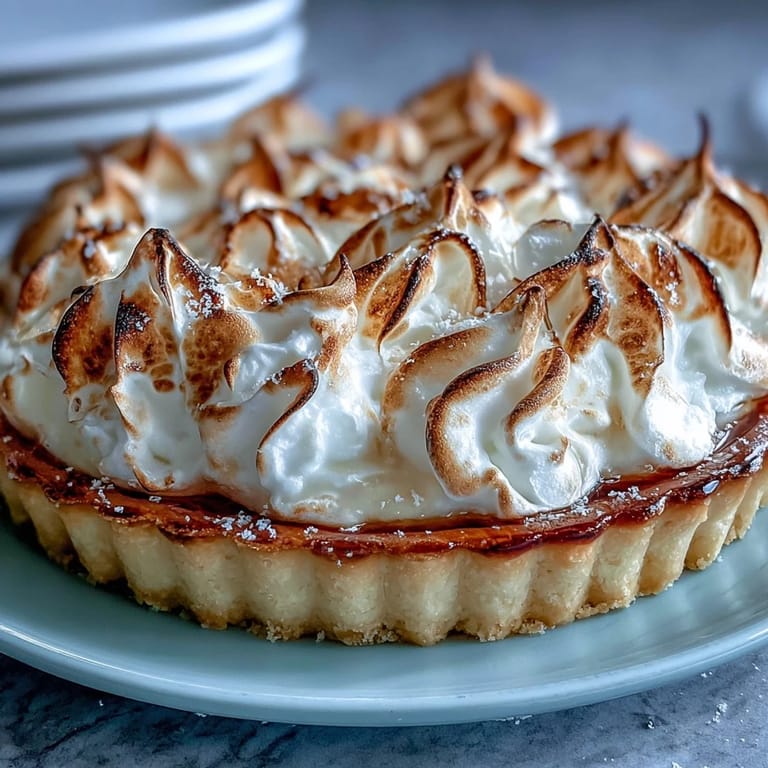
Save One summer evening, I brought this pie to a potluck and watched a group of strangers bond over their childhood lemon dessert memories. Someone's aunt, someone's diner, someone's failed attempt in home economics class. The pie disappeared in minutes, but the conversation lasted hours. Food has this quiet power to unlock stories we didn't know we were ready to tell.
Getting the Crust Just Right
The crust can make or break this pie, and I've learned that keeping everything cold is non negotiable. If your butter starts to soften while you're mixing, pop the whole bowl in the fridge for ten minutes. I also brush the baked crust with a thin layer of beaten egg white before adding the filling, which creates a moisture barrier and keeps the bottom crisp. Don't skip the chilling time for the dough either, it's the difference between a tender, flaky crust and a tough, chewy one.
Mastering the Meringue
Room temperature egg whites are your best friend here because they whip up with more volume and stability than cold ones. I leave mine on the counter for about thirty minutes before starting, and I make sure my bowl and beaters are completely clean and dry, since even a speck of grease can prevent proper whipping. Adding the sugar gradually, about a tablespoon at a time once soft peaks form, ensures it dissolves fully and creates that glossy, marshmallow like texture. The meringue should be spreadable but hold stiff peaks, and when you lift the beater, the peak should stand straight up without drooping.
Serving and Storing
This pie is best served chilled, and I always use a sharp knife dipped in hot water and wiped clean between each slice for perfect cuts. Leftovers keep in the fridge for up to three days, though the meringue may weep slightly over time, which is normal. If you're making this ahead, you can prepare the crust and filling a day in advance, but add the meringue and bake it the day you plan to serve for the best texture and appearance.
- For a twist, try adding a tablespoon of limoncello to the filling for an extra layer of citrus complexity.
- If you love coconut, toast some shredded coconut and sprinkle it over the meringue before baking.
- A drizzle of raspberry coulis on the plate makes this feel like a restaurant dessert.
 Save
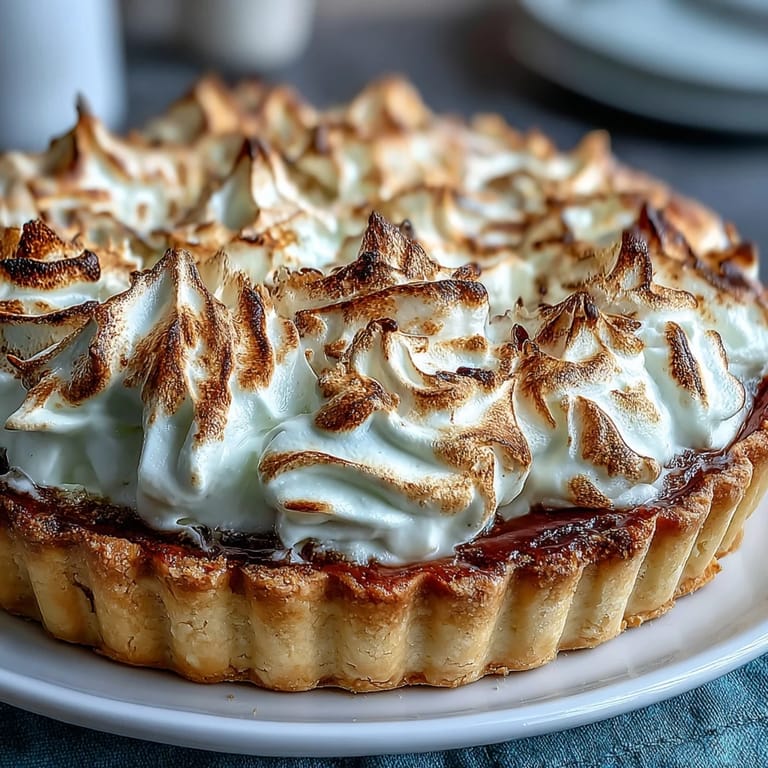
Save There's a particular kind of pride that comes from setting this pie on the table and watching faces light up. It's the kind of dessert that makes people pause mid conversation, fork halfway to their mouth, just to admire it one more time.
Recipe FAQs
- → How do I prevent my meringue from weeping?
Spread the meringue over the filling while it's still warm, ensuring it seals completely to the crust edges. This helps prevent moisture from forming underneath. Bake immediately after spreading.
- → Can I make the crust ahead of time?
Yes, you can prepare and bake the crust up to 2 days in advance. Store it covered at room temperature until ready to fill.
- → What's the best way to get clean slices?
Chill the pie thoroughly for at least 2 hours. Use a sharp knife dipped in hot water and wiped clean between each cut for neat, professional-looking slices.
- → Can I use bottled lemon juice instead of fresh?
Fresh lemon juice is highly recommended for the best flavor and brightness. Bottled juice often contains preservatives that can affect the taste and texture of the filling.
- → How long will this pie keep?
Store covered in the refrigerator for up to 2 days. The meringue may begin to soften after that, though the pie will still taste delicious.
- → Why did my meringue deflate?
Ensure your bowl and beaters are completely clean and grease-free. Beat the egg whites until stiff peaks form, and add sugar gradually. Overbeating can also cause deflation.