 Save
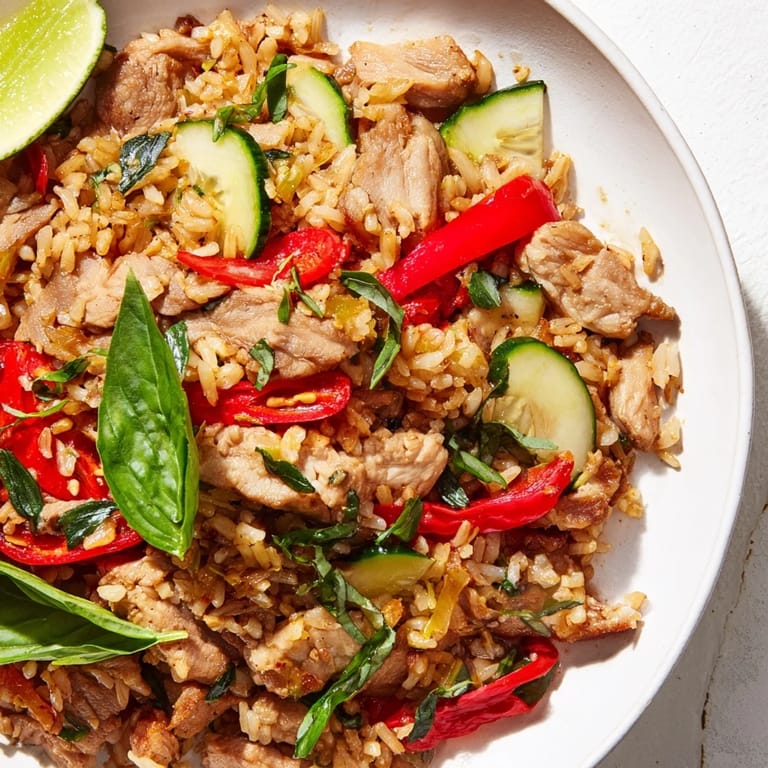
Save The first time I tasted holy basil was at a tiny street stall in Bangkok, where the chef tossed chicken and rice in a wok over flames that leaped dramatically toward the ceiling. The aroma hit me before I even took my first bite—spicy, sweet, and impossibly fragrant all at once. I spent the next three years trying to recreate that magic in my home kitchen, burning countless batches of rice and learning that high heat and confidence matter more than any fancy technique. This recipe is the closest I've come to that memory, and it has become my go-to when I need something that feels special but comes together in the time it takes to set the table.
Last summer, my neighbor caught me cooking this through my open kitchen window and actually knocked on my door to ask what I was making. I ended up bringing over a bowl for her family, and now we have this unspoken tradition where I make extra whenever I see her car in the driveway. Her kids call it the rice that smells like sunshine, which is honestly the best compliment any dish has ever received in my house.
Ingredients
- Boneless chicken thighs or breasts: Thighs stay juicier in high heat, but if you only have breasts, slice them thinly against the grain and they will work beautifully
- Day old jasmine rice: Fresh rice turns to mush in the wok, so cook it the night before or spread freshly cooked rice on a baking sheet to dry out for an hour
- Holy basil leaves: This is the non negotiable ingredient that makes the dish authentic, but Thai basil works if you cannot find the real thing
- Thai red chilies: Slice them thin if you want heat throughout, or leave them whole for milder bites and sudden surprises
- Garlic: Minced fresh garlic is essential here, paste or powder will not give you those fragrant pops of flavor
- Onion: Finely chopped so it softens quickly and blends into the rice rather than staying in distinct chunks
- Soy sauce, oyster sauce, and fish sauce: This trio creates that perfect Thai balance of salty, sweet, and umami that defines the cuisine
- Vegetable oil: Something neutral with a high smoke point, since you will be cooking at seriously high temperatures
- Lime wedges: The acid at the end cuts through the richness and wakes up all the other flavors
Tired of Takeout? 🥡
Get 10 meals you can make faster than delivery arrives. Seriously.
One email. No spam. Unsubscribe anytime.
Instructions
- Get everything ready before you turn on the stove:
- Mise en place is not fancy restaurant talk, it is the difference between a great stir fry and a burnt mess. Slice your chicken, chop your vegetables, measure out your sauces, and have your rice clump free and ready to go. Once that wok is hot, there is no time to hunt for ingredients.
- Crank up the heat and warm your wok:
- You want the oil shimmering and almost smoking before you add anything. High heat is what gives fried rice its characteristic smoky flavor and keeps everything from turning into a steamed mushy situation.
- Wake up the aromatics:
- Toss in your garlic and chilies first, giving them about 30 seconds to release their oils and fragrance. You will know they are ready when the scent hits you and the garlic starts turning golden at the edges.
- Cook the chicken until it is done:
- Add your sliced chicken and let it sear without constantly moving it around. You want some browning and caramelization, which takes about 3 to 4 minutes. Do not worry about overcooking it slightly—thin slices stay tender even with extra time in the wok.
- Add the vegetables:
- Throw in your onion and bell pepper if you are using it, giving them about 2 minutes to soften while still keeping some crunch. They will continue cooking briefly with the rice, so do not wait until they are completely limp.
- Toss in the rice:
- Add your day old rice, breaking up any clumps with your spatula as you go. Keep everything moving with a folding motion rather than stirring, which helps distribute the heat evenly without mashing the grains.
- Sauce it up:
- Pour in your soy sauce, oyster sauce, fish sauce, sugar, and white pepper. Toss everything together until each grain of rice is coated and glossy, about 1 to 2 minutes. The rice should look unified and fragrant, not patchy or dry.
- Finish with the holy basil:
- Remove the wok from heat and fold in the holy basil leaves. They only need seconds to wilt and release their incredible aroma. Cooking them longer makes the flavor disappear, and that would be a tragedy.
 Save
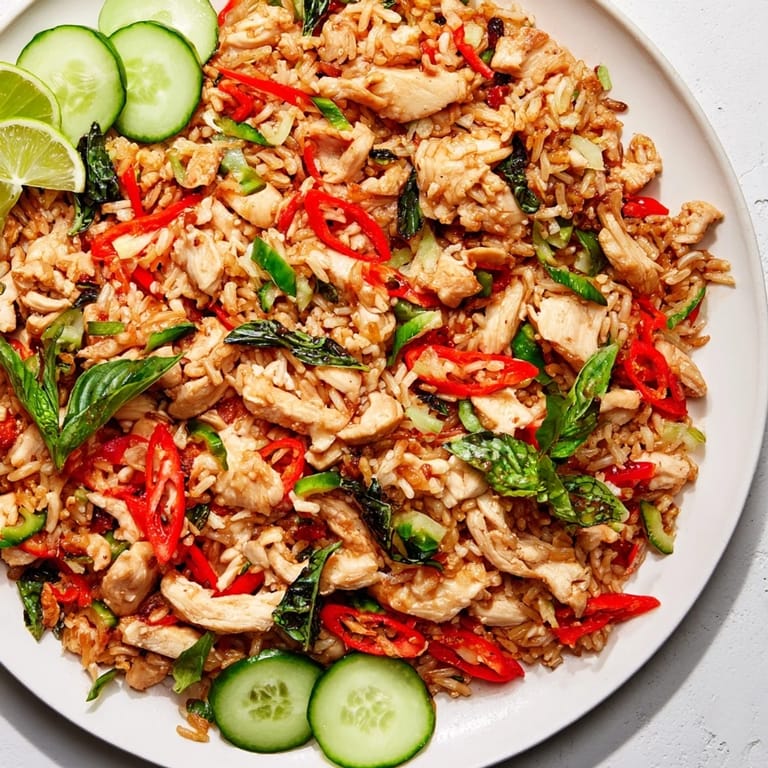
Save This recipe has seen me through everything from celebratory dinners to nights when I needed comfort food but did not want to spend hours cooking. There is something deeply satisfying about standing over a hot wok, listening to the rice sizzle and pop, and knowing that in a few minutes, something delicious will be on the table.
Getting the Rice Texture Right
The secret to restaurant style fried rice is using cold, day old rice that has had time to dry out slightly in the refrigerator. Freshly cooked rice contains too much moisture and steams instead of frying, resulting in gummy clumps that no amount of high heat can fix. If you are in a pinch, spread freshly cooked rice on a baking sheet and freeze it for 15 to 20 minutes—this mimics the overnight drying process and works surprisingly well.
Building Flavor in Layers
Thai cooking is all about layering flavors, and this dish is a perfect example of that principle in action. The garlic and chilies provide the aromatic base, the chicken contributes depth, the sauces bring umami and balance, and the holy basil adds that final fresh, peppery note that makes the whole dish sing. Taste as you go and adjust the seasoning—more fish sauce for saltiness, more sugar to balance the heat, or an extra squeeze of lime at the end for brightness.
Making It Your Own
Once you have made this recipe a few times, do not be afraid to experiment and make it your own. Some nights I add a scrambled egg at the beginning, letting it set before breaking it into pieces. Other times I toss in some baby corn or snap peas for extra crunch and color. The important thing is maintaining that balance of flavors and keeping the cooking technique sharp and hot.
- Try swapping the chicken for shrimp, tofu, or even thinly sliced pork for a different protein experience
- A fried egg on top with a runny yolk creates this incredible sauce when you break it into the rice
- If you cannot handle serious heat, start with one chili and add more at the end rather than going all in at the beginning
 Save
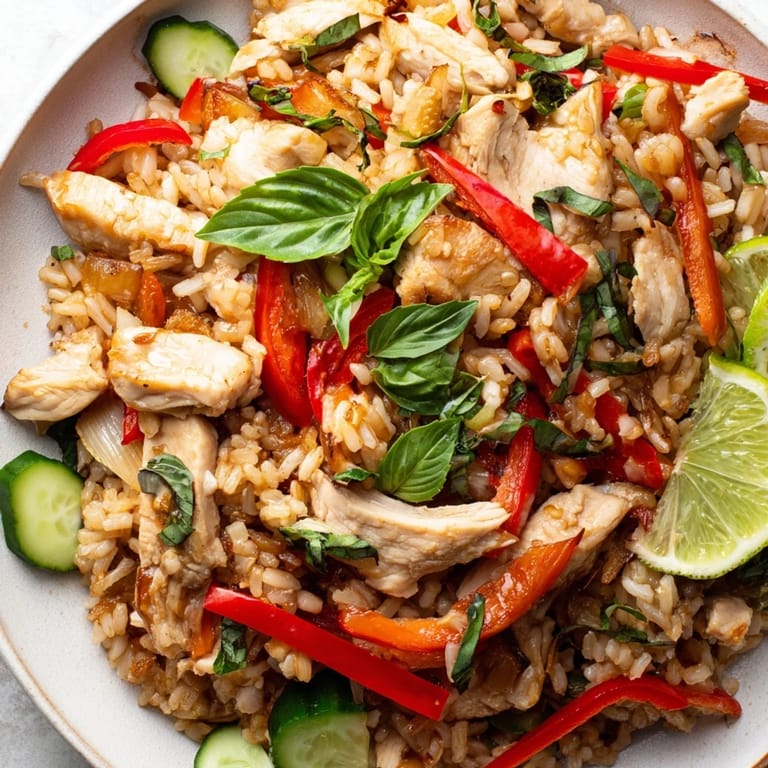
Save Every time I make this now, I think about that tiny stall in Bangkok and how the simplest ingredients, treated with respect and cooked with confidence, can create something extraordinary. Enjoy every bite.
Recipe FAQs
- → What is holy basil and can I substitute it?
Holy basil, also known as tulsi, has a distinct peppery flavor with clove-like notes. If unavailable, Thai basil makes the best substitute, though sweet basil works in a pinch. The flavor profile will shift slightly but remains delicious.
- → Why use day-old rice for fried rice?
Day-old rice has dried out slightly, preventing it from becoming mushy during stir-frying. Freshly cooked rice contains too much moisture and can turn gummy. If you must use fresh rice, spread it on a baking sheet and refrigerate for 1-2 hours before cooking.
- → How spicy is this dish?
With 2-3 Thai chilies, this dish delivers moderate heat that builds gradually. Adjust the spice level by reducing chilies for milder flavor or increasing them for extra kick. Removing chili seeds also tones down the heat while preserving the aromatic flavor.
- → Can I make this dish vegetarian?
Absolutely. Replace chicken with firm tofu or extra vegetables like broccoli, carrots, and snap peas. Substitute fish sauce with vegetarian fish sauce or soy sauce, and use mushroom-based oyster sauce instead of traditional oyster sauce.
- → What's the best way to prevent rice from sticking to the wok?
Ensure your wok is thoroughly heated before adding oil. Use cold rice straight from the refrigerator and break up clumps with your hands before adding to the wok. Keep ingredients moving constantly with a spatula and avoid overcrowding the pan.
- → How do I store and reheat leftovers?
Store cooled leftovers in an airtight container in the refrigerator for up to 3 days. Reheat in a wok over medium-high heat with a splash of water or oil, or microwave in 30-second intervals, stirring between each to ensure even heating.