 Save
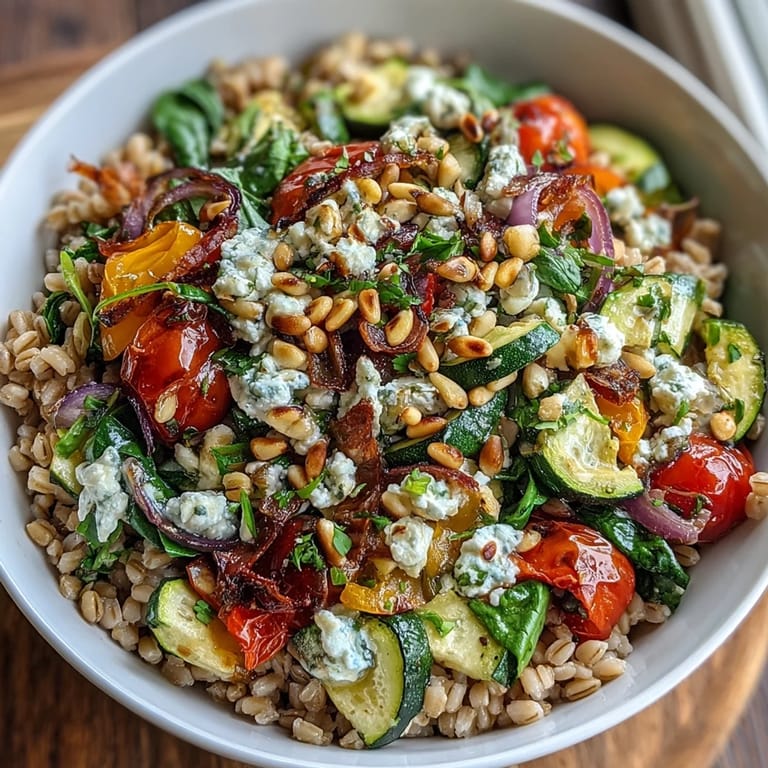
Save There's something about the way farro catches the light in a bowl that makes me slow down. I discovered this pasta one afternoon while rummaging through a Mediterranean market, drawn by its pearl-like appearance and the vendor's insistence that it tasted nothing like regular pasta. That first bite—nutty, substantial, almost creamy—convinced me to build an entire meal around it. Now it's what I reach for when I want something that feels both nourishing and celebratory, without any fuss.
I made this for a friend who'd just moved into her first apartment with a tiny kitchen, and watching her face light up when she realized something this colorful and satisfying could come from one skillet felt like a small victory. She's made it probably fifty times since, each time with whatever vegetables were on sale, and it never disappoints. That's when I knew this wasn't just a recipe—it was permission to cook simply without apology.
Ingredients
- Farro pasta, 250 g: The star of the show—it has a nutty, almost wheaty flavor and a satisfying bite that regular pasta doesn't offer, plus it holds onto dressing beautifully without getting mushy.
- Zucchini, 1 medium diced: It softens into the pasta without disappearing, adding a delicate sweetness and bulk without heaviness.
- Red and yellow bell peppers, 1 each diced: These bring both sweetness and a hint of smokiness when sautéed, plus they're cheerful to look at while you're cooking.
- Cherry tomatoes, 150 g halved: They burst slightly in the heat, creating their own little sauce, so choose the ripest ones you can find.
- Baby spinach, 100 g: It wilts in seconds and adds an earthy, mineral quality that balances all the brightness from the other vegetables.
- Red onion, 1 small finely sliced: The sharpness mellows as it sautés, adding depth and a touch of sweetness that ties everything together.
- Garlic, 2 cloves minced: Just enough to whisper in the background, building flavor without overwhelming the delicate vegetables.
- Extra virgin olive oil, 60 ml plus 2 tbsp: The good stuff matters here—it's the dressing's backbone and should taste like you're at an outdoor table somewhere sunny.
- Lemon juice, 2 tbsp freshly squeezed: Fresh juice makes an enormous difference; bottled feels flat by comparison and changes the entire character of the dish.
- Dried oregano, 1 tsp: It blooms in the warm oil and ties the whole thing to the Mediterranean without being pushy about it.
- Sea salt and black pepper: Taste as you go—the feta will add saltiness, so you might need less than you think.
- Feta cheese, 60 g crumbled: The tangy, salty finish that transforms this from good to memorable, though feel free to skip it or use a vegan alternative.
- Fresh parsley and toasted pine nuts, optional: Parsley adds a bright, grassy note at the end, while pine nuts bring a creamy richness if you're feeling generous.
Tired of Takeout? 🥡
Get 10 meals you can make faster than delivery arrives. Seriously.
One email. No spam. Unsubscribe anytime.
Instructions
- Get the water boiling:
- Fill a large pot with plenty of salted water—it should taste almost like the sea—and bring it to a rolling boil while you prep your vegetables. This way nothing is rushed when you're ready to cook the pasta.
- Cook the farro:
- Add the pasta and stir occasionally so nothing sticks together. You want it al dente, with just a slight firmness in the center, which usually takes about 10–12 minutes for most brands. If you're using whole farro grains instead, give them the full 20–25 minutes and taste them partway through.
- Start the vegetables:
- While the pasta cooks, warm a large skillet over medium heat and add two tablespoons of olive oil. When it shimmers slightly, add your sliced red onion and minced garlic, stirring constantly for about 2 minutes until the kitchen smells incredible and the onion starts to soften.
- Build color and flavor:
- Add your diced zucchini, bell peppers, and halved cherry tomatoes all at once. The vegetables should hit the hot oil with a little sizzle—that sound means the flavors are developing. Stir gently every minute or so for 6–8 minutes, letting them soften just enough to be tender but still bright and slightly firm when you bite into them.
- Wilt in the spinach:
- Once the other vegetables are where you want them, pile in the baby spinach and stir for just 1–2 minutes until it's completely wilted and any liquid has mostly evaporated. Don't walk away—it happens fast.
- Make the dressing:
- While the skillet is doing its thing, whisk together your remaining olive oil, fresh lemon juice, dried oregano, sea salt, and cracked black pepper in a small bowl. Taste it on a vegetable and adjust the seasoning—it should taste bright and a little bold since it needs to flavor everything else.
- Bring it together:
- Drain the cooked pasta and tip it into a large bowl with all the sautéed vegetables. Pour the dressing over everything and toss gently but thoroughly, making sure every piece of pasta gets coated. If it seems a little dry, add another splash of olive oil.
- Finish and serve:
- Divide the warm pasta among serving bowls and scatter crumbled feta, fresh parsley, and toasted pine nuts across the top if you're using them. You can serve this warm, at room temperature, or even chilled the next day—it gets better as the flavors settle.
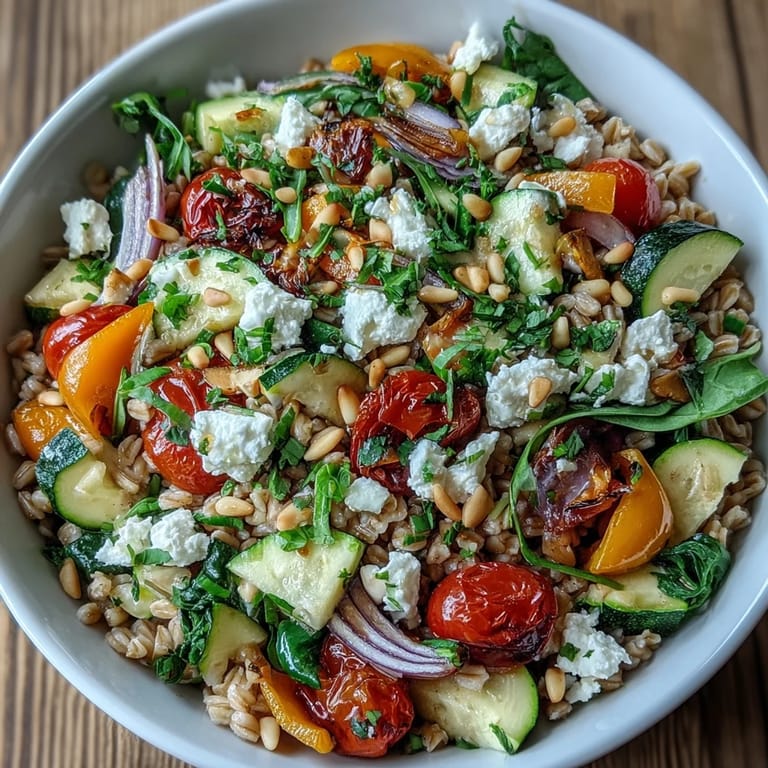 Save
Save There was an evening when I made this dish for a dinner party and forgot to add the dressing until everyone was already seated. My first instinct was panic, but then I realized I could toss it at the table—and watching people's faces change as the flavors suddenly came alive was worth every nervous second. That's when I understood that this recipe's real gift isn't just the food itself, but the way it invites you to be present while you're making it.
Why This Dish Works as a Weeknight Dinner
Most weeknight dinners feel like a race against exhaustion, but this one moves at a gentle pace. Everything cooks in about 25 minutes, but nothing demands your full attention every second—you can prep vegetables while the water boils, the pasta handles itself, and the vegetables sauté happily while you organize serving bowls. It's the kind of meal that lets you breathe a little instead of ending the day feeling frazzled.
The Magic of Serving Temperature
I used to think pasta salads had to be cold, until I served this warm one summer evening and realized how much more the flavors sang when the farro was still hot. The olive oil tastes richer, the oregano more alive, and the feta gets slightly creamy around the edges instead of staying brittle. That said, it's genuinely excellent cold the next day too—sometimes even better, as everything melds overnight and the flavors become more integrated.
Building Your Own Version
Once you understand the structure, this recipe becomes a canvas. I've made it with grilled eggplant instead of zucchini on days when eggplant felt right, swapped in roasted broccoli when it was in season, and added chickpeas when I needed something more substantial. The dressing stays the same because it's really the backbone—everything else is negotiable depending on what looks good at the market or what's lingering in your crisper drawer.
- Swap any vegetables for what's seasonal and fresh—roasted mushrooms, artichoke hearts, even diced cucumber work beautifully.
- Add grilled chicken, crispy tofu, or white beans if you want to turn this into a more protein-forward meal without disrupting the flavor balance.
- Make a double batch of dressing and keep it in a jar in the refrigerator—it becomes an instant topping for salads, roasted vegetables, or even plain grains throughout the week.
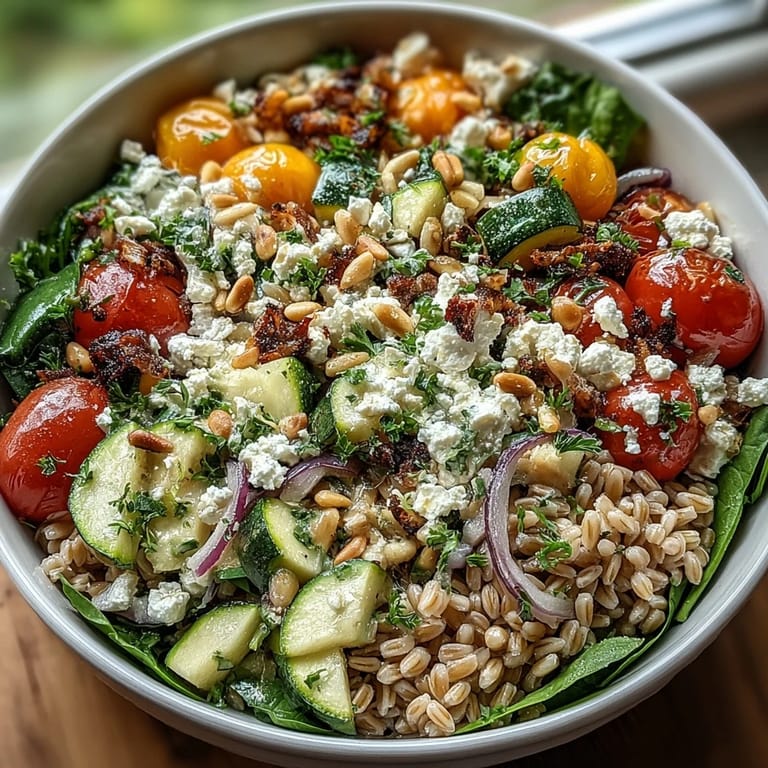 Save
Save This pasta has become my answer to the question of what to cook when I want something that feels a little special but doesn't require special skills. It's the kind of dish that reminds you why you love cooking in the first place.
Recipe FAQs
- → Can I use regular farro instead of farro pasta?
Yes, whole farro works perfectly as a substitute. Cook whole farro for 20–25 minutes until tender, then drain and proceed with the recipe as written. The texture will be slightly chewier than pasta but equally delicious.
- → How long does this keep in the refrigerator?
The farro bowl stores well for 3–4 days in an airtight container. The flavors actually improve as they meld together. If meal prepping, keep the feta and pine nuts separate and add them just before serving to maintain their texture.
- → What can I use instead of feta cheese?
For dairy-free options, try vegan feta alternatives or omit the cheese entirely. Olives, sun-dried tomatoes, or avocado can provide similar savory richness. For a different dairy option, goat cheese or fresh mozzarella pair beautifully with the Mediterranean flavors.
- → Can I make this dish completely vegan?
Absolutely. Simply skip the feta cheese or use a plant-based feta alternative. The vegetables, olive oil dressing, and farro create a satisfying complete meal. You might add extra pine nuts or chickpeas for additional protein and texture.
- → Is farro gluten-free?
No, farro contains wheat gluten. For a gluten-free version, substitute with quinoa, brown rice, or gluten-free pasta. Quinoa works particularly well here as it complements the Mediterranean flavors and has a similar cooking time.
- → Can I serve this cold as a salad?
Yes, this dish excels as a cold salad. Allow it to cool completely after tossing with the dressing, then refrigerate. The flavors develop beautifully when chilled, making it ideal for picnics, potlucks, or make-ahead lunches during warmer months.