 Save
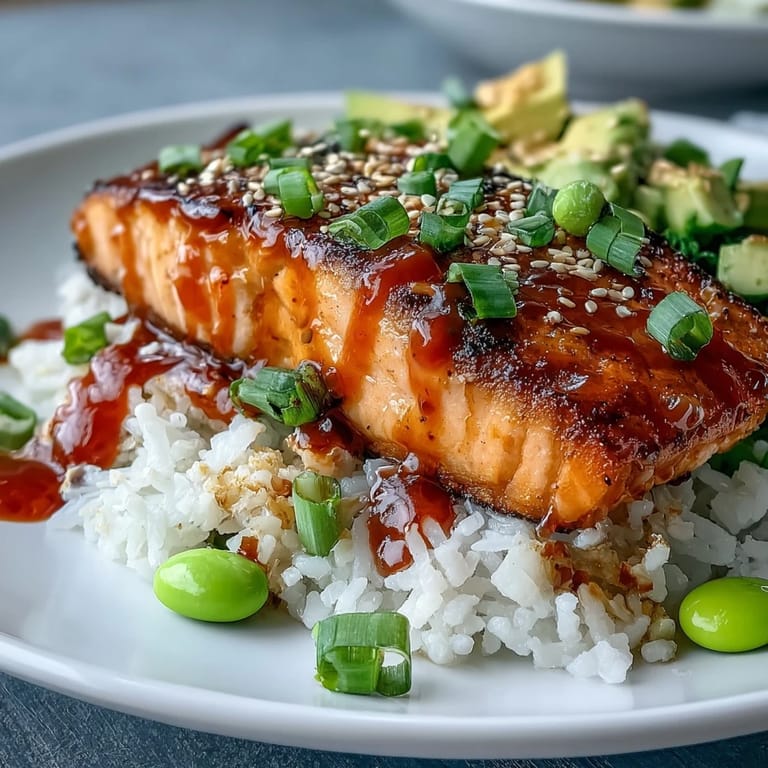
Save There's a particular magic that happens when you're standing at the stove on a Tuesday evening, the kitchen smelling like ginger and garlic hitting hot oil, and you realize you've stumbled onto something that tastes like you actually know what you're doing. That's this salmon bowl for me. A friend texted asking what I was making for dinner, and by the time they arrived, the house smelled so good they didn't even bother with pleasantries. The combination of that sticky-sweet glaze catching the light on the salmon, the cooling contrast of cucumber and avocado, the little pop of edamame—it all came together without fuss.
I made this for my sister during one of those visits where she'd just announced something big was happening in her life, and we both needed to sit down with something nourishing that didn't require talking while cooking. She picked at the edamame thoughtfully, then suddenly started laughing at how the sriracha mayo had dripped on her chin, and just like that, the conversation opened up naturally. Food has this way of creating permission to just be present.
Ingredients
- Salmon fillets (4, about 150 g each, skinless): This is your protein centerpiece, and buying quality matters because you'll taste the difference when there's nothing else hiding it; look for fillets with a pink hue and firm texture.
- Vegetable oil (1 tablespoon): Medium-high heat needs an oil that won't smoke, so avoid olive oil here and stick with something neutral like canola or avocado oil.
- Salt and black pepper: Season generously before cooking because the glaze will add sweetness but needs that salt foundation to shine.
- Honey (3 tablespoons): This is what gives the glaze its glossy caramel finish; don't skip it or use a substitute unless you like things less velvety.
- Sriracha sauce (2 tablespoons for glaze, 1 tablespoon for mayo): Buy a good bottle because cheap versions taste more vinegary than complex; Huy Fong is the standard for a reason.
- Soy sauce (1 tablespoon): The umami backbone that makes everything taste intentional and balanced rather than just sweet.
- Lime juice (1 tablespoon for glaze, 1 teaspoon for mayo): Fresh is non-negotiable here; bottled lime juice will taste metallic and flat by comparison.
- Fresh ginger (1 teaspoon grated): Microplane it fresh right before cooking so the oils stay bright; pre-grated loses its bite quickly.
- Garlic clove (1, minced): One clove is restrained on purpose, letting other flavors breathe instead of turning the whole thing into garlic bread energy.
- Jasmine rice (2 cups): The light, floral note matters here; jasmine rice will feel luxurious while brown rice would add earthiness you don't need.
- Water (2 1/2 cups): The exact ratio for jasmine rice so it's fluffy not mushy, and definitely rinse the rice first or you'll get starch-glued grains.
- Edamame (1 cup shelled): Steamed fresh or thawed frozen both work; they add protein, sweetness, and that satisfying texture contrast.
- Cucumber (1 large, thinly sliced): The cooling element that keeps the bowl from feeling heavy, and thin slices mean more surface area to absorb flavors.
- Avocados (2 ripe): Ripe is the key word here because underripe avocado is mealy and disappointing; they should yield slightly to thumb pressure.
- Mayonnaise (1/3 cup): The sriracha mayo needs real mayo's emulsified richness to be creamy; don't use light versions.
- Sesame seeds (2 tablespoons, optional): Toast them yourself for about 90 seconds in a dry pan to wake up the nutty flavor, then everything becomes more interesting.
- Green onions (2, sliced, optional): The final brightness that says this is finished, not that it's just sitting there.
Tired of Takeout? 🥡
Get 10 meals you can make faster than delivery arrives. Seriously.
One email. No spam. Unsubscribe anytime.
Instructions
- Rinse and cook the jasmine rice:
- Run cold water over the rice in a fine mesh strainer, stirring gently, until the water runs clear—this removes excess starch so you get individual grains instead of a starchy clump. Combine rinsed rice and water in your saucepan, bring to a boil uncovered, then cover, reduce heat to low, and let simmer exactly 12 minutes while you prep everything else.
- Whisk together the sriracha mayo:
- In a small bowl, combine mayonnaise, sriracha, and lime juice, whisking until completely smooth and there are no streaks of sriracha left visible. This becomes your drizzle element, so make it ahead so it's ready when you need it.
- Build the honey sriracha glaze:
- Combine honey, sriracha, soy sauce, lime juice, freshly grated ginger, and minced garlic in another small bowl, stirring until the honey dissolves and everything is evenly distributed. The glaze should smell aromatic and balanced, not overwhelming in any one direction.
- Season and sear the salmon:
- Pat salmon fillets dry with paper towels, then season generously on both sides with salt and pepper. Heat oil in your nonstick skillet over medium-high heat until it shimmers, then add salmon skin-side up and cook without moving it for 3-4 minutes until the bottom develops a light golden crust, then flip and cook another 3-4 minutes until the flesh is mostly opaque.
- Glaze the salmon gently:
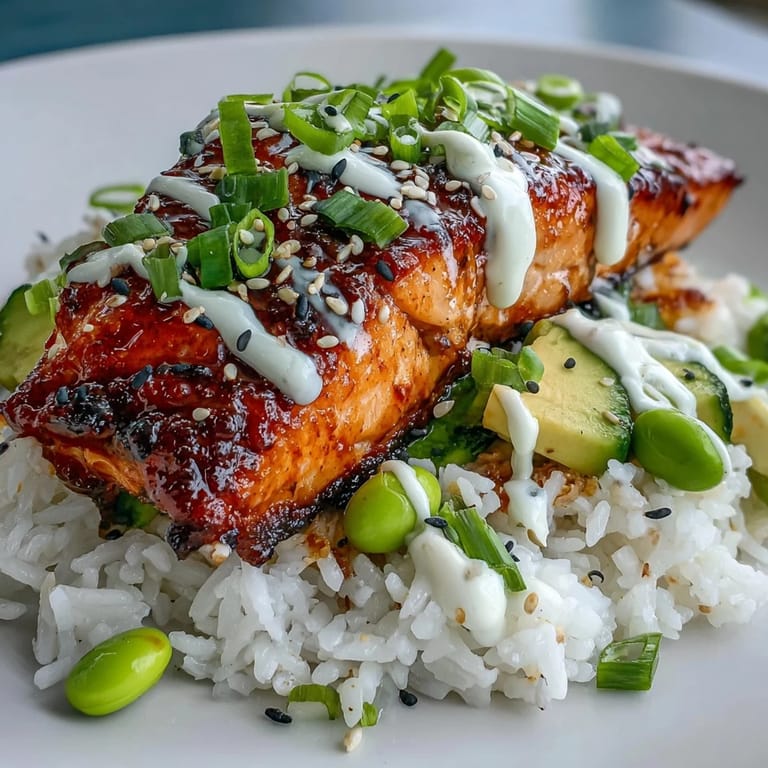
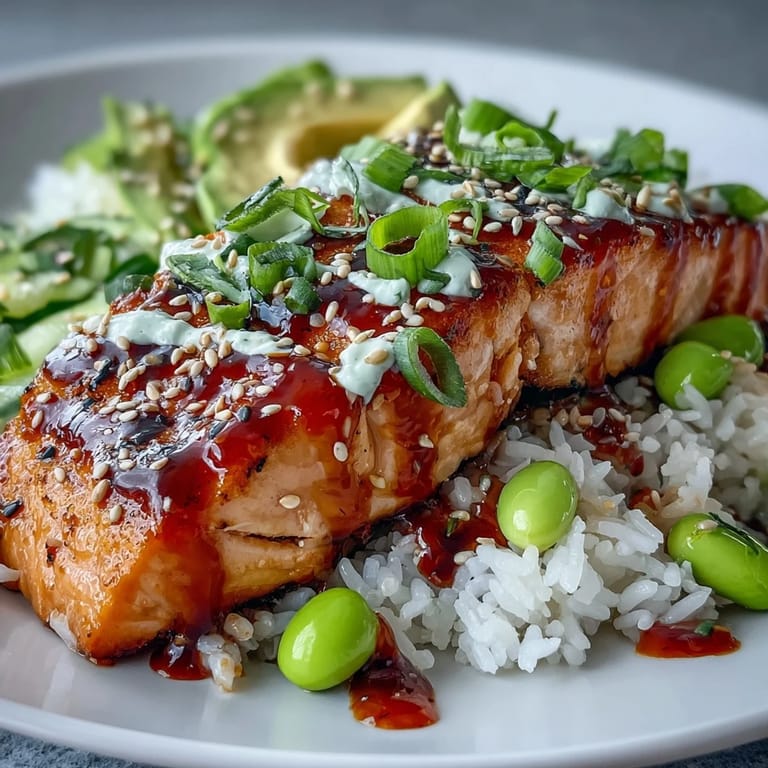
- Reduce heat to low, pour the honey sriracha glaze directly over the salmon fillets, and let them simmer for 2-3 minutes while you spoon the glaze over the top repeatedly, creating a shiny coating. The salmon should be completely cooked through and the glaze should look thick and caramelized, not runny.
- Let the rice rest and finish cooking:
- After 12 minutes of simmering, remove the rice from heat but keep it covered for exactly 10 minutes—this resting time lets the steam finish the cooking process. Fluff it with a fork just before assembling, breaking up any clumps gently.
- Assemble your bowls with intention:
- Divide the fluffy jasmine rice among four bowls as your base, then arrange edamame, cucumber slices, and avocado slices in sections around the bowl so each bite has variety. Place one glazed salmon fillet on top of each bowl's rice, drizzle with sriracha mayo, and garnish with sesame seeds and green onions if you're using them.
 Save
Save I remember my mom tasting this and asking for the recipe with the kind of genuine surprise that felt like a compliment, then making it for book club and coming back home to ask more questions. There's something about a bowl that feels both simple and intentional that makes people want to replicate it, to bring that same care into their own kitchens.
The Science Behind That Glaze
The magic of honey sriracha isn't just flavor—it's chemistry. When honey heats with sriracha's vinegar and chili peppers, it undergoes a quick caramelization that creates a glossy, slightly thick coating that clings to the salmon. The soy sauce and lime juice add umami and brightness so the dish doesn't become cloyingly sweet, and the ginger and garlic provide aromatic compounds that make your brain think you've cooked all day. Temperature control matters here; you need that low heat in the final step so the glaze thickens without burning, otherwise you'll taste bitterness instead of complexity.
Why This Bowl Works as a Complete Meal
Every component plays a role beyond just sitting there looking pretty. The jasmine rice provides neutral carbohydrates and lets the other flavors shine instead of competing. Edamame and salmon together give you complete plant and animal protein, plus the edamame adds sweetness that echoes the honey in the glaze. Cucumber and avocado aren't just texture—cucumber's water content keeps the bowl fresh and prevents it from feeling heavy, while avocado's fat helps your body absorb the fat-soluble vitamins in the salmon. The sriracha mayo ties everything together with creaminess and extra heat, making each bite feel cohesive rather than like separate ingredients.
Adaptations and Personal Touches
This bowl is forgiving enough to work with what you have while still tasting intentional. If jasmine rice isn't in your pantry, brown rice will give you earthiness and more texture, or quinoa will add nuttiness and extra protein. For crunch, shredded carrots or sliced radishes work beautifully alongside or instead of cucumber, adding both color and complexity. You can adjust sriracha to your heat preference—some people want just a whisper of spice while others want it to announce itself, and there's no wrong answer. Some nights I add a soft egg on top because the creamy yolk mingles with the glaze, and other nights I keep it simple. The point is to feel like you're cooking for yourself, not following orders.
- If you can't find fresh ginger, use one-half teaspoon of ground ginger as a last resort, but seriously try to find fresh.
- Make the glaze ahead of time and reheat it gently—cold glaze applied to hot fish will separate instead of clinging.
- Slice your avocado right before assembling or it will oxidize and look sad.
 Save
Save This bowl became my answer to the question of what to make when you want something that feels special but not stressful, something that tastes like care without requiring hours of your evening. Make it once and it becomes a favorite you return to when you need to feed people or just yourself.
Recipe FAQs
- → Can I use frozen salmon fillets?
Yes, frozen salmon works well for this bowl. Thaw completely in the refrigerator overnight, then pat dry before seasoning and cooking to ensure proper searing and glaze adhesion.
- → How can I make this less spicy?
Reduce the sriracha in both the glaze and mayo to half the amount, or substitute with sweet chili sauce for a milder heat level while maintaining the sweet flavor profile.
- → What other grains work instead of jasmine rice?
Brown rice, quinoa, or cauliflower rice make excellent substitutes. Adjust cooking time accordingly—brown rice takes longer, while cauliflower rice needs just 2-3 minutes.
- → Can I meal prep these bowls?
Absolutely. Store components separately in airtight containers: rice, glazed salmon, vegetables, and sauce. Reheat salmon gently and assemble fresh for best texture and flavor.
- → Is there a substitute for mayonnaise in the sauce?
Greek yogurt or sour cream work well as lighter alternatives. For a vegan option, use plant-based mayo or cashew cream blended with lime juice and sriracha.
- → How do I know when the salmon is perfectly cooked?
The salmon is done when it flakes easily with a fork and reaches an internal temperature of 145°F (63°C). The flesh should turn opaque and slightly pink throughout.