 Save
Save There's something deeply satisfying about the sound of soba noodles hitting cold water—that little sizzle and steam that rises up while you're rinsing them clean. I discovered this bowl on a sweltering afternoon when my kitchen felt too small for hot meals, and I needed something that felt both light and genuinely filling. The first time I made it, I underestimated how much the sesame dressing would tie everything together, turning simple vegetables and noodles into something that tasted intentional and complete.
I made this for my neighbor last summer when she stopped by unannounced, and she sat at my counter watching me work while we talked about our gardens. By the time I divided the bowls and drizzled that golden sesame dressing across the top, she'd already asked for the recipe twice. There's a particular kind of hospitality in serving something that looks as thoughtful as it tastes.
Ingredients
- Dried soba noodles (250 g): These buckwheat noodles have a subtle earthiness that sets them apart from regular pasta—look for ones that are 100% buckwheat if you're avoiding gluten.
- Shelled edamame (1 cup): They add protein and a pop of bright green color, plus they're one of those ingredients that work straight from the freezer with zero shame.
- Cucumber (1 medium, julienned): The crisp, cool texture is essential here—it's what makes this feel refreshing rather than just noodles in a bowl.
- Carrots (2 medium, peeled and julienned): A little sweetness and crunch that balances the umami of the dressing beautifully.
- Scallions (2, thinly sliced): Don't skip these—they add a sharp freshness that ties the whole thing together.
- Toasted sesame seeds (2 tbsp): These are the punctuation mark at the end of the sentence, adding nuttiness and texture.
- Fresh cilantro or mint (1/4 cup, optional): Either one brightens everything up, though this is where you can make the dish your own.
- Soy sauce (3 tbsp): The backbone of the dressing—use tamari if you need gluten-free.
- Rice vinegar (2 tbsp): This gives the dressing its subtle tang without overpowering anything.
- Toasted sesame oil (1 tbsp): A little goes such a long way here; this is where most of the dressing's personality lives.
- Tahini or smooth peanut butter (1 tbsp): Creates that creamy, slightly thick consistency that clings to the noodles.
- Honey or maple syrup (1 tbsp): A touch of sweetness that rounds out all the savory and tangy notes.
- Fresh ginger (1 tsp, grated): Adds warmth and a little bite that makes you notice you're eating something alive and intentional.
- Garlic clove (1 small, minced): Just enough to add depth without letting it dominate the flavor profile.
- Water (1 tbsp, for thinning): Keep extra on hand—you might need it depending on your tahini's consistency.
Tired of Takeout? 🥡
Get 10 meals you can make faster than delivery arrives. Seriously.
One email. No spam. Unsubscribe anytime.
Instructions
- Cook the soba noodles:
- Bring a pot of water to a rolling boil and add the noodles, stirring gently so they don't clump together. They'll cook faster than you expect—usually around 4 to 5 minutes, depending on thickness. Drain them into a colander and rinse thoroughly under cold running water, using your fingers to gently separate any strands that are sticking together.
- Blanch the edamame:
- While the noodles are cooking, bring a separate pot of salted water to a boil and add the edamame. They'll only need 2 to 3 minutes—you're just heating them through and keeping them bright green and tender. Drain and set aside to cool.
- Make the sesame dressing:
- In a small bowl, whisk together the soy sauce, rice vinegar, sesame oil, tahini, honey, ginger, and garlic until you have a smooth, pourable sauce. If it feels too thick, add water a little at a time until it reaches the consistency you want—it should coat the back of a spoon but still drizzle easily.
- Prepare your vegetables:
- Julienne the cucumber and carrots into thin, matchstick-like pieces; thinly slice the scallions on a diagonal. If you're using herbs, give them a rough chop so they're ready to go.
- Dress the noodles:
- Put the cooled soba noodles into a large bowl and pour half of the sesame dressing over them, tossing gently so every strand gets coated. This prevents them from clumping and makes sure the flavor is distributed evenly.
- Build your bowls:
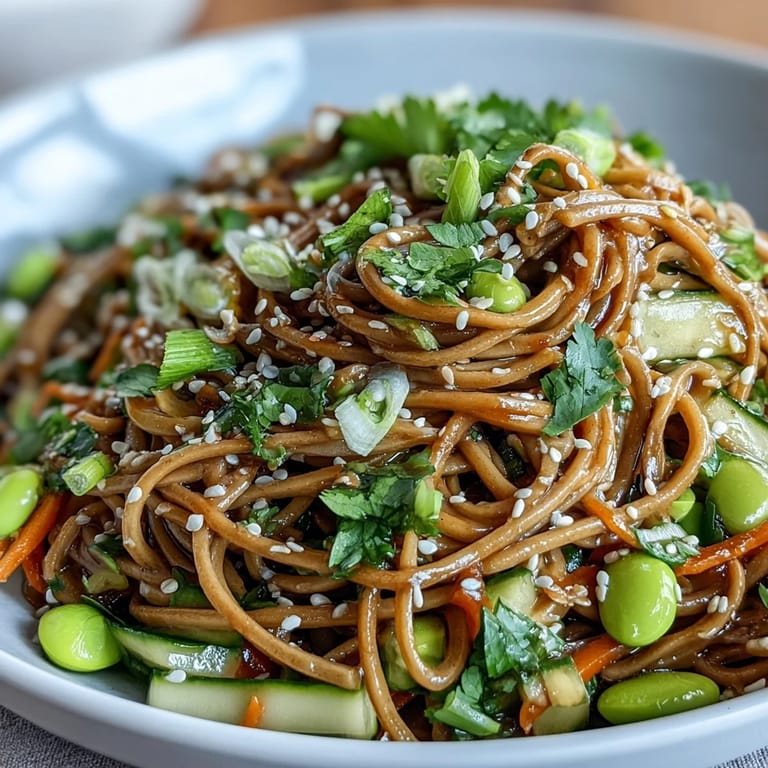
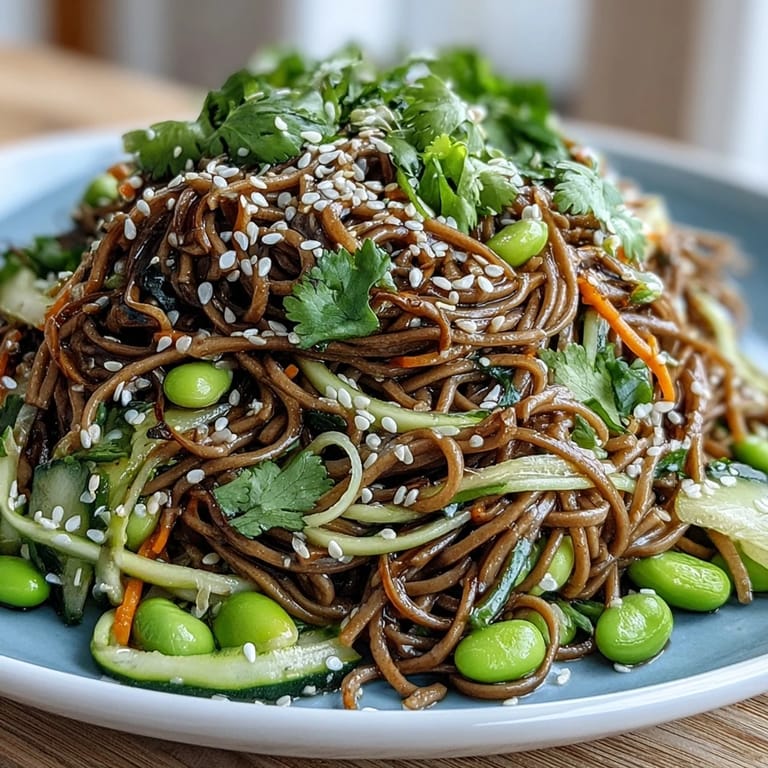
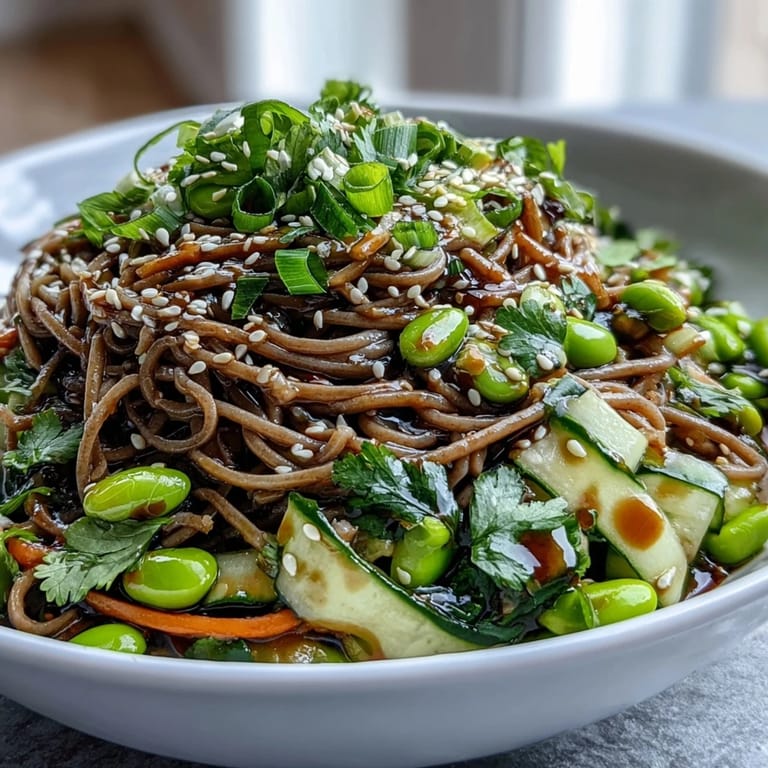
- Divide the dressed noodles among four bowls, then arrange the edamame, cucumber, carrots, and scallions on top of each portion in little piles. This way, each person gets a balance of everything in every bite.
- Finish and serve:
- Drizzle the remaining dressing over the top of each bowl, then sprinkle with toasted sesame seeds and fresh herbs if you're using them. Serve immediately while everything is still cool and crisp.
 Save
Save I served this to my family one evening, and my youngest asked if we could eat it cold more often—which meant something about this bowl had clicked in a way that surprised me. It wasn't fancy or complicated, but it felt like I'd made something thoughtful rather than something quick.
Why This Works as a Complete Meal
The buckwheat noodles provide complex carbohydrates and a subtle earthiness that feels grounding, while the edamame brings real protein to the table without needing anything else to feel substantial. The vegetables aren't just decoration—they're there to add texture, fresh flavors, and nutrients that make you feel nourished rather than full. That sesame dressing ties everything together so thoroughly that you forget you're eating something simple.
Making It Your Own
This bowl is genuinely flexible, and part of its charm is that it accepts additions and substitutions without losing its soul. Grilled tofu adds protein and absorbs the dressing beautifully, while a soft-boiled egg on top makes it feel slightly more indulgent. You can swap the vegetables for snap peas, bell peppers, radishes, or anything else that's crisp and fresh; the structure stays the same, only the flavors shift.
Storage and Make-Ahead Tips
The components keep well separately in the refrigerator for up to three days, which means you can assemble this in minutes if you've prepped everything ahead of time. The dressing stays fresh in a covered jar, and you can even cook the noodles and vegetables the night before, keeping them in separate containers so nothing gets soggy or confused. Just don't toss everything together until you're ready to eat, because the noodles will eventually absorb all the dressing and lose their texture.
- Keep the dressing separate from the noodles if you're meal prepping, and stir it in just before eating.
- Toasted sesame seeds stay crispest if you add them right at the end, not minutes before.
- A squeeze of fresh lime juice on top just before serving adds brightness if you want to brighten things up even further.
 Save
Save This soba noodle bowl has become one of those dishes I make when I want to feel like I've taken care of myself and the people around me. It's the kind of meal that reminds you that good food doesn't have to be complicated to feel intentional.
Recipe FAQs
- → Are soba noodles gluten-free?
Traditional soba noodles contain both buckwheat and wheat flour. For a gluten-free version, look for 100% buckwheat noodles and substitute tamari for soy sauce in the dressing.
- → Can I make this bowl ahead of time?
Yes! Prepare the components up to 2 days in advance. Store noodles, vegetables, and dressing separately, then assemble when ready to serve. The dressing actually develops more flavor after sitting.
- → What vegetables work well in this bowl?
Beyond cucumber and carrots, try snap peas, bell peppers, radishes, shredded cabbage, or bean sprouts. The key is using crisp, raw vegetables that hold their texture against the soft noodles.
- → How do I prevent soba noodles from sticking?
Rinse cooked noodles thoroughly under cold water immediately after draining. This removes excess starch and stops the cooking process. Toss with a small amount of sesame oil before storing.
- → Can I add protein to make it more filling?
Excellent protein options include grilled tofu, baked tempeh, shredded chicken, shrimp, or a soft-boiled egg. Simply prepare your chosen protein separately and arrange on top before serving.