 Save
Save I still remember the summer my neighbor handed me a cold beer and asked if I could help him throw together something for his daughter's graduation party. I had a few hours and a fully stocked grill, so I decided to build a spread that would let everyone eat exactly what they loved. Thick slabs of meat, charred vegetables that tasted like pure summer, and dips that made everything better. That day taught me that the best gatherings aren't about complicated recipes—they're about abundance, choice, and the smell of smoke rising from a well-loved grill.
The real magic happened around hour two of that graduation party when I looked over and saw three generations standing around our platter—a grandmother loading her bread with ranch-dipped zucchini, teenagers building towering stacks of everything, kids chasing char marks on corn. Someone said, 'This is perfect,' and I realized they weren't just talking about the food. They were talking about what it represented: time, care, and the confidence that comes from knowing you can feed people well.
Ingredients
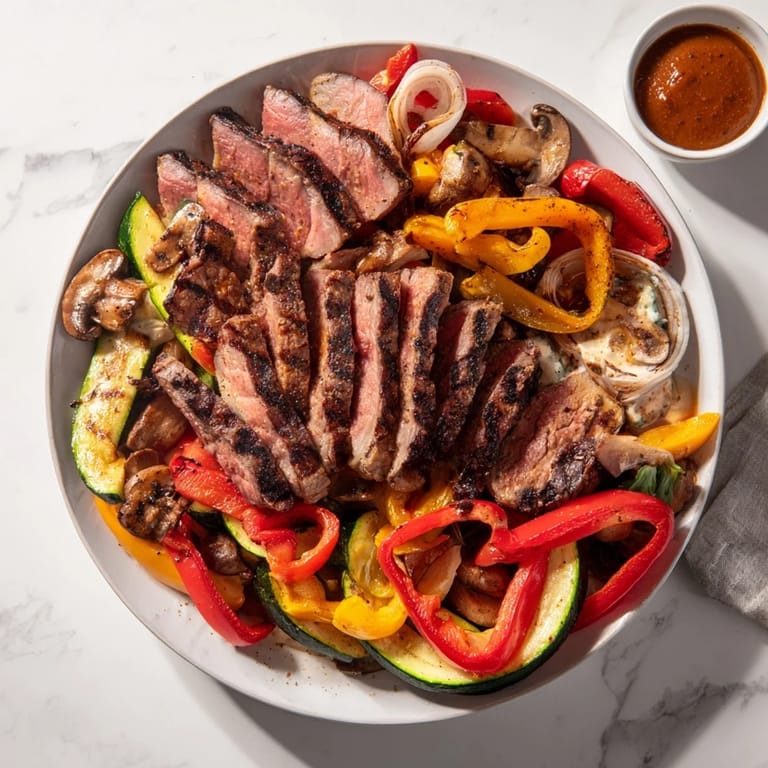
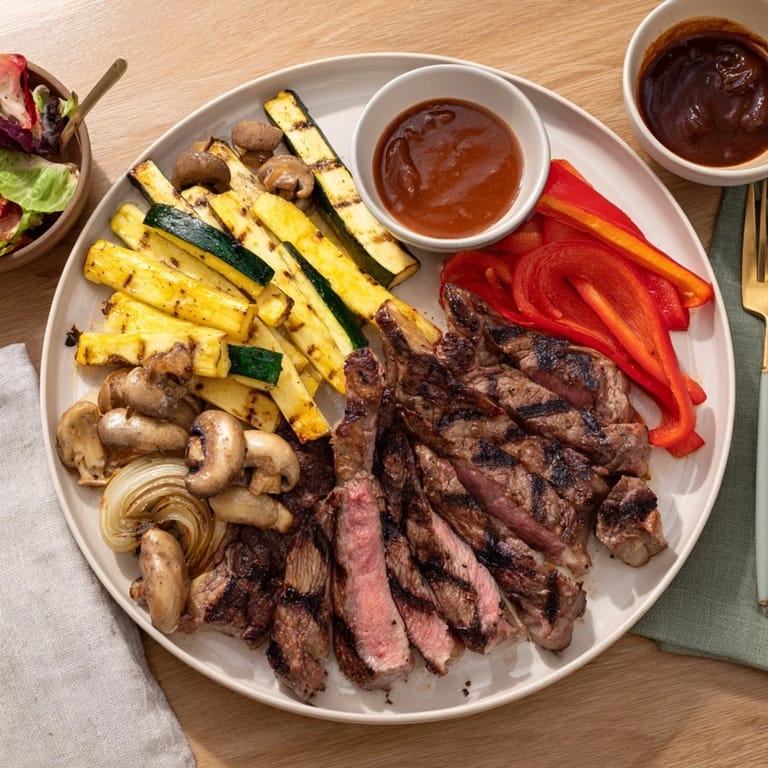
- Beef ribeye steaks, thick-cut into strips: The marbling in ribeye means these strips stay juicy even over high heat. Two pounds fed our crowd beautifully, with a few pieces left over for late arrivals.
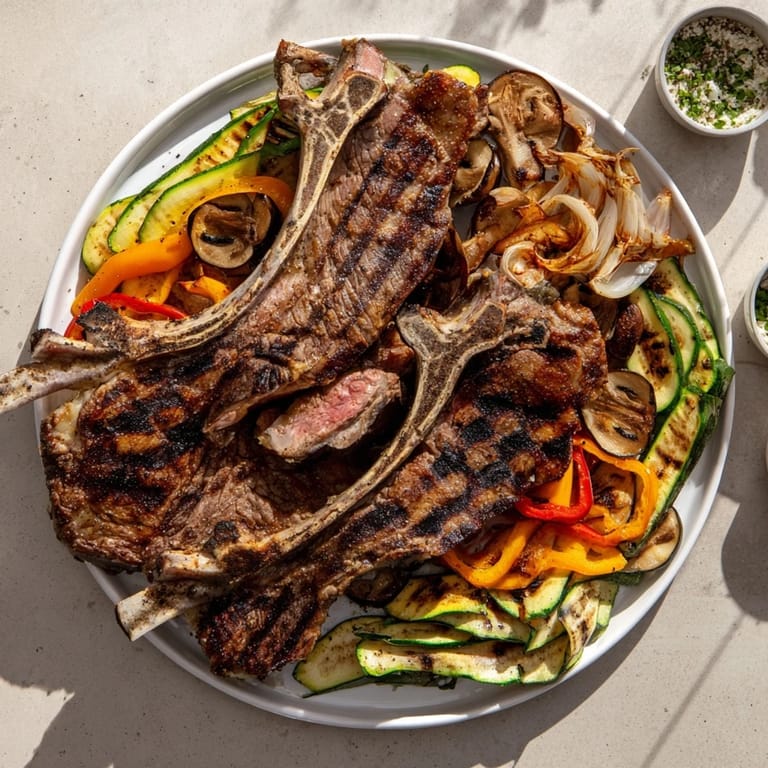
- Bone-in pork chops, thick-cut: The bone conducts heat beautifully and keeps the meat tender. Don't trim the fat—that's where the flavor lives on the grill.
- Chicken thighs, boneless and skinless: Dark meat is forgiving and stays moist. These cook faster than breasts and are cheaper too.
- Zucchini, thickly sliced diagonally: The angle matters because it creates more surface area for char. Thin slices fall through the grates—I learned that the hard way.
- Red bell peppers in large strips: They take longer to cook than you'd think, so give them space and time to blister.
- Red onion in thick rings: The rings hold together on the grill and develop a sweet, caramelized edge that's nothing like raw onion.
- Corn cut into thirds: Cutting it into manageable pieces made it easier for guests to handle and eat standing up.
- Cremini mushrooms, halved: These are meaty enough to hold their own on a platter and soak up all the smoky flavors.
- Olive oil for coating: It carries the spices into every crevice and prevents sticking on the grill.
- Smoked paprika: This is the secret that makes everything taste like it came from a real smokehouse, even if you're grilling.
- Garlic powder: It's not as elegant as fresh garlic, but it clings to the meat in a way that raw garlic can't, and it gets deeper when grilled.
- Ranch dip, smoky barbecue sauce, and blue cheese dip: Three very different flavor directions. Guests naturally gravitate toward different ones, and it's beautiful to watch.
- Rustic country bread, sliced thick: Thick enough that it doesn't fall apart when guests load it up, and it holds char without burning through.
- Mixed baby greens: The brightness cuts through the richness and makes the whole board look alive.
Tired of Takeout? 🥡
Get 10 meals you can make faster than delivery arrives. Seriously.
One email. No spam. Unsubscribe anytime.
Instructions
- Get your grill ready:
- Preheat to medium-high heat. You want it hot enough that water beads and sizzles when it hits the grates, but not so volcanic that everything burns before it cooks through. This takes about 10 minutes, and it's the most important step nobody rushes.
- Season and oil the proteins:
- Toss your beef, pork, and chicken together in a large bowl with olive oil and your smoked paprika, garlic powder, salt, and pepper. The oil is your delivery system for the spices—make sure every piece is well coated. This is also where you can taste and adjust the seasoning. I always add a little extra pepper because grilling mellows the spice.
- Prepare the vegetables:
- In a separate bowl (keeping meat and vegetables apart is smart kitchen hygiene), toss your zucchini, peppers, onions, corn, and mushrooms with olive oil, salt, and pepper. They don't need anything fancy—just enough oil to coat and seasoning to make them taste like themselves, only better.
- Grill the meats in stages:
- Start with the beef ribeye strips—they need only 3 to 4 minutes per side for medium-rare, and they cook fast. Let them develop a brown crust before flipping. Move them to a cooler part of the grill or a holding platter. Next, the pork chops for 5 to 6 minutes per side. They take longer and benefit from that time. Finally, the chicken thighs, which need 6 to 7 minutes per side until they're cooked completely through—no pink near the bone. Once everything's done, rest it all under a loose tent of foil for about 5 minutes. This is when the magic happens inside the meat, and resting keeps it from drying out when people eat it.
- Grill the vegetables with intention:
- Zucchini and bell peppers go on for 2 to 3 minutes per side until they're tender with char marks. The corn and onions need 3 to 4 minutes, turning occasionally so they get color all over. Mushrooms are quick—just 2 minutes per side until they soften. Vegetables finish faster than you expect, so don't wander off.
- Toast the bread:
- The bread goes on last, just 1 to 2 minutes per side until it's lightly golden and warm. It should still be bread, not charcoal—people will use this as their vehicle for everything else.
- Build your platter like you're telling a story:
- Use a large wooden board if you have one—it looks amazing and keeps everything warm longer. Make generous piles of meat, arrange vegetables in clusters, place your three dips in bowls scattered around, pile the bread on one side, and scatter the baby greens as a bright accent. The abundance is the point. People should feel like there's more than enough, even if they've already eaten.
- Serve with invitation:
- Bring the whole platter out and let people gather around. Hand them a plate or a piece of bread and let them build their own creation. This is where the magic shifts from your kitchen to theirs, and that's exactly how it should be.
 Save
Save After everyone had eaten and the platter was picked clean, my neighbor's daughter hugged me and said this was the food memory she'd take with her when she moved away. Years later, she told me she'd tried to recreate that platter for her own graduation party. That's when I understood that recipes aren't just instructions—they're permission to gather people around something real and abundant.
The Art of the Shared Platter
A platter like this works because it removes the pressure of choice from you and puts it on your guests. Nobody's waiting for someone else's plate. Nobody's unhappy because there wasn't enough of their favorite thing. The abundance itself becomes part of the hospitality. I've learned that the best entertaining happens when you stop trying to control what people eat and just make sure there's enough of everything they might love.
Timing That Feels Effortless
The beauty of this spread is that once everything is prepped and seasoned, you're just managing timing on the grill. The meats take about 25 minutes total, vegetables about 15, and bread maybe 3. That means you can have everything grilled, rested, and ready to pile onto that platter in under 40 minutes. The real trick is accepting that some things finish before others, and that's fine. The foil tent is your friend. A warm platter stays warm for longer than you'd think, giving you flexibility and keeping you from panicking.
Making This Your Own
This recipe is a canvas, not a cage. I've made it with sausages when ribeye was out of my budget, with plant-based proteins when friends were visiting, even with grilled pineapple and pickled red onions when I wanted something unexpected. The structure is what matters—the proteins, the vegetables, the dips, the bread. The specifics can change completely based on what you have and what your guests love. That flexibility is why this became my go-to platter for every season and every occasion.
- Add grilled pineapple chunks for a sweet and smoky combination nobody expects
- Mix in pickled vegetables or a quick cucumber salad for brightness and acidity
- Keep a hot grill going the whole time and let people add extra vegetables as they eat—they'll come back for more
 Save
Save This platter is my favorite way to feed people because it says 'I trust you to know what you love, and I've brought enough of it.' That generosity, more than any single ingredient, is what makes a meal memorable.
Recipe FAQs
- → What cuts of meat are ideal for this platter?
Thick-cut beef ribeye strips, bone-in pork chops, and boneless chicken thighs provide a variety of flavors and textures that grill well together.
- → How do I achieve perfect grill marks on vegetables?
Preheat the grill to medium-high and place veggies like zucchini and bell peppers directly on grates, turning after 2-3 minutes for well-defined char marks without overcooking.
- → What dips pair best with the grilled meats and vegetables?
Classic ranch, smoky barbecue sauce, and creamy blue cheese dips offer complementary flavors balancing smoky, spicy, and creamy notes.
- → Can this platter be adapted for dietary preferences?
Yes, substituting meats for sausages or plant-based proteins works well, and gluten-free bread can replace rustic slices to accommodate restrictions.
- → How long should the grilled meat rest before serving?
Allow meats to rest under foil for a few minutes after grilling to redistribute juices and ensure tender, juicy bites.