 Save
Save The smell hit me before I even opened the oven door: warm olive oil, lemon zest, and that clean scent salmon gets when it's barely kissed by heat. I was skeptical about confiting fish at first, worried it would turn greasy or fall apart, but a friend who'd trained in a Parisian kitchen swore by the method. That first bite proved her right. The flesh was so tender it practically dissolved on my tongue, nothing like the dry, overcooked fillets I'd served too many times before.
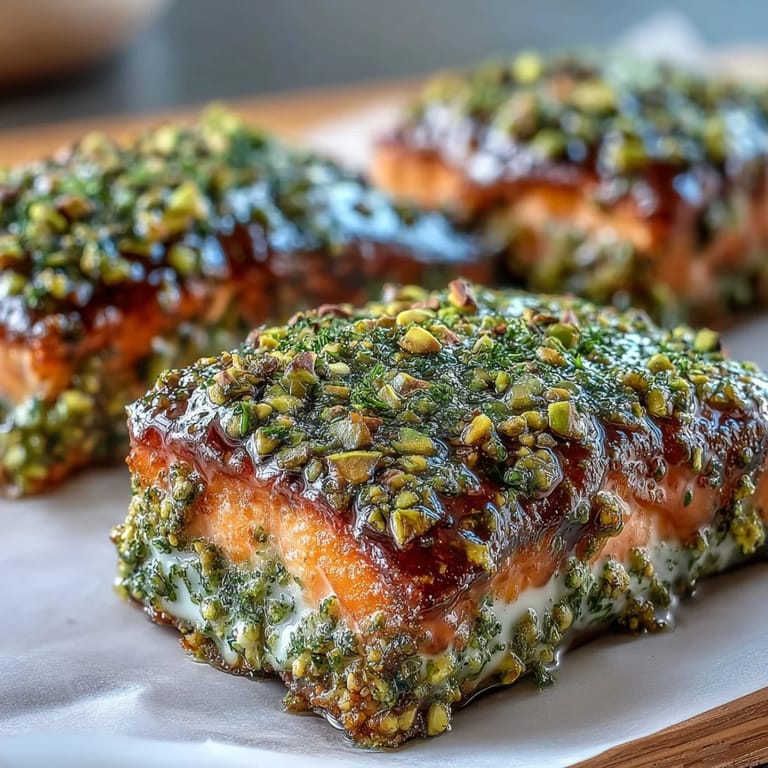
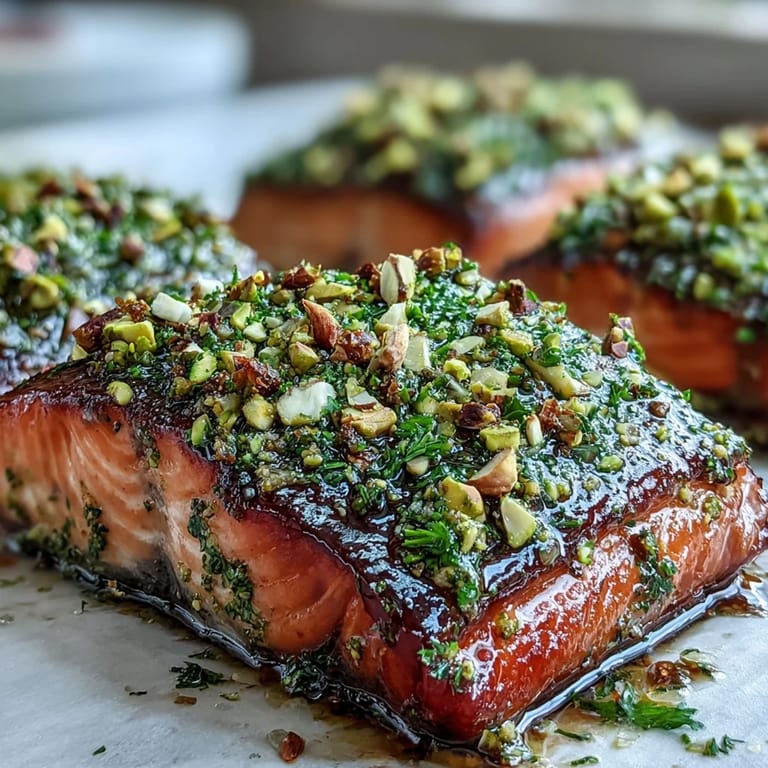
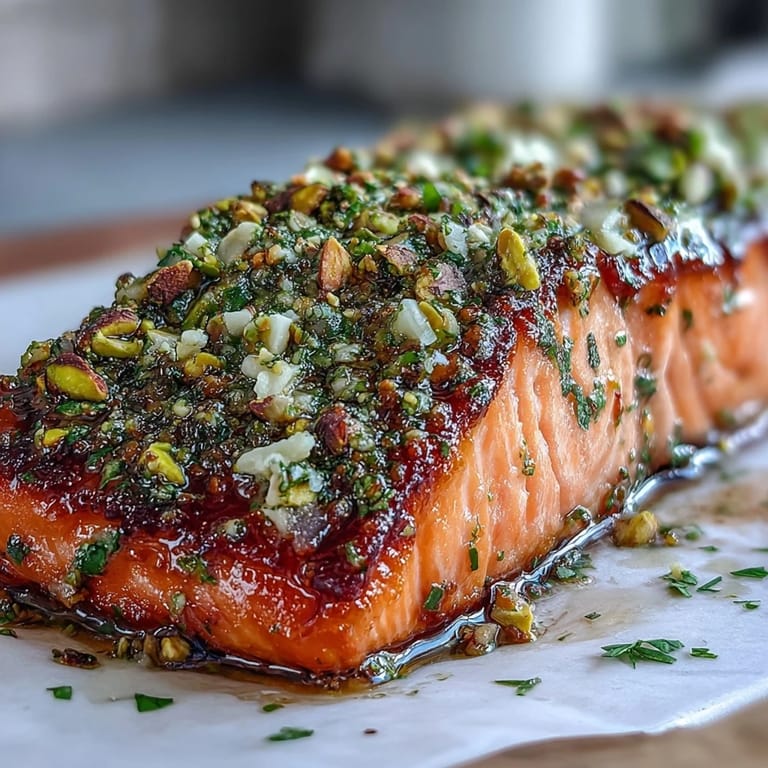
I made this for a small dinner party on a rainy October evening, and the kitchen felt like a quiet refuge as the salmon slowly cooked. My friend Sarah, who claimed she didn't like fish, took a second helping and asked for the recipe before dessert even arrived. The crust, bright green and fragrant, made the plate look like something from a restaurant, and I felt a quiet pride watching everyone lean in to take their first bite.
Ingredients
- Salmon fillets: Choose center-cut pieces with even thickness so they cook uniformly, and make sure they're skinless or the texture won't be as silky.
- Olive oil: Use a mild, fruity oil, not your fanciest extra virgin, since you'll be heating it gently and can save it afterward.
- Lemon zest: This brightens the oil and perfumes the fish without adding acidity that can cook the surface.
- Pistachios: Finely chop them by hand for varied texture, a food processor can turn them pasty too quickly.
- Tahini: Stir it well before measuring, the oil separates and you want a smooth, pourable consistency.
- Fresh herbs: Parsley, dill, and mint together create a complex, garden-fresh flavor that dried herbs simply can't match.
- Garlic clove: Grate it finely or mince it to a paste so it melts into the crust without harsh bites.
- Lemon juice: Balances the richness of tahini and oil, brightening every mouthful.
- Honey: Just a teaspoon rounds out the savory elements and helps the crust cling to the fish.
- Ground cumin: Adds a warm, earthy note that ties the Middle Eastern flavors together.
Tired of Takeout? 🥡
Get 10 meals you can make faster than delivery arrives. Seriously.
One email. No spam. Unsubscribe anytime.
Instructions
- Set up the confit:
- Preheat your oven to 100°C and nestle the salmon fillets snugly in a small ovenproof dish, seasoning them with salt, pepper, and lemon zest. Pour enough olive oil over the fillets to mostly submerge them, creating a gentle, low-temperature bath.
- Poach the salmon:
- Slide the dish into the oven and let the salmon cook for 25 to 30 minutes, until the flesh turns opaque and flakes easily with a fork. The oil should barely shimmer, never bubble, so the fish stays tender and moist.
- Make the crust:
- While the salmon poaches, combine pistachios, tahini, garlic, parsley, dill, mint, lemon juice, honey, cumin, salt, and pepper in a bowl. Stir until the mixture forms a thick, spoonable paste that holds its shape but isn't dry.
- Drain and rest:
- Carefully lift the cooked fillets from the oil and place them on a paper towel-lined plate to drain excess oil. Let them cool slightly so the crust adheres better and doesn't slide off.
- Apply the crust:
- Spread a generous layer of the tahini-pistachio mixture over the top of each fillet, pressing gently so it sticks. The crust should be thick enough to see the green herbs and nut pieces clearly.
- Serve:
- Arrange the fillets on a platter, garnish with extra herbs, lemon wedges, and a drizzle of olive oil if you like. Serve warm or at room temperature for the best flavor and texture.
 Save
Save The first time I served this, my dad, who usually drowns fish in tartar sauce, ate his fillet plain and asked if I'd opened a catering business. That moment, watching him savor each bite with genuine surprise, reminded me that good food doesn't need to be complicated, it just needs to be cooked with care and a little creativity.
Serving Suggestions
This salmon pairs beautifully with a crisp green salad dressed in lemon vinaigrette, or with warm flatbread to scoop up any extra crust that falls onto the plate. I've also served it over a bed of herbed couscous or alongside roasted vegetables like zucchini and cherry tomatoes. The dish is rich enough to stand alone but light enough that you won't feel weighed down, and it works just as well for a casual weeknight dinner as it does for a special occasion.
Storage and Reheating
Leftovers keep well in the fridge for up to two days, stored in an airtight container with a piece of parchment between the fillets so the crust doesn't smudge. I actually prefer eating this cold the next day, flaked over a salad or tucked into pita with cucumber and yogurt. If you want to reheat it, do so gently in a low oven (around 120°C) for just a few minutes, or the fish can dry out and lose its tender texture.
Make It Your Own
If pistachios aren't your thing, swap them for almonds or walnuts, though pistachios give the prettiest green color. You can also play with the herbs: swap mint for cilantro, or add a pinch of red pepper flakes if you like a hint of heat. For extra crunch, spread the crust on the fillets and run them under the broiler for a minute or two, just until the top turns golden and crispy.
- Try adding a tablespoon of pomegranate molasses to the crust for a sweet-tart twist.
- Serve with a side of tahini sauce thinned with lemon juice and water for dipping.
- Use the leftover confit oil to dress salads or drizzle over roasted vegetables, it's infused with lemon and salt and tastes incredible.
 Save
Save This dish taught me that luxury isn't about expensive ingredients or complicated methods, it's about taking the time to do something simple really well. I hope it becomes one of those recipes you reach for when you want to feel proud of what you've made.
Recipe FAQs
- → What temperature should I use for confiting salmon?
Set your oven to 100°C (210°F) for gentle, even cooking that keeps the salmon incredibly moist and tender without overcooking.
- → Can I prepare the tahini-pistachio crust in advance?
Yes, you can make the crust mixture up to 24 hours ahead and store it covered in the refrigerator. Bring to room temperature before spreading on the salmon.
- → What can I substitute for pistachios?
Almonds or walnuts work beautifully as alternatives. Chop them finely to achieve a similar texture and nutty flavor profile.
- → How do I know when the salmon is properly cooked?
The salmon is done when it's just opaque throughout and flakes easily with a fork. It should still be moist and tender, not dry or chalky.
- → Can I reuse the olive oil after confiting?
Absolutely! Strain the cooled oil through a fine-mesh sieve or cheesecloth and store it in an airtight container. Use it for sautéing vegetables or making salad dressings.
- → What sides pair well with this dish?
Serve with a crisp green salad, roasted vegetables, warm flatbread, couscous, or herb-infused rice for a complete Mediterranean-inspired meal.