 Save
Save The smell of miso dissolving into warm broth pulled me out of a cooking rut I didn't even know I was in. I'd been making the same rotation of bland chicken dinners for weeks, and then a coworker mentioned her favorite noodle bowl from a spot downtown. I scribbled down a few ingredients on a sticky note and decided to try my own version that night. What came together was this savory, umami-packed bowl that felt like a hug in a dish. I've been hooked ever since.
I made these bowls for my sister after her evening shift at the hospital, and she sat at my kitchen counter in silence for the first few minutes, just eating. Then she looked up and said it was the first meal all week that didn't feel like fuel. That moment reminded me why I love cooking: it's not just about feeding people, it's about giving them a pause, a little comfort. Now whenever she texts asking what's for dinner, I know exactly what she's hoping for.
Ingredients
- Boneless, skinless chicken thighs or breasts: Thighs stay juicier and more forgiving if you slightly overcook them, but breasts work beautifully if sliced thin after resting.
- White miso paste: This is the soul of the dish, adding salty, fermented depth without overwhelming the broth, and it doubles as a marinade base and broth enricher.
- Low-sodium soy sauce: Gives you control over saltiness while still delivering that essential savory backbone.
- Rice vinegar: Brightens the marinade and balances the richness of miso and sesame oil.
- Honey or maple syrup: A touch of sweetness caramelizes on the chicken and rounds out the tang from the vinegar.
- Fresh ginger and garlic: Grate them finely so they melt into the marinade and don't burn when you sear the chicken.
- Toasted sesame oil: A few drops go a long way, adding nutty aroma that makes the whole kitchen smell like a ramen shop.
- Soba noodles or whole wheat spaghetti: Soba has that earthy, slightly nutty flavor, but whole wheat pasta works in a pinch and holds up well in broth.
- Low-sodium chicken broth: The foundation of your soup, choose a quality broth or make your own if you have time.
- Shiitake mushrooms: They release umami into the broth as they simmer and add a meaty, earthy bite.
- Carrot, bok choy, snow peas, spinach or kale: A mix of textures and colors that cook quickly and soak up all that miso goodness.
- Soft-boiled eggs: Totally optional, but the jammy yolk stirs into the broth and makes everything silkier.
- Scallions, sesame seeds, cilantro, nori, chili oil: These toppings aren't just garnish, they add bursts of freshness, crunch, and heat with every spoonful.
Tired of Takeout? 🥡
Get 10 meals you can make faster than delivery arrives. Seriously.
One email. No spam. Unsubscribe anytime.
Instructions
- Whisk the marinade:
- In a shallow bowl, combine miso paste, soy sauce, rice vinegar, honey, ginger, garlic, and sesame oil, whisking until the miso dissolves completely and the mixture is smooth. This marinade should smell bright, salty, and slightly sweet.
- Marinate the chicken:
- Add the chicken to the bowl, turning each piece to coat evenly, then cover and refrigerate for at least 30 minutes or up to 8 hours. The longer it sits, the deeper the flavor soaks in.
- Cook the noodles:
- Bring a large pot of water to a rolling boil, add soba noodles, and cook until just al dente according to package directions. Drain, rinse under cold water to stop the cooking, and toss with a few drops of sesame oil to keep them from clumping.
- Sear the chicken:
- Heat a grill pan or skillet over medium-high heat, shake off excess marinade from the chicken, and cook for 4 to 5 minutes per side until golden and the internal temperature hits 165°F. Let the chicken rest on a cutting board for 5 minutes, then slice into thin strips.
- Build the broth:
- In a clean soup pot, bring chicken broth and water to a gentle simmer, then whisk in the remaining miso paste until it dissolves completely. Taste and adjust if you want it saltier or more umami-forward.
- Simmer the vegetables:
- Add mushrooms, carrots, bok choy, and snow peas to the broth and simmer for 3 to 4 minutes until just tender but still crisp. Stir in spinach or kale and remove from heat so the greens wilt without turning mushy.
- Assemble the bowls:
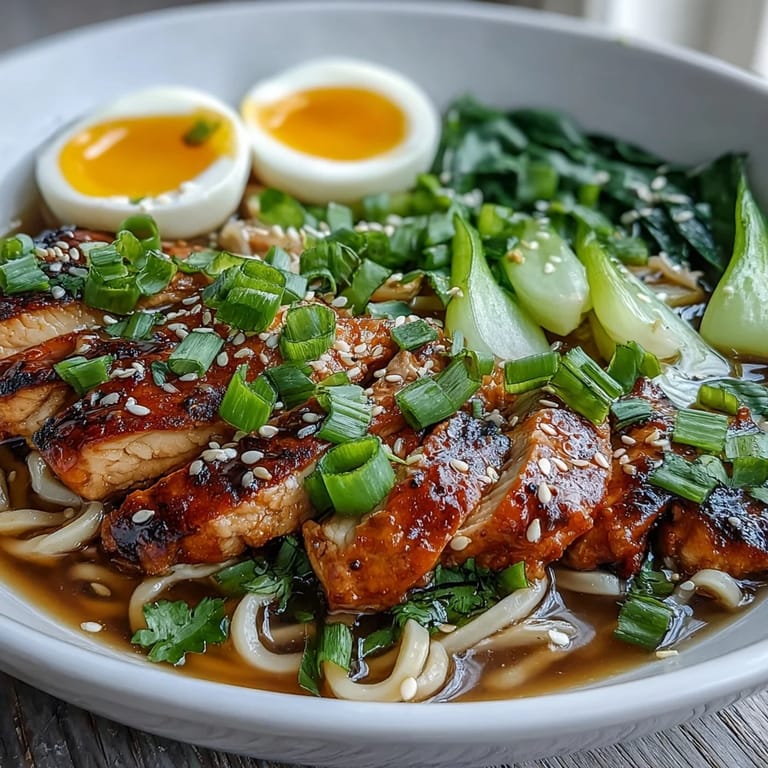
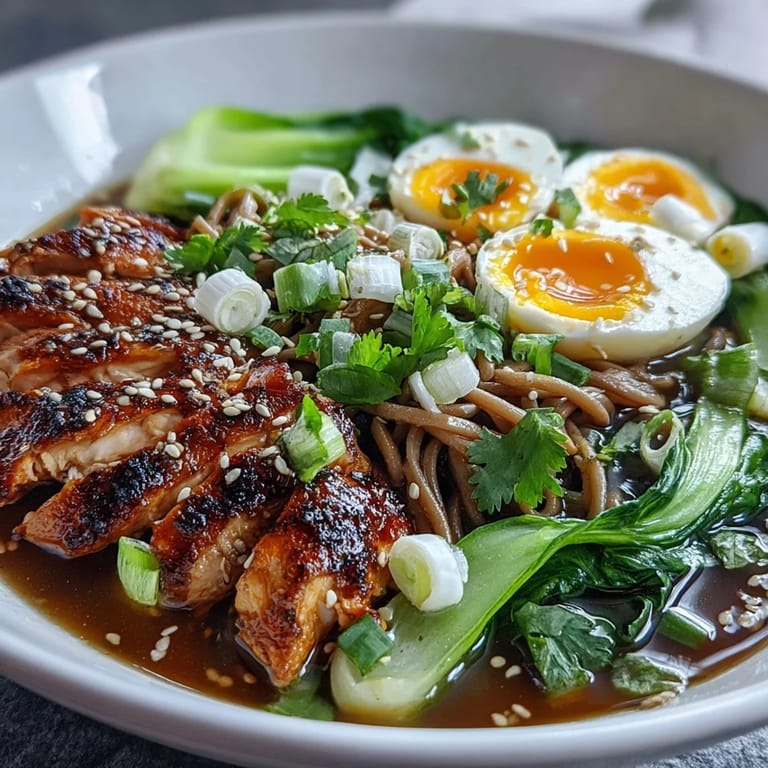
- Divide the noodles between two bowls, arrange sliced chicken on top, and ladle the hot broth and vegetables over everything. The noodles should be submerged but not drowning.
- Add toppings and serve:
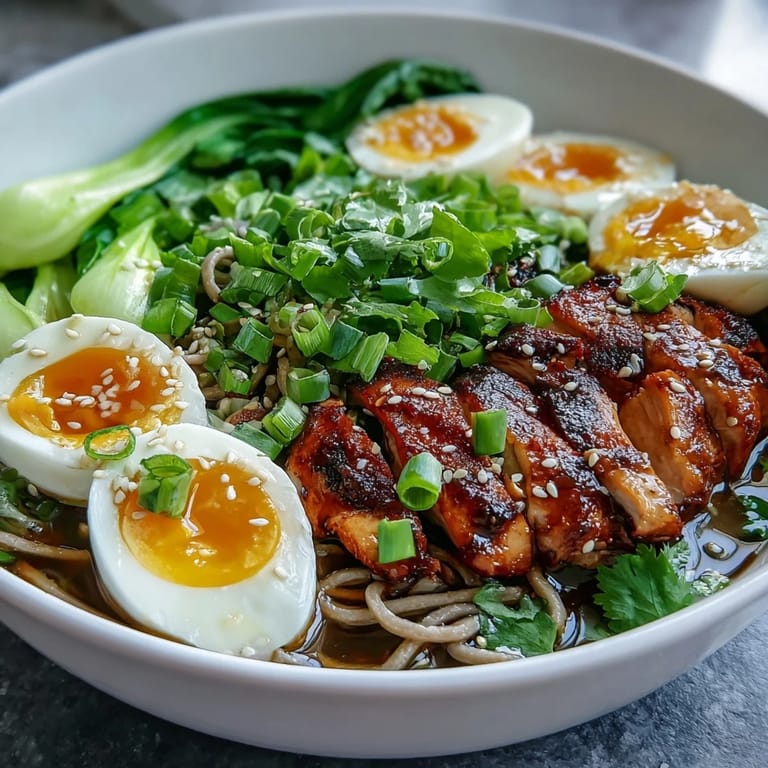
- Top each bowl with halved soft-boiled eggs, scallions, sesame seeds, cilantro, and nori strips, then drizzle with chili oil or Sriracha if you like heat. Serve immediately while everything is steaming hot.
 Save
Save One rainy Saturday, I made a double batch of these bowls and invited a few friends over. We sat around my tiny dining table, slurping noodles and laughing, and someone said it felt like we were in a cozy ramen shop in Tokyo. I've never been to Tokyo, but I'll take that as a win. Food has this way of transporting you, even if it's just across your own kitchen.
Make It Your Own
This recipe is incredibly forgiving and loves to be tweaked. Swap chicken for extra-firm tofu if you want to go vegetarian, just press it well and marinate it the same way. You can also toss in whatever vegetables you have on hand: broccoli, edamame, snap peas, or even thinly sliced bell peppers. If you're not a fan of soba, use rice noodles, udon, or even ramen noodles. The broth stays the same, and it's always delicious.
Storage and Reheating
Leftover noodle bowls are tricky because noodles soak up broth and turn mushy if stored together. I've learned to keep the broth, vegetables, and chicken in one container, and the noodles in another. When I'm ready to eat, I reheat the broth on the stove, add fresh or reheated noodles to a bowl, and pour the hot broth over top. The toppings should always be added fresh, especially the eggs and herbs, so they stay vibrant and flavorful.
Ingredient Swaps and Shortcuts
If you can't find white miso paste, yellow miso works too, though it's a bit saltier so start with less. For a quicker version, use rotisserie chicken and skip the marinating step entirely, just slice it and add it at the end. You can also use pre-cut stir-fry vegetables from the grocery store to save prep time. For a gluten-free version, make sure your soba noodles are 100% buckwheat and use tamari instead of soy sauce.
- Try adding a splash of lime juice right before serving for extra brightness.
- If you like it spicier, stir a teaspoon of gochugaru or chili paste into the broth.
- Leftover broth freezes beautifully for up to three months, just thaw and reheat when you need a quick dinner base.
 Save
Save This bowl has become my answer to long days, cold nights, and moments when I need something nourishing that doesn't take forever. I hope it becomes that for you too.
Recipe FAQs
- → What makes miso special in this dish?
White miso paste brings a deep, savory umami flavor that transforms the simple chicken broth into something truly extraordinary. The fermented soybean paste adds complexity and richness that lingers beautifully.
- → Can I prepare this ahead of time?
Marinate the chicken overnight for deeper flavor penetration. Cook the noodles and vegetables fresh, but prepare the broth base up to 2 days in advance and store it refrigerated.
- → What's the best way to slice the chicken?
Let the chicken rest for 5 minutes after cooking to retain juices. Use a sharp knife to slice thinly against the grain for tender, bite-sized pieces that absorb the savory broth.
- → Are soba noodles gluten-free?
Traditional soba contains wheat, but 100% buckwheat soba noodles are naturally gluten-free. Always check labels and substitute with rice noodles or tamari if needed.
- → How do I store leftovers properly?
Keep broth, noodles, chicken, and toppings in separate airtight containers. Reheat the broth gently and combine fresh components when ready to eat for the best texture.
- → Can I make this vegetarian?
Substitute extra-firm tofu for the chicken and use vegetable broth instead of chicken stock. Press the tofu before marinating to help it absorb the miso flavors.