 Save
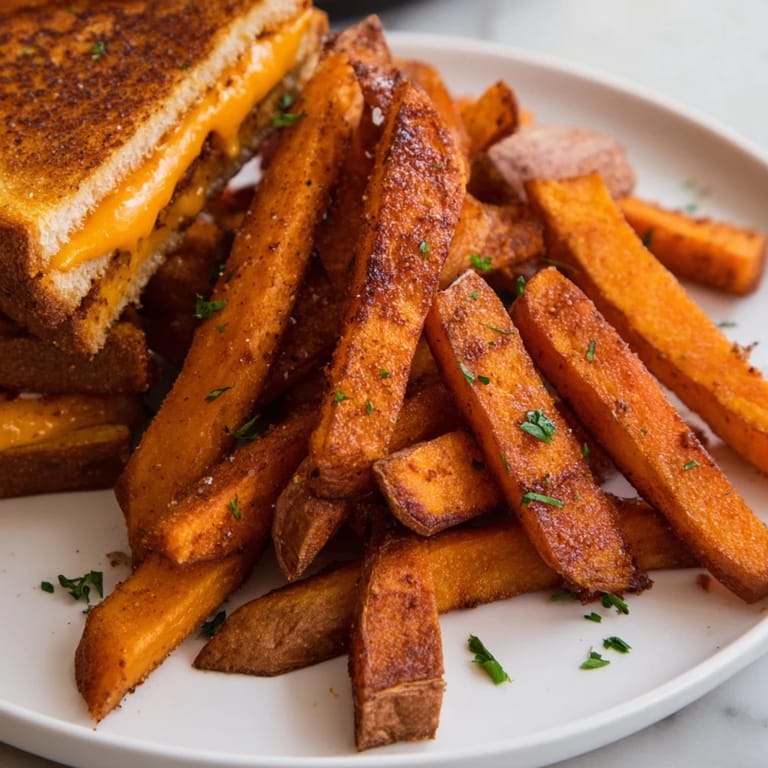
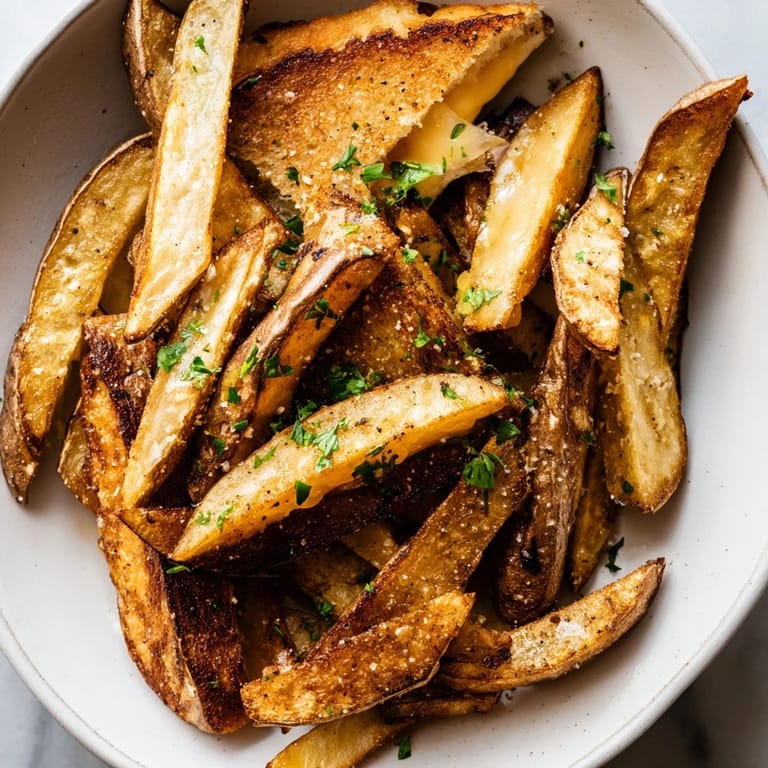
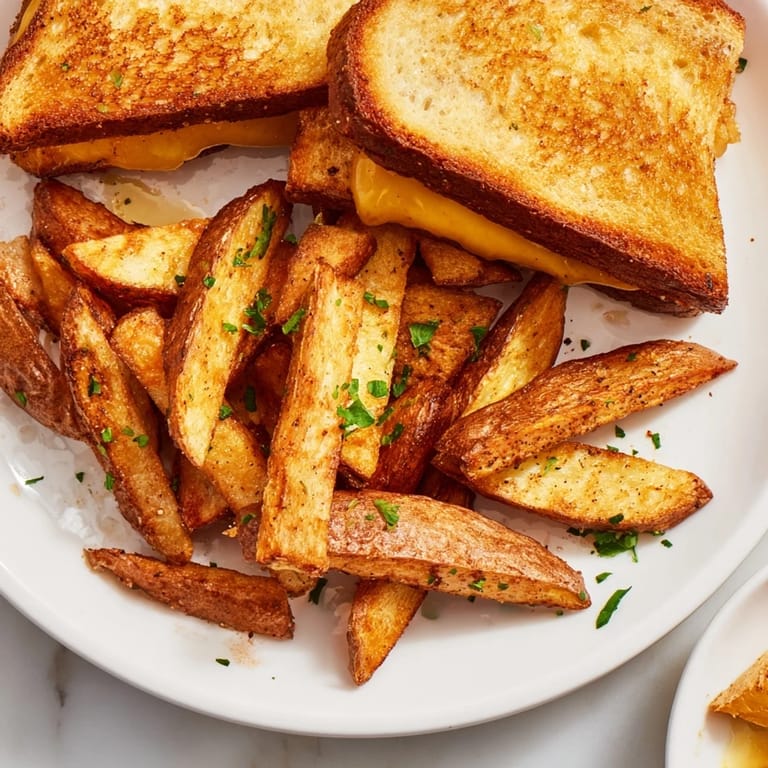
Save There's something about the smell of beef tallow hitting hot oil that instantly transports me back to a diner I stumbled into on a rainy afternoon in Portland. The cook there was making fries the old-fashioned way, and when I asked how they got them so impossibly crispy, he just smiled and said beef tallow. That conversation stuck with me for years until I finally tried it at home, paired with a grilled cheese that melted into golden, buttery submission. Now this combination is my go-to when I want comfort food that actually feels special.
I made this for my sister the first time she came home from college, and watching her bite into a fry, then immediately reach for another, told me everything. She'd been eating cafeteria food for months, and suddenly this simple meal felt like the most elegant thing I could offer. We sat in my small kitchen dipping fries in aioli while our grilled cheeses cooled just enough to eat without burning our mouths, and I realized this dish works because it's generous without being pretentious.
Ingredients
- Russet potatoes: Their starch content is what creates that crispy exterior; they're sturdy enough to handle two frying rounds without falling apart.
- Beef tallow: The real star—it has a higher smoke point than most oils and adds a savory depth that lingers on your tongue in the best way.
- Kosher salt: Season aggressively at the end when fries are still hot so it sticks; fine salt dissolves away.
- Black pepper: A grind of fresh pepper right before serving keeps it lively.
- Fresh parsley: A small touch of color and a faint herbaceous note that cuts through the richness.
- Sourdough bread: The tang balances the cheese, and the structure holds up to butter and heat without turning to mush.
- Sharp cheddar cheese: Sharp means it has flavor that stands up to toasting; mild cheese gets lost in the crunch.
- Unsalted butter: Softening it first means even distribution and a more uniform golden crust.
- Mayonnaise: If using, it browns faster than butter alone and creates an almost shatteringly crisp exterior.
Tired of Takeout? 🥡
Get 10 meals you can make faster than delivery arrives. Seriously.
One email. No spam. Unsubscribe anytime.
Instructions
- Soak your potatoes like you mean it:
- Cut them into even ¼-inch sticks—consistency matters because thick pieces cook unevenly. Cold water for at least 30 minutes draws out starches that would make them gummy instead of crispy. Pat them completely dry with paper towels; any moisture left behind will steam instead of fry.
- Do the first fry low and slow:
- At 325°F, you're cooking them through gently for 4–5 minutes until they're tender but pale. This step is invisible but essential; skip it and you'll have burnt exteriors with raw insides.
- Crank up the heat for the finale:
- At 375°F, the second fry in batches for 2–3 minutes shatters that exterior golden and crispy. Work in batches so the oil stays hot—crowding the pot drops temperature and gives you soggy results.
- Season immediately while hot:
- The moment they come out, salt and pepper while steam is still rising; that's when everything sticks. If you wait until they cool, you're just sprinkling seasoning on top.
- Butter both sides of your bread:
- Even coverage on the outside creates an even toast; one side butter-heavy means uneven browning. If you're using mayonnaise, mix it gently with softened butter for easier spreading.
- Build the sandwich thoughtfully:
- Two cheese slices per sandwich matters—one melts too thin and gets lost, three makes biting through awkward. Place cheese in the center where heat concentrates.
- Toast over medium heat with patience:
- Medium is slower than medium-high, but it gives cheese time to actually melt while bread toasts. Press very gently with a spatula after the first minute to ensure contact with the pan.
- Watch for that golden moment:
- 3–4 minutes per side gets you golden brown with melted cheese; any longer and the outside hardens before the inside finishes melting. You'll see a little cheese creeping out the sides when it's ready to flip.
- Serve everything immediately:
- Fries lose their crispness quickly, and grilled cheese firms up as it cools, so plate and eat while everything is at its peak.
 Save
Save What surprised me most was how this meal became a ritual for quiet Thursday nights with my roommate in grad school. Nothing fancy, no reservation needed, just beef tallow fries and grilled cheese that we'd make while talking about our terrible days. It's the kind of food that reminds you comfort doesn't need to be complicated to feel like love.
Why Beef Tallow Changes Everything
I used to think beef tallow was some exotic ingredient only old-school steakhouses bothered with, but then I tasted a fry cooked in it alongside one from vegetable oil side-by-side. The difference is immediate—beef tallow creates a savory richness that lingers, while regular oil fades. It has a higher smoke point around 400°F, which means it can get hotter without breaking down, creating that crispy exterior without the burnt taste. The flavor isn't overwhelming; it's subtle enough to complement the sharp cheddar without competing. Once you've tasted beef tallow fries, vegetable oil ones feel hollow by comparison.
Building the Perfect Grilled Cheese
The secret to grilled cheese is respecting that it's actually two separate problems: getting the bread golden without burning it, and melting the cheese without waiting forever. Butter matters because it browns at the right speed, creating flavor while you toast. Sourdough's slight tang and firm crumb prevent the bread from becoming greasy or collapsing when cheese melts. Sharp cheddar has enough flavor that it doesn't disappear into the bread—mild cheese becomes invisible, and processed American cheese feels cheap next to everything else on the plate. The mayonnaise trick is worth trying at least once because it browns faster than butter alone, creating an almost shattering crust while the butter keeps things tender underneath.
The Equipment and Details That Matter
A proper deep pot or dedicated fryer makes this easier because you're not worried about splashing hot oil across your stove. Paper towels between each frying batch absorb excess oil so fries stay crisp rather than soggy. A slotted spoon is worth using instead of tongs because it drains as you lift, meaning less oil stays on your fries. For grilled cheese, a heavy skillet or griddle distributes heat evenly; a thin pan creates hot spots that burn bread while leaving other areas pale. One final reminder is to work methodically—rushing this meal defeats the purpose, and these are the kinds of dishes that actually reward patience.
- Keep your beef tallow in a cool place; it solidifies as it cools and can be strained and reused multiple times.
- If beef tallow is hard to find, ask your butcher or order it online, but avoid substitutes if possible because they genuinely don't deliver the same result.
- Leftover fries are best eaten the same day, but reheating them briefly in a hot oven brings back some of their crispness.
 Save
Save This is the kind of meal that reminds you why cooking at home matters—not because it's complicated, but because it's wholly yours. Serve it to someone you care about.
Recipe FAQs
- → Why use beef tallow for frying?
Beef tallow provides a rich, savory flavor and high smoke point, resulting in exceptional crispness and a golden color for fries.
- → How can I make the fries extra crispy?
Soak the potatoes in cold water to remove starch, then double-fry them at different temperatures to achieve maximum crunch.
- → What bread works best for the grilled cheese?
Sourdough bread is ideal for its sturdy texture and tangy flavor, which complements the sharp cheddar cheese perfectly.
- → Can I add herbs to the fries?
Yes, sprinkling chopped fresh parsley after frying adds a fresh aroma and a touch of color to the fries.
- → How do I ensure the cheese melts evenly?
Cook the sandwich on medium heat and press gently with a spatula to evenly toast the bread and fully melt the cheese inside.