 Save
Save I'll never forget the first time I hosted a book club meeting in my apartment. I wanted to impress everyone, but I was terrified of overcomplicated recipes. That's when I discovered the magic of a thoughtfully arranged platter—no cooking required, just intention and care. I started pairing different sections with wines, matching flavors like I was conducting a symphony. Now, whenever friends gather around my table with their books and wine glasses, it's this platter that gets the most compliments. There's something about presenting food as a curated experience that makes everyone feel celebrated.
I remember my friend Sarah setting down her book, picking up a slice of crisp apple and the triple-cream brie, then closing her eyes like she'd just tasted something sacred. That moment made me realize this wasn't just about feeding people—it was about creating small, delicious pauses in their evening where they could really taste something and think about it alongside the wine in their glass.
Ingredients
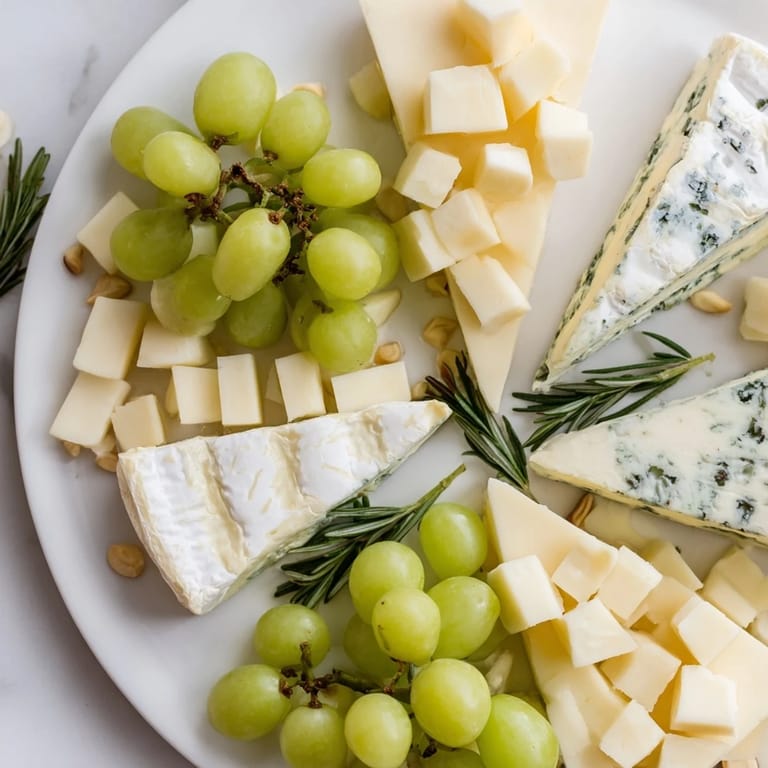
- Triple-cream brie, 100 g sliced: This is your crown jewel for the Chardonnay section—creamy enough to feel indulgent but subtle enough to let the wine shine. Slice it just before serving so it stays cool and doesn't weep into the board.
- Gruyère cheese, 100 g cubed: Those little golden cubes add a nutty depth that plays beautifully with crisp whites. I learned the hard way that this cheese deserves to breathe slightly, so don't add it until 10 minutes before guests arrive.
- Green grapes, 1 small bunch: These are your palate cleansers. Their natural sweetness and juice contrast perfectly with the rich cheeses and provide those lovely bursts of freshness everyone reaches for.
- Crisp apple, 1 sliced: Choose something like a Honeycrisp or Pink Lady that won't brown too quickly. I toss mine with a tiny squeeze of lemon juice just before plating to keep them bright and prevent oxidation.
- Marcona almonds, 50 g: These buttery Spanish almonds are softer and richer than regular almonds—they feel like a treat rather than just nuts. They ground the first section with their richness.
- Aged cheddar, 100 g cubed: The deeper, more complex flavor here is what makes the Pinot Noir section work. Look for a cheddar that's been aged at least 12 months for that sharp, almost crystalline quality.
- Smoked gouda, 100 g sliced: The smoke in this cheese creates a bridge between the bold wine and the cured meats. I keep these slices slightly thicker so they're substantial enough to hold up against the other elements.
- Prosciutto, 70 g thinly sliced: Let this come to room temperature before arranging so the flavors aren't muted by the cold. Arrange it loosely so it doesn't clump together—each slice should feel precious and individual.
- Salami, 70 g sliced: Choose a good quality salami where you can actually taste the spices and the meat's depth. The richness of the fats is what makes this section satisfying alongside a medium-bodied red wine.
- Cherry tomatoes, 1 cup: These add brightness and acidity that Pinot Noir loves. They're also the only element that makes this section feel fresh rather than heavy—don't skip them.
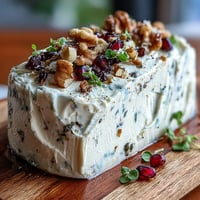
- Herbed goat cheese, 100 g formed into a log: This is the elegant anchor of the third section. The herbs (usually dill, chives, and thyme) add an herbaceous note that sparkling wine absolutely sings with. I roll the log in extra fresh herbs right before serving for visual impact.
- Dried apricots, 70 g: These little pockets of concentrated sweetness pair gorgeously with the effervescence of sparkling wine. They're also one of the only elements here that can sit for hours without changing.
- Roasted pistachios, 50 g: The delicate, almost buttery flavor of pistachios feels more refined than other nuts and provides a subtle textural contrast. I keep these in their shell when possible for visual interest.
- Mixed olives, 1/2 cup: Choose a mix of colors and brines—Castelvetrano, Kalamata, and Niçoise work beautifully together. The brininess refreshes the palate between bites and loves sparkling wine.
- Cucumber, 1/2 sliced: These cool, crisp rounds feel almost cooling against the richer cheeses and provide a clean palate reset. Slice them just before serving to maintain their crispness.
- Baguette, 1 sliced: The backbone of everything. I slice it about a quarter-inch thick and arrange it around the board's perimeter rather than filling gaps—presentation matters.
- Assorted crackers, 1 box: These are your vehicles for the cheese and meats. I prefer a mix of textures: some simple and crispy, some with seeds for subtlety, some with whole grains for nuttiness.
- Fresh rosemary sprigs, 3–4: Beyond their role as dividers, these sprigs release their aroma as people reach across the board. They're your secret weapon for making the entire table smell like warmth and intention.
- Honey or fig jam, optional: A small bowl of honey next to the goat cheese section is transformative. That drizzle turns something simple into something people remember.
Tired of Takeout? 🥡
Get 10 meals you can make faster than delivery arrives. Seriously.
One email. No spam. Unsubscribe anytime.
Instructions
- Choose your canvas:
- Select a large platter or wooden board—something with some visual weight to it. This is the stage, so make it matter. If you have a beautiful marble board or a rustic wooden one, use that. The platter itself is part of the presentation.
- Create your divisions with intention:
- Place your 3–4 fresh rosemary sprigs on the board to create three distinct sections. Don't overthink this—imagine dividing the board into thirds, but let the sprigs guide you naturally. Run your fingers near the rosemary; that smell is the beginning of your platter's magic.
- Build Section 1 (Chardonnay pairing):
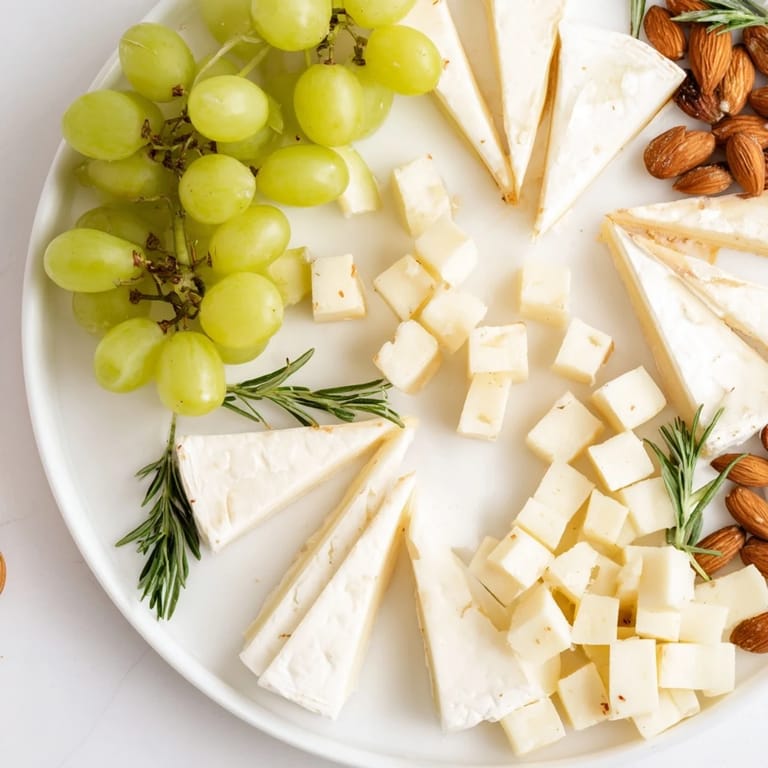
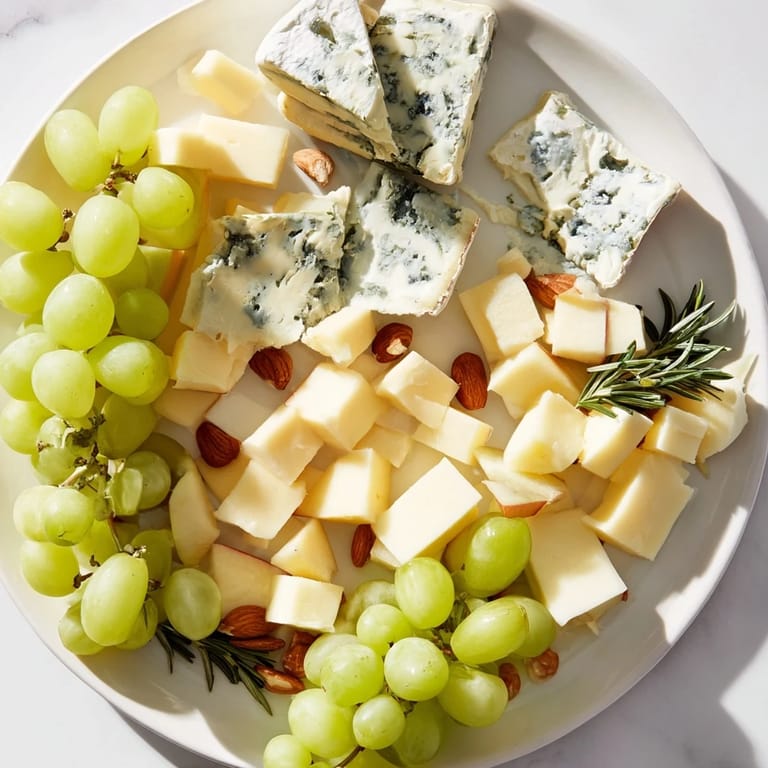
- Start with the brie slices arranged in a gentle cascade, like they're welcoming people in. Around them, scatter the Gruyère cubes, then create little pockets with the grapes, apple slices, and almonds. Think of this section as a study in soft colors—creams, pale yellows, hints of green. Let some items overlap slightly; perfection is less inviting than generosity.
- Compose Section 2 (Pinot Noir pairing):
- This section is bolder, more dramatic. Arrange the aged cheddar and smoked gouda with intention, then arrange the prosciutto in loose, flowing lines—let it ripple across the section. Salami goes in the corners and gaps. Finally, scatter the cherry tomatoes like little jewels. This section should feel rich and warm in color.
- Arrange Section 3 (Sparkling wine pairing):
- Place the goat cheese log in the center or slightly off-center—it's an anchor. Around it, arrange the dried apricots, pistachios, olives, and cucumber slices in a way that creates visual movement. This section should feel lighter and more delicate, with brighter pops of color.
- Fill the spaces thoughtfully:
- Now come the baguette slices and crackers. Rather than jamming them into every gap, arrange them around the outer edges and between sections. Leave some breathing room—a board that looks generous rather than overcrowded feels more elegant and gives people space to reach without triggering an avalanche of items.
- Add the final touches:
- If using honey or fig jam, place them in small bowls on the board or nearby. These aren't afterthoughts—they're flavor intensifiers. A small ceramic dish of honey next to the goat cheese is like a secret you're sharing with each guest.
- Step back and breathe:
- Take a moment to look at what you've created. Is there visual balance? Can people see all three sections clearly? Does it feel inviting? If something feels off, adjust one or two items. The best boards have a sense of abundance without feeling chaotic.
- Serve at the right moment:
- Bring this to the table just as people are settling in, before they start getting hungry. The act of discovering what's on the board together is part of the experience. Serve at room temperature or just slightly chilled—cold cheeses taste like nothing.
 Save
Save I think about my friend Michael, who normally just drank wine without thinking about it much. But halfway through our book club evening, he tasted a piece of goat cheese with a sip of sparkling wine and actually stopped mid-conversation. He looked at me like I'd just shown him a secret door in a familiar room. That's when I understood that this platter wasn't about fancy ingredients—it was about creating a moment where people could actually taste what they were eating and share that discovery with others.
The Art of Pairing Without Pretension
Here's what I've learned about wine and food pairing: it doesn't need to be stuffy or complicated. The Chardonnay section works because creamy textures and crisp whites are a natural match—the wine's acidity cuts through the richness and leaves you wanting another bite. The Pinot Noir section thrives on the cured meats' salt and fat playing against the wine's earthiness. And the sparkling wine section? It's all about the effervescence creating little flavor explosions with the creamy goat cheese and those concentrated apricots. Once you understand these basic flavor marriages, you can swap ingredients around without losing the magic. The point isn't to follow rules rigidly—it's to understand why things work together so you can play confidently.
Why This Works for Gatherings
A traditional meal requires someone to serve it, to coordinate timing, to make sure everyone's been properly fed. This platter is different—it empowers your guests. Everyone can graze at their own pace, try combinations of their own choosing, and the conversation never stops because no one's waiting for the next course. It's also remarkably forgiving. If someone's vegetarian, they skip the meats. If someone has a nut allergy, there are still dozens of things to try. The board becomes a landscape where everyone finds something that speaks to them, rather than a single dish that either works for them or doesn't.
Small Details That Make the Difference
The tiny moments are what elevate this from a nice snack to something memorable. Zest a hint of lemon over the apple slices about 5 minutes before serving to keep them bright and add a subtle flavor layer. Make sure your rosemary sprigs are truly fresh and fragrant—dry rosemary looks the part but doesn't have the same impact. Arrange items at slightly different heights using small bowls underneath crackers or stacking some cheese—this creates visual interest and makes reaching for things more of a discovery than a chore. And here's something almost no one thinks about: chill your platter or board in the freezer for 10 minutes before plating if you can. It keeps the cheeses at a better temperature much longer.
- Quality matters more than quantity—one really excellent cheese beats three mediocre ones
- Prep as much as possible the morning of, then do the final arrangement right before guests arrive so everything is at its peak
- Keep it simple enough that you're relaxed and actually present with your guests rather than stressed about execution
 Save
Save When you set this platter down in the middle of your table, you're giving your guests permission to slow down, to taste things intentionally, and to share those discoveries with each other. That's the real recipe.
Recipe FAQs
- → How do rosemary sprigs enhance the platter?
Rosemary sprigs serve as natural dividers, adding a fresh aroma and visual separation between sections, elevating the platter’s presentation.
- → Can this platter accommodate vegetarian preferences?
Yes, simply omit the cured meats and add extra nuts or roasted vegetables to maintain variety and flavor.
- → Which cheeses pair best with the white wine section?
Triple-cream brie and Gruyère complement the crispness of Chardonnay and other white wines beautifully.
- → What is the ideal way to serve this platter?
Arrange all components on a large board, separate sections with rosemary, and add crackers and baguette slices around for easy serving.
- → Can the nuts and cheeses be substituted?
Absolutely, feel free to swap cheeses or nuts depending on taste preferences or dietary needs without compromising the balance of flavors.