 Save
Save The first time I tasted muhammara, I was sitting in a tiny Damascus kitchen on a winter evening, watching my friend's mother char peppers directly over a gas flame, the smell so intense it made my eyes water in the best way. She never measured anything, just moved with the confidence of someone who'd made this dip a thousand times, and when she finally blended everything together, I understood why this recipe has survived generations in Syrian homes. There's something almost alchemical about how those blackened peppers transform into something bright and sophisticated, balanced by the sharp tang of pomegranate molasses and the warmth of toasted walnuts.
I made this for a dinner party once when I was nervous about cooking for people whose palate I didn't quite know yet, and watching everyone reach for it again and again—spreading it on warm pita, dolloping it next to olives, just eating it straight with a spoon when they thought no one was looking—I realized this dip has a way of making people feel welcome. It's the kind of food that says you care enough to do something right, without making it seem like a performance.
Ingredients
- Red bell peppers (3 large): These are the star, and roasting them until they're charred and blistered is what gives muhammara its signature smoky depth, so don't skip the darkening.
- Walnuts (1 cup, lightly toasted): Toasting them yourself makes a real difference in the final flavor, bringing out oils and richness that raw walnuts won't deliver.
- Pomegranate molasses (2 tbsp): This is the ingredient that makes people ask what you put in it, balancing the richness with a sharp, slightly sweet tang that's irreplaceable.
- Garlic cloves (2): Roasting mellows garlic, so even people who usually avoid it find this palatable, but taste as you go since everyone's garlic tolerance is different.
- Breadcrumbs (2 tbsp): These add body and keep the texture from becoming too smooth, giving muhammara that slightly coarse, rustic quality that makes it feel handmade.
- Extra virgin olive oil (2 tbsp, plus more for drizzling): Quality matters here because the oil becomes part of the flavor profile, so use something you'd actually taste on its own.
- Smoked paprika and Aleppo pepper (1/2 tsp each): These spices work together to create warmth and smokiness without overwhelming heat, though you can adjust them depending on your tolerance.
- Lemon juice (1–2 tbsp): Add gradually at the end because this is your final brightness, and it's easier to add more than take it back out.
- Ground cumin, salt, and black pepper: These are your foundation flavors, tying everything together into something that tastes intentional.
Tired of Takeout? 🥡
Get 10 meals you can make faster than delivery arrives. Seriously.
One email. No spam. Unsubscribe anytime.
Instructions
- Char your peppers until the skins blister:
- Preheat your oven to 220°C (425°F), arrange the red peppers on a baking tray, and roast for 20–25 minutes, turning them halfway through so they char evenly on all sides. You want the skins to look almost blackened and blistered all over, which is what gives muhammara its distinctive smoky character.
- Steam and peel while they're still warm:
- Transfer the hot peppers to a bowl, cover it tightly with plastic wrap or a plate, and let them sit for 10 minutes to steam—this loosens the skins and makes peeling infinitely easier. Once cooled slightly, the blackened skin should slip off in strips, and you can easily remove the seeds and stems with your fingers.
- Pulse your dry ingredients first:
- In a food processor, combine the roasted peppers, toasted walnuts, garlic, breadcrumbs, cumin, smoked paprika, Aleppo pepper, salt, and black pepper, pulsing until the mixture is coarse and nothing is finely ground. This step creates texture and prevents over-processing, which would turn muhammara into baby food.
- Add the wet ingredients and blend to a rough paste:
- Pour in the pomegranate molasses, olive oil, and lemon juice, then process until the mixture is mostly smooth but still has some texture and body. Taste it now and adjust the balance—more molasses for tang, more lemon for brightness, more oil if it feels too thick.
- Plate and finish with a flourish:
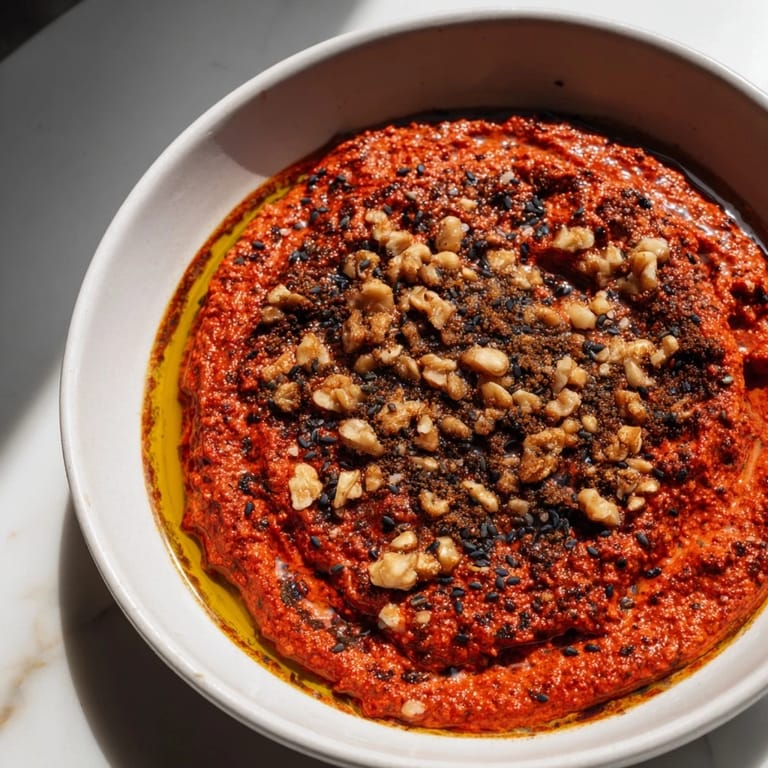
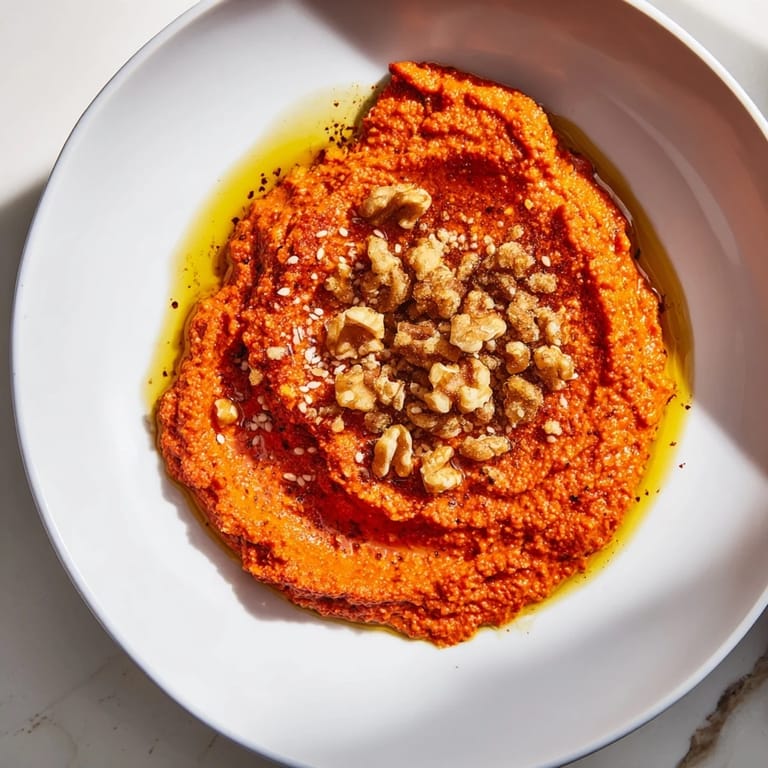
- Transfer the muhammara to a shallow serving bowl or plate, drizzle generously with good olive oil, and scatter sesame seeds on top if you're using them. This final oil isn't just for looks; it keeps the dip moist and adds richness as people scoop it up.
 Save
Save I remember my friend's mother telling me that muhammara was her mother's recipe, and her mother's before that, and how she could taste her grandmother's hand in the balance of spices even though she'd never written anything down. That's when I understood that this isn't just a recipe—it's a conversation across time, each person adding their own instincts to something ancient and tried.
The Best Way to Serve It
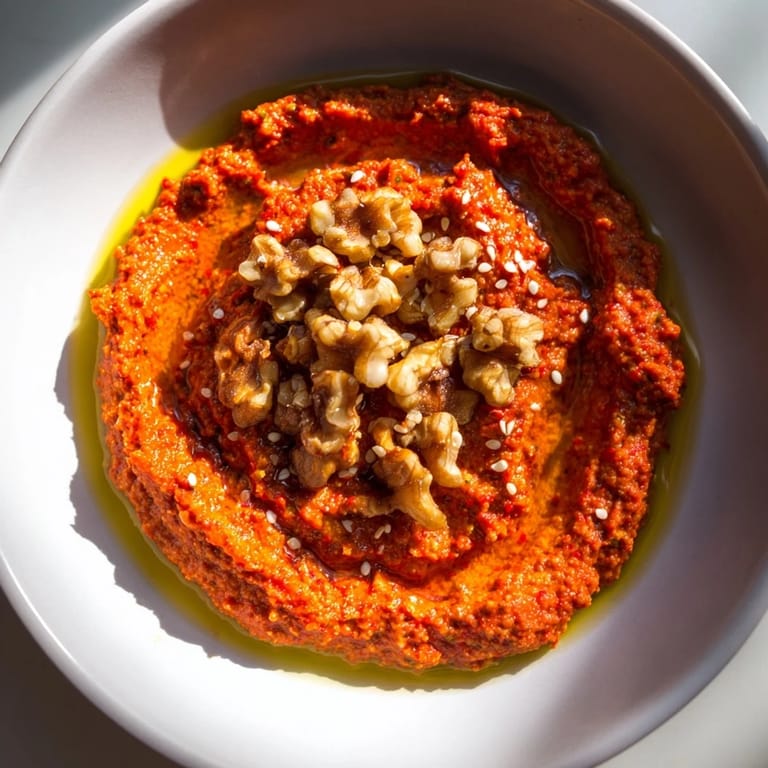
Muhammara is at its best as the centerpiece of a mezze platter, surrounded by hummus, baba ghanoush, olives, fresh cucumbers, and warm pita bread. I've learned that serving it in a shallow bowl and drizzling it with extra oil right before people arrive keeps it looking vibrant and inviting, and something about the ritual of scooping and sharing makes the meal feel more generous. The dip also works beautifully on a crudités board or as a spread on sandwiches the next day, making it one of those rare recipes that improves with time as the flavors settle and deepen.
Why This Recipe Works
The magic of muhammara is in its balance of contrasts: the smokiness of charred peppers against the brightness of pomegranate molasses, the earthiness of walnuts against the sharpness of lemon, the richness of oil against the slight heat of Aleppo pepper. Every element has a reason for being there, and nothing overshadows anything else because the proportions are so carefully calibrated from centuries of home cooking. When you make this once and taste how all these flavors come together, you start to understand why this dip has remained unchanged across generations and borders.
Storage and Make-Ahead Tips
Muhammara keeps beautifully in the refrigerator for up to five days, actually becoming more flavorful as it sits because the spices continue to bloom and the textures meld together. You can make it a day or two ahead of a dinner party and store it in a covered container, bringing it to room temperature about 20 minutes before serving so the flavors wake back up. If you want to freeze it, it holds well for up to two months in an airtight container, though the texture becomes slightly softer after thawing—not worse, just different, so do a test batch first if you're hesitant.
- Always drizzle with fresh olive oil right before serving to keep the top from drying out and to add that final luxurious touch.
- If your muhammara becomes too thick after refrigeration, warm it slightly and stir in a little more olive oil to loosen it.
- The recipe doubles easily if you're feeding a crowd, and it's the kind of dip that disappears faster than you'd expect.
 Save
Save Every time I make muhammara, I'm transported back to that Damascus kitchen, to the sound of peppers blistering in the oven and my friend's mother's quiet confidence that this recipe, this balance, this dip would bring people together. It's food that tastes like home, even if home is somewhere you've never been.
Recipe FAQs
- → What is the best way to roast the red peppers?
Roast red bell peppers at 220°C (425°F) for 20-25 minutes until skins are charred and blistered, then steam to loosen skins for easy peeling.
- → Can I adjust the heat level in this dip?
Yes, increase or decrease the Aleppo pepper or red chili flakes to control the spice intensity according to taste.
- → What substitutes can I use for breadcrumbs?
Gluten-free breadcrumbs or crushed nuts can be used as alternatives to maintain texture while accommodating dietary needs.
- → How should this dip be stored?
Keep refrigerated in an airtight container for up to 5 days to preserve freshness and flavor.
- → What dishes pair well with this dip?
It complements fresh pita bread, crackers, or vegetable sticks, and is delightful as part of a mezze platter with hummus and baba ghanoush.