 Save
Save There's something about the winter solstice that makes me want to create something visually dramatic on a board—a edible conversation about light and shadow. I was standing in my kitchen on a grey December afternoon, thinking about how much I missed the sun, when I realized I could build that feeling onto a platter. Half dark, half bright. Rich olives and deep chocolate anchoring one side, while honeycomb and pears glowed from the other. It wasn't about being clever; it was about making something that actually looked like the season felt, and then eating it with people I wanted to slow down with.
I made this for my partner's family on the solstice a few years back, and I remember my uncle—who usually just eats what's put in front of him without comment—standing there for ten minutes just looking at it before he touched anything. He kept pointing out the colors, like he was reading meaning into every placement. Later he told me it was the first time he'd felt hopeful about the season turning back toward light. That board ended up being less about the cheese and more about what we were all silently feeling.
Ingredients
- Kalamata olives: These dark, briny ones are the foundation of your shadow side—salty and rich, they anchor everything around them.
- Oil-cured black olives: Deeper and softer than Kalamata, these add texture and a different kind of dark intensity.
- Dried mission figs: Halve them so people can eat them easily, and they'll taste like concentrated sweetness with an almost meaty texture that surprises.
- Fig jam: A dollop of this adds a bridge between the salty and sweet—people will spoon this onto crackers before they even realize they're doing it.
- Dark chocolate: Broken into irregular pieces so it doesn't feel formal; the bitterness is the counterpoint to everything else.
- Roasted almonds: Their crunch and slight saltiness give your dark side dimension—they're the detail that makes it feel intentional.
- Fresh rosemary: A single sprig becomes your divider and your garnish; it smells like winter and tastes green and piney if someone actually chews it.
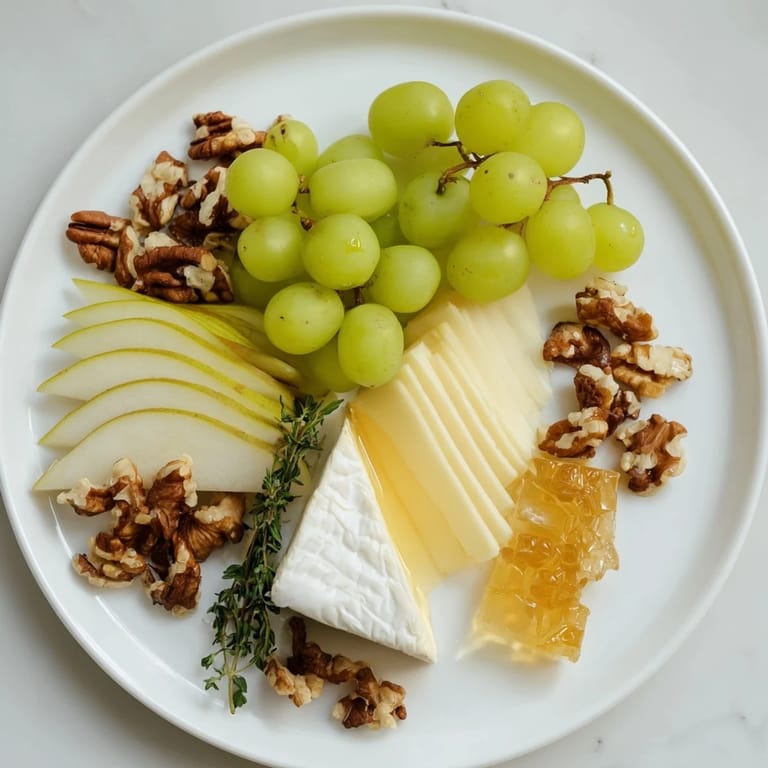
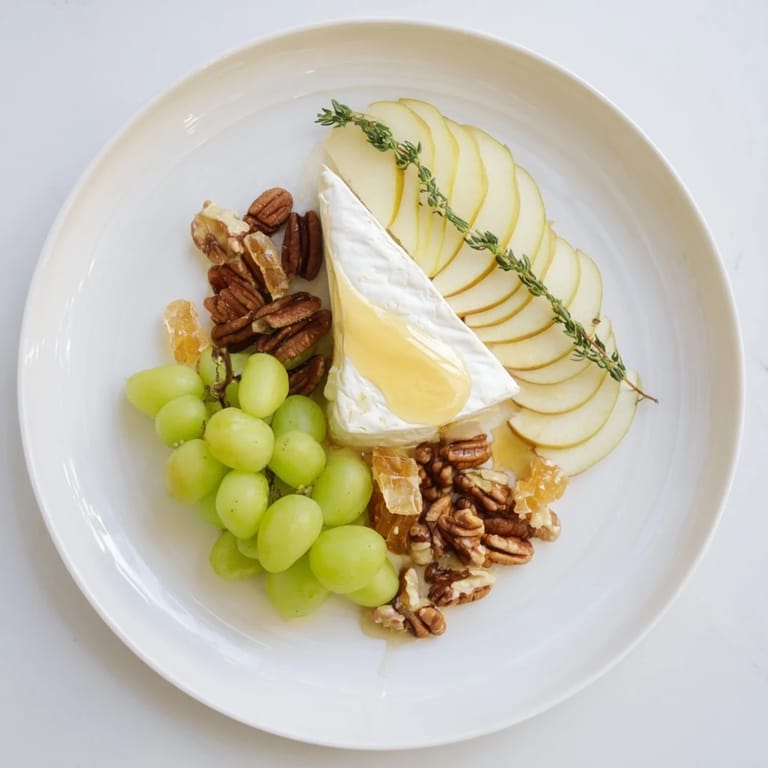
- Ripe Brie: Should be soft enough to spread but not melting into a puddle; room temperature is key so it has this creamy, almost cold feeling against warm crackers.
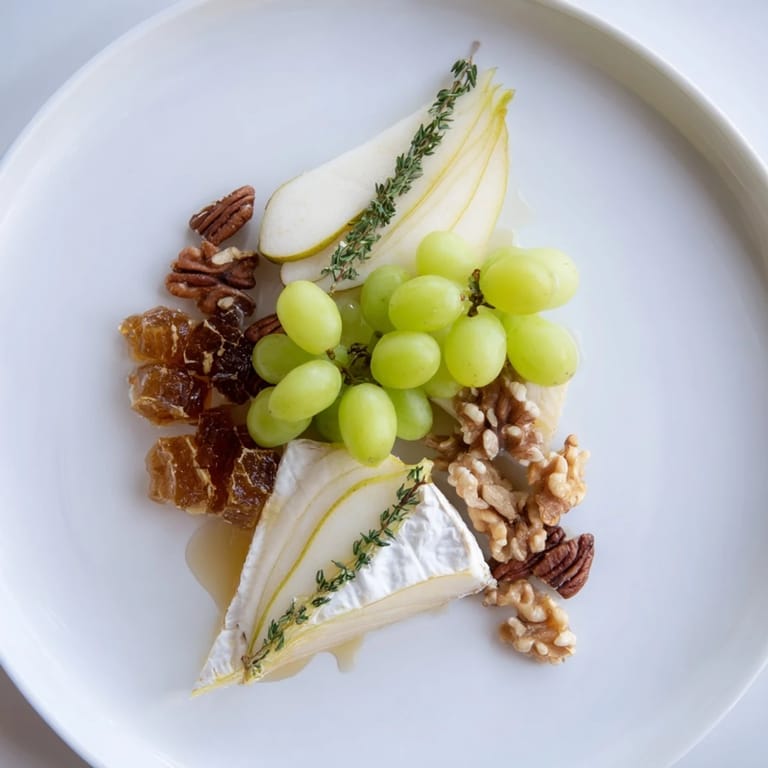
- Ripe pears: Slice them just before serving so they don't brown; they're the jewels of your bright side.
- Honeycomb or honey: Honeycomb feels luxurious and looks like golden geometry; if you use honey, drizzle it just before people arrive so it glistens.
- Toasted walnuts: These have an earthiness that balances the sweetness of the honey and pears without being heavy.
- Seedless green grapes: They're practically jewelry—pop one in your mouth between bites of everything else and they taste like summer interrupting winter.
- Fresh thyme: Use this as your light-side garnish; the little leaves catch the eye and smell herbaceous and alive.
- Baguette slices: Toast them lightly if you want them crispy, or leave them soft—they're just the vehicle for everything else.
- Assorted crackers: Mix textures here—some thin and crispy, some seeded, some subtle—so the board feels generous and thoughtful.
Tired of Takeout? 🥡
Get 10 meals you can make faster than delivery arrives. Seriously.
One email. No spam. Unsubscribe anytime.
Instructions
- Create your dividing line:
- Lay your board down and imagine it split exactly in half—some people use a line of fresh rosemary as their visual marker, others use a neat row of crackers standing upright. This is your moment to commit to the concept, so make it clear and intentional.
- Dress the dark side:
- Start with the two kinds of olives, clustering them so their dark, shiny surfaces catch any light in the room. Scatter the halved figs between them, add small clusters of almonds, then place a small spoon or fork in the fig jam so people know what it is. Break your dark chocolate into rough pieces and distribute them across the surface—they should look almost accidental, like you tossed them there. Finish with that single sprig of rosemary running along the edge or across the middle.
- Build the light side:
- Position your Brie as a focal point—either as a whole wheel or a large wedge, depending on what you have. Arrange the pear slices in overlapping lines or scattered clusters, then drizzle or place the honeycomb so it catches light. Scatter toasted walnuts around, then add the green grapes as little color points. Finish with fresh thyme sprinkled across everything so it looks alive and seasonal.
- Add the bread and crackers:
- Arrange baguette slices and crackers along the center dividing line, standing some upright and laying others flat, or pile them on small separate plates so they don't crowd the actual star players. This is about function but also creating small pockets of empty space that make the arrangement feel generous rather than crowded.
- Serve and step back:
- Bring it to the table at room temperature; nothing cold or stiff here. Let people approach it slowly, read the visual story you've created, and start eating when they're ready. The board is the conversation starter.
 Save
Save What I didn't expect was how quiet the table would go when everyone saw it. People pulled out their phones, which I almost never see at a table with my family. Someone said it looked like a painting, someone else said it looked like hope, and my nephew—who's twelve and usually just hungry—spent five minutes arranging his crackers with things before he actually ate anything. That's when I realized this wasn't just about feeding people; it was about giving them permission to slow down and notice.
The Symbolism Behind the Split
The winter solstice is the darkest day, the moment when the sun feels farthest away. Building a board that visually honors that darkness while also celebrating the light that's coming back feels like small magic. The olives, figs, and chocolate are grounding and rich—flavors that feel like they belong to the earth and to depths. The Brie, pears, and honeycomb are bright and forward, almost optimistic. When you eat from both sides in the same handful, you're tasting the balance, the knowledge that darkness and light aren't enemies but partners in the turning of seasons.
Making It Your Own
This recipe is less about precision and more about intuition and what you have on hand. The structure is the same—divide, darken one side, brighten the other—but the specifics can shift. Swap pears for apples if pears aren't good right now, use dried apricots instead of figs, try Roquefort or Camembert instead of Brie. The solstice board is a concept, not a formula, which means it's never wrong as long as the contrast is clear and the arrangement feels considered. Some years you might add prosciutto to the dark side because that's what feels right; some years you keep it vegetarian. The point is that you're building something that reflects both the season and your own kitchen logic.
Pairing and Serving
A dry sparkling wine cuts through the richness of the olives and the creaminess of the Brie without competing with anything else on the board. A light-bodied red—something not too tannic—works too if that's what you have. Some people will pour themselves coffee after and come back to the board as the meal winds down, which is exactly what should happen. The beauty of a board like this is that it doesn't demand a structured progression; it just sits there, inviting people back again and again.
- Serve at room temperature so every flavor and texture is actually present and not muffled by cold.
- Give people small plates and decent cheese knives so they're not standing over the board trying to wrangle everything onto a cracker.
- Light candles or dimmed lighting makes the bright side feel even more luminous and the whole thing more like an event than just snacking.
 Save
Save Every time I make this board, someone tells me it's too beautiful to eat, and every time, I tell them that's exactly the point—something this beautiful should be enjoyed and consumed and turned into a shared moment, not saved. That's what winter solstice is teaching us anyway: light returns, darkness isn't permanent, and the best things are the ones you actually use.
Recipe FAQs
- → How do I divide the board for the dark and light sides?
Use a sprig of rosemary or a row of crackers to create a clear, straight line dividing the board into two halves for contrasting flavors.
- → What can I substitute for Brie cheese?
Camembert or Roquefort are excellent alternatives that maintain creamy texture and rich flavor.
- → Are there options to replace the fruit on each side?
You can swap pears for apples or dried apricots for figs to customize the fresh components.
- → Can this be made suitable for non-vegetarians?
Adding prosciutto slices on either side adds a savory contrast but can be omitted for vegetarian preferences.
- → What drinks pair well with this board?
A dry sparkling wine or a light-bodied red complements the balance of rich and fresh flavors nicely.